


Introduction
In 2026, SEO is no longer just about keywords and backlinks. The scale, speed, and complexity of search demand have increased dramatically.
AI is becoming a key part of SEO strategies for businesses of all sizes.
In fact, 86% of enterprise SEOs have already integrated AI into their workflows, and 82% plan to boost their AI investment next year, according to a survey by SEO Clarity. This isn’t just a passing trend; it’s a strategic shift that’s transforming how SEO is done.

But adopting AI for SEO isn’t as simple as flipping a switch. To truly benefit, businesses need to combine AI tools with human expertise, ensuring content quality and SEO alignment.
Ready to make AI an integral part of your SEO strategy?
In this guide, we’ll explain why AI is critical for SEO in 2026, how it’s changing SEO workflows, and the tools and steps you need to adapt to implement it effectively. Let’s dive in.
Why AI for SEO Matters in 2026
AI for SEO uses intelligent algorithms and automated tools to analyse keywords, understand search intent, and optimize content for higher rankings. AI improves SEO by generating data-driven insights, predicting performance trends, and streamlining tasks such as audits, clustering, and SERP analysis.
AI strengthens content quality, enhances on-page optimization, and supports scalable workflows for faster growth. AI helps users create relevant content, improve technical health, and increase organic traffic with accurate, real-time recommendations.
A recent McKinsey survey also found that roughly one-third of organizations have moved past experimentation and are scaling AI programs, with many allocating more than 20% of their digital budget to AI.
AI for SEO matters now because it enables:
- faster processing of large data sets (e.g., thousands of keywords, competitor SERPs)
- improved decision-making via predictions and insights rather than just reporting
- scalable workflows that maintain quality as volume increases
Let’s understand how AI is shaping search behavior.
How is AI Transforming Search Behavior
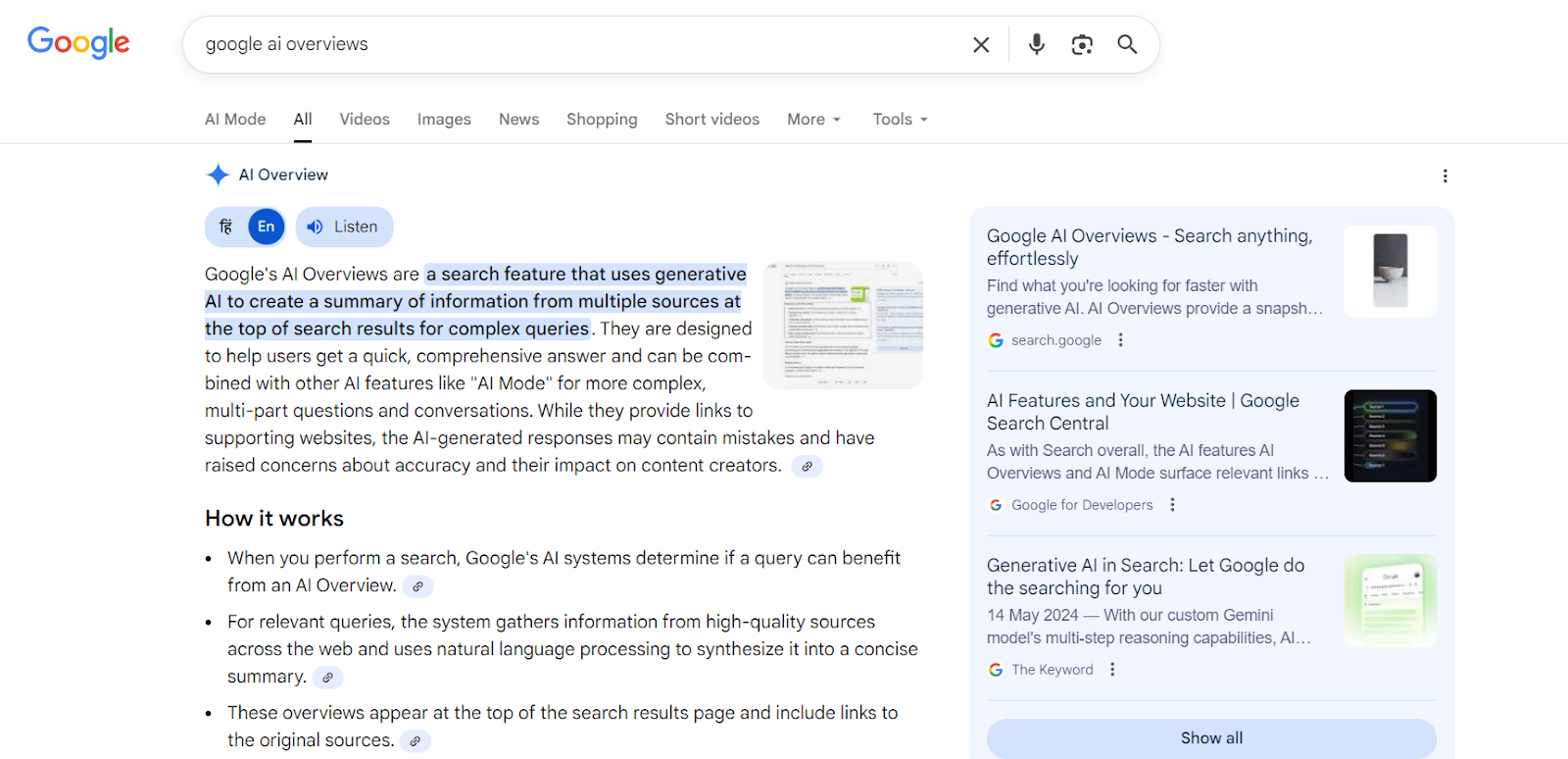
As search engines are integrating AI-generated answers and deeper semantic understanding, search behavior is changing.
- According to Semrush, AI-generated summaries now appear in search results, often taking up valuable space above organic links. 13.14% of queries now show AI Overviews, and this feature has been linked to a 30% drop in CTR for organic results.
- Search is becoming more conversational, with long-tail, context‑rich queries rising. BrightEdge reports a 49 percent increase in long-form, conversational queries since 2024.
- Search engines now prioritize meaning over keywords. For instance, Surfer found that only 5.4 percent of AI Overview summaries contain the exact user query.
- Ahrefs notes that 86.5 percent of top-ranking content contains AI-assisted components, and 74 percent of new content is AI-influenced.
- With Google’s Helpful Content Update, quality is paramount. Search engines reward deep, well‑structured content that answers user queries comprehensively.
Why SEO Teams Are Adopting AI Fast
SEO teams are embracing AI because it clears bottlenecks, improves decision‑making, and enables scale without sacrificing quality.
- AI automates tasks like keyword clustering and content brief generation, reducing the time from idea to publication
- AI models provide predictive insights on ranking shifts, competitor movements, and keyword opportunities, giving teams a proactive edge.
- AI-powered tools run continuous audits, flagging technical issues (broken links, duplicate content) and scoring content for quality and relevance in real time.
- By automating routine tasks, AI enables SEO teams to produce more content with fewer resources, improving overall productivity.
AI offers capabilities that were previously impractical or impossible to scale manually.
But to put these capabilities into practice, you need the right AI tools, so let’s examine the platforms shaping SEO performance today.
Top AI for SEO Tools (Full Breakdown + Ratings + Use Cases)
We analyzed the best AI SEO tools to bring you a curated list of platforms that are transforming how SEO teams work, offering detailed breakdowns, user ratings, and real‑world use cases for each tool to help you make an informed decision for your business.
From keyword clustering to predictive analytics, these tools help optimize both technical SEO and on-page content for sustainable growth.
Let’s dive into their in-depth analysis.
1. Surfer SEO

Surfer SEO is a content optimization platform that uses real-time SERP analysis and NLP scoring to guide writers and strategists in creating pieces that match what search engines currently reward. It emphasizes on-page structure, semantic relevance, and internal linking.
Ideal For:
Teams that publish high volumes of blog posts, landing pages, or editorial content want to align each asset closely with searcher intent and ranking patterns.
Top Features:
- NLP-powered content scoring: shows how well your draft covers entities, topics, and semantics found in top-ranking pages.
- SERP competitor analysis: compares your content to current top results and surface gaps.
- Internal linking insights: recommends linking opportunities to boost topical relevance and internal structure.
- Content brief builder: automates the creation of outlines based on what ranks, accelerating brief development.
Pricing:
Approximately US $79/month for the Essential plan. Reported full packages start at higher tiers (e.g., $179/month)
Use Cases:
- TOFU Content: For creating a “What is X (Topic)? A Complete Beginner Guide” article, Surfer helps define semantic topics, headline structure, and internal links to address the intent of beginner searchers.
- MOFU Content: When crafting a listicle content such as “Top 10 Tools for X (Process)”, Surfer identifies which competitor pages rank for “tools for X (Process)”, shows keyword overlap, and suggests structure for higher click-through.
- BOFU Content: For producing a “X vs Y: Which Should You Choose?” comparison page, Surfer surfaces features and semantic phrases that users expect when comparing tools, and helps optimize the internal linking to supporting content.
Customer Ratings:
- G2: 4.8/5
- Capterra: 4.9/5
- TrustRadius: 8.9/10
Limitations:
Surfer has weaker keyword-research depth and isn’t ideal for technical SEO audits or performance-tracking at scale.
2. Writesonic
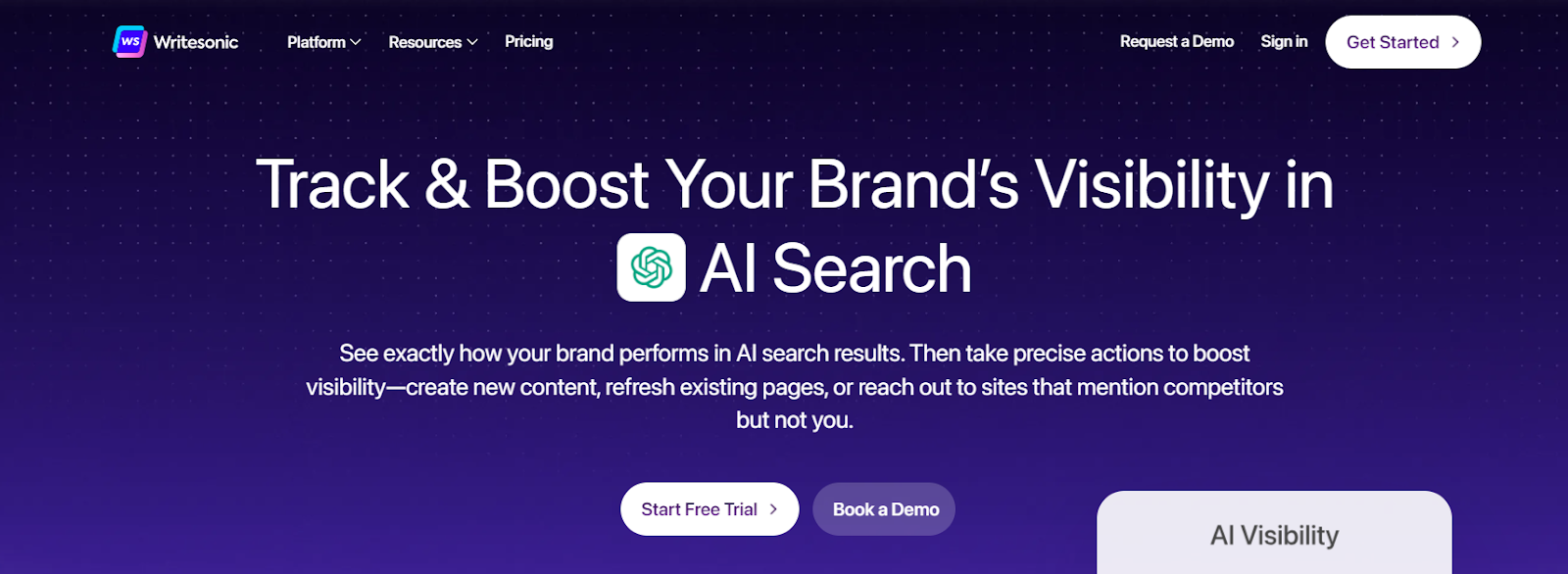
Writesonic is an AI-powered content creation tool designed to help teams write SEO-friendly content quickly and efficiently. With its ability to generate high-quality copy for blog posts, landing pages, product descriptions, and more, Writesonic is ideal for teams that need to produce content at scale while ensuring SEO alignment.
Ideal For:
Small to medium-sized businesses, content marketers, and agencies looking to produce high-volume content with strong SEO performance. Writesonic is ideal for teams that need to generate copy quickly while maintaining relevance and quality.
Top Features:
- AI content generation: Generate long-form articles, product descriptions, and SEO-friendly blog posts in minutes, helping teams scale their content production.
- SEO optimization: Tools for keyword research, keyword density optimization, and SEO content scoring, ensuring content is aligned with search engine algorithms.
- Multiple content templates: Over 50 templates for various content formats like blogs, listicles, landing pages, ads, and more.
- Content rewriting: AI-powered content rewriting tools allow you to refresh existing content, making it more SEO-friendly or tailored to different audiences.
- Collaboration tools: Allow teams to collaborate on content creation, making it easy to refine drafts and optimize content before publishing.
Pricing:
$79/month for the standard plan, with higher pricing for premium features and usage based on word count and number of users.
Use Cases:
- TOFU Content: For a blog such as “Best SEO Practices for 2026”, Writesonic generates the initial draft of a blog post with relevant keywords and optimized headings, while its SEO scoring feature ensures content aligns with search engine expectations.
- MOFU Content: For a ‘how-to’ blog, such as “How to Start an E-commerce SEO Strategy”, Writesonic uses AI-powered content writing templates to draft an engaging, step-by-step guide, optimized for SEO, with keyword relevance checked by the tool.
- BOFU Content: When creating a BOFU blog, such as “Why Choose Our SEO Services”, Writesonic creates a persuasive sales page, integrating AI-driven content rewriting to enhance messaging and ensure SEO alignment for high-intent search queries.
Customer Ratings:
- G2: 4.7/5
- Capterra: 4.8/5
- TrustRadius: 8.1/10
Limitations
While it excels at generating content, it may not be as strong in offering advanced SEO insights like keyword clustering or backlink analysis. Content still requires human editing for tone, accuracy, and alignment with brand voice.
3. Frase.io
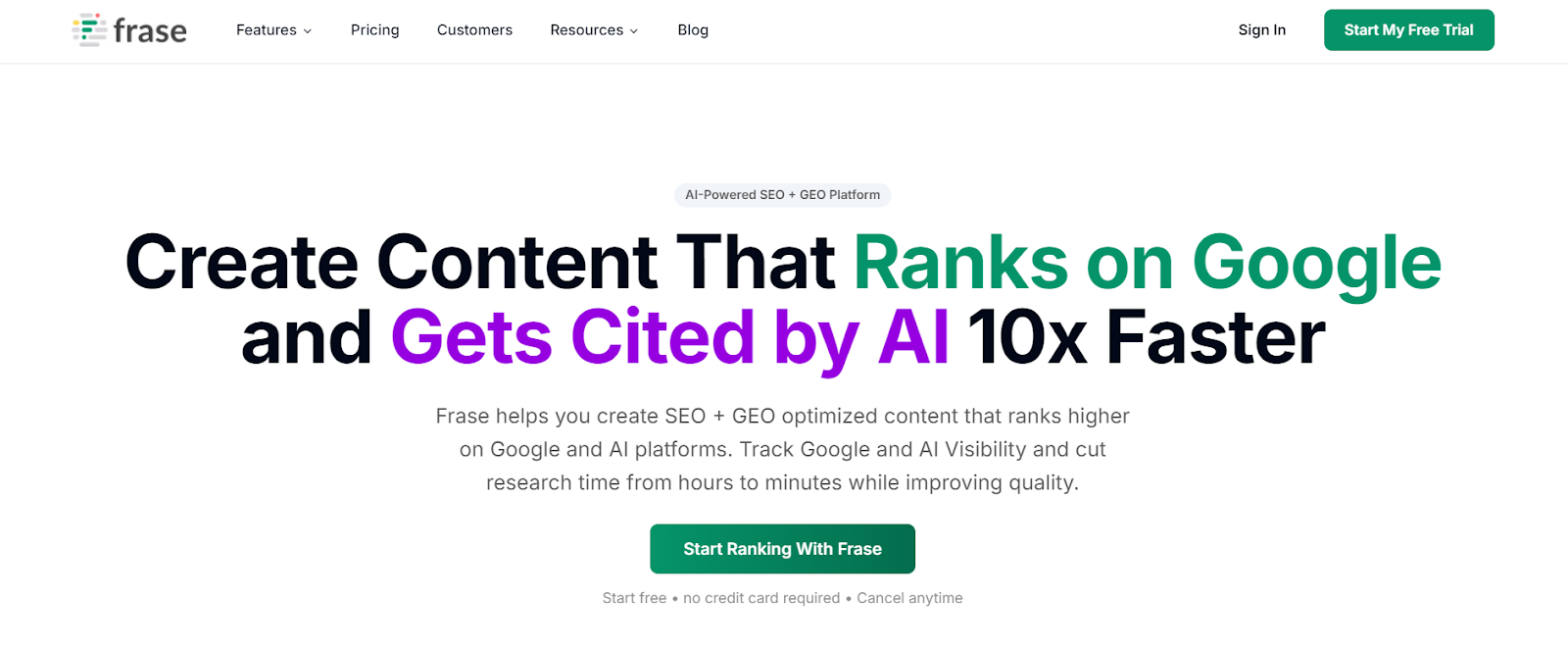
Frase.io is a content-brief and optimization platform that uses NLP and SERP analysis to generate outlines, briefs, and content scoring for writers and SEO teams.
Ideal For:
Teams that are building content briefs quickly, optimizing articles already published, and scaling content workflows without heavy investment.
Top Features:
- SERP topic analysis to extract headings, questions, and semantics
- Brief builder that automates outline generation using top-ranking pages
- AI writing assistant for drafts and sections
- Content-scoring to evaluate published pages for gaps and optimisation opportunities
Pricing:
Starting around US $98/month for professional plans based on site usage.
Use Cases:
- TOFU Content: For a “Everything You Need to Know About X” piece, use Frase’s brief builder to map out headings, FAQs, user questions, and ranked pages so your content covers the full topic.
- MOFU Content: For step-by-step frameworks, you can use Frase to generate structured outlines that guide a user through a process (e.g., “How to implement AI for SEO”), ensuring each step aligns with what ranks.
- Optimization: When refreshing outdated articles, you can use Frase’s scoring to identify missing entities, weaker headings, or outdated statistics, and then update accordingly.
For example, at Revv Growth, we used Frase while creating a blog for our client Flipspaces on “Real Estate Office Design Ideas.”
Frase helped us uncover high-value semantic terms competitors were overlooking, such as “modern office layout,” “workspace trends,” and “employee wellness design.” Incorporating these terms allowed us to strengthen topical depth, improve relevance, and align the content more closely with what searchers were actually exploring.

Customer Ratings:
- G2: 4.8/5
- Capterr: 4.8/5
- TrustRadius: 8.7/10
Limitations:
It lacks deep technical SEO auditing features, and some users highlight a learning curve in mastering its full capabilities.
4. MarketMuse
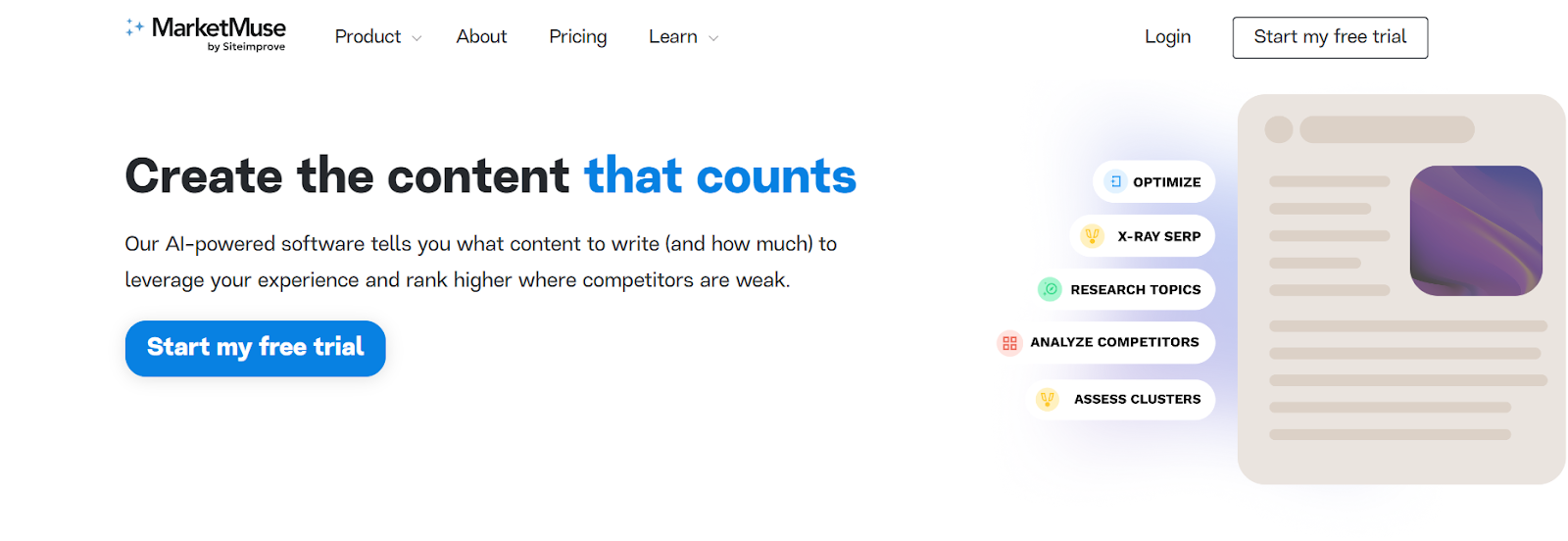
MarketMuse is an enterprise-grade topic-modelling and content-strategy platform that uses AI to map out topical authority, build clusters and recommend content that fills gaps against competitors.
Ideal For:
Enterprise teams needing deep topical authority, strategic content planning, long-form resource hubs and cluster planning across large site architectures.
Top Features:
- Topic modelling to identify relevant subtopics and entity relationships
- Authority scoring to evaluate the content’s strength in a niche
- Competitor content analysis for coverage, depth and semantic gaps
- Long-form planning tools for pillar pages and topic clusters
Pricing:
Not disclosed
Use Cases:
- TOFU Content: For pillar pages (“Complete Guide to X”), you can use MarketMuse to identify all relevant subtopics and entities so your pillar is comprehensive and ranks for multiple queries.
- MOFU Content: When you are building a content hub with interlinked long-form articles that cover all angles of a topic, MarketMuse shows where you’re weak, and competitors are strong.
- BOFU Content: If you’re producing authoritative content (e.g., “State of AI for SEO Report”), MarketMuse helps ensure your article has the depth, entity coverage and structure expected by search engines.
Customer Ratings:
- G2: 4.6/5
- Capterra: 4.6/5
- TrustRadius: 9.2/10
Limitations:
Complexity may be high for smaller teams; it doesn’t focus as strongly on technical SEO or real-time alerts.
5. RankIQ
RankIQ is a nimble, niche-focused AI SEO tool designed for blogs and smaller websites targeting low-competition keywords. It emphasises long-tail optimization and rapid content refresh workflows.
Ideal For:
Bloggers, niche websites, or small teams looking to punch above their weight in long-tail search without heavy budgets or enterprise complexity.
Top Features:
- Hand-picked keyword libraries with competition scores
- AI content briefs tailored to long-tail topics
- Optimization grading to measure how well a draft covers topic and intent
Pricing: US $49/month.
Use Cases:
- TOFU Content: For a “Top 5 X Tools” style listicles, RankIQ identifies long-tail keywords with low competition, helps structure the list format, and guides internal linking to support content clusters.
- Long-tail niche topics: For bloggers targeting narrow keywords such as “AI for SEO in small e-commerce sites”, RankIQ surfaces overlooked topics with opportunity.
- Content refresh: For upgrading older blog posts, RankIQ evaluates existing content, recommends enhancements or re-publishing for stronger performance.
Customer Ratings:
Limitations:
It lacks advanced technical audit features and might not scale well for large enterprise sites.
6. Clearscope
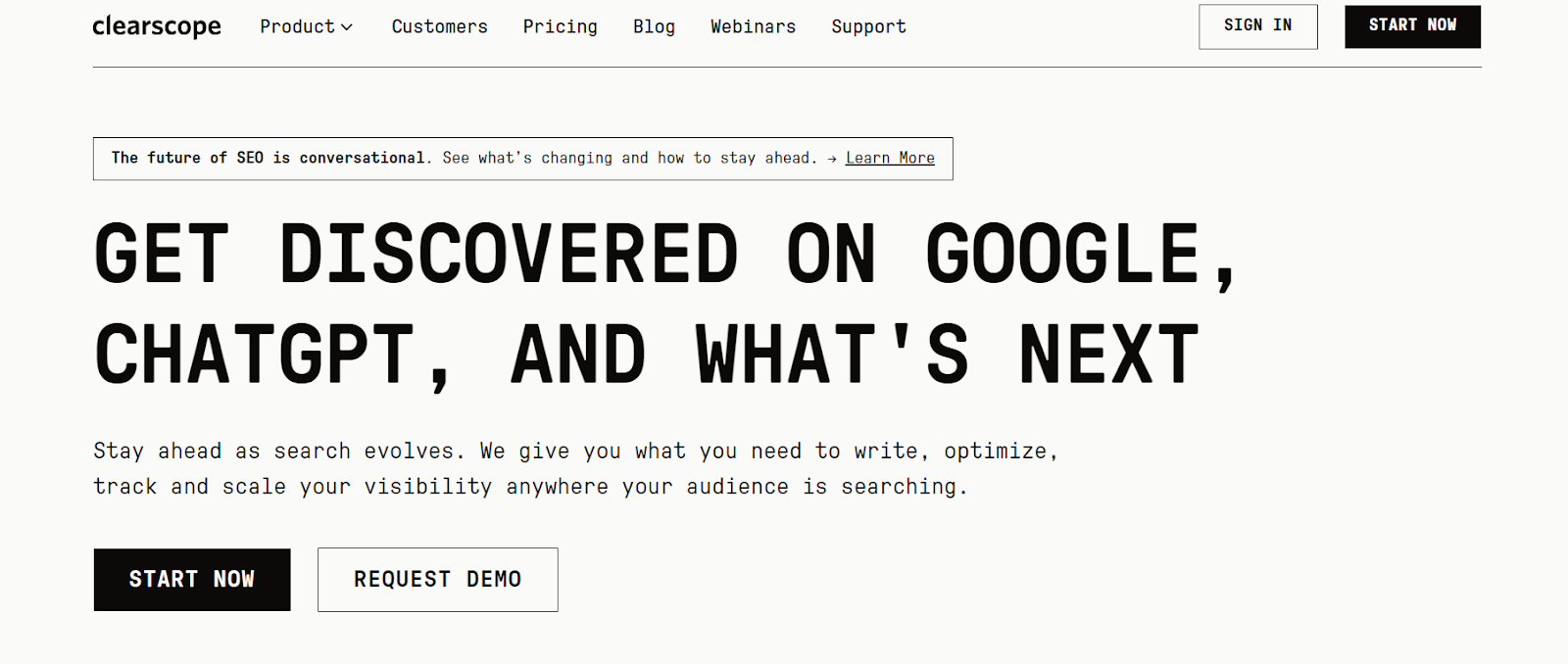
Clearscope is a premium content-optimization platform built around NLP-based scoring, keyword relevance insights, and competitor content comparison. It focuses heavily on writing quality and semantic optimization.
Ideal For:
Teams optimizing for content quality, relevance, and SERP competitiveness, especially in B2B, SaaS or high-stakes content verticals.
Top Features:
- NLP-based content scoring: measures how well a draft covers entities, synonyms and topical depth
- Keyword relevance insights: suggests semantically related terms rather than simple keyword lists
- Competitor content comparison: shows how top-ranking pages perform and highlights gaps in your own draft
Pricing:
Approximately US $129/month (varying by plan).
Use Cases:
- Improved depth & semantic coverage: For B2B SaaS keywords where coverage must be comprehensive and authoritative, Clearscope helps identify missing concepts or depth.
- Stronger competitiveness: When up against content-heavy pages, Clearscope shows how your draft stacks up and where gaps exist.
- Content refreshes: For updating older articles, use Clearscope to raise content grade and semantic score, thereby improving competitiveness.
Customer Ratings:
- G2: 4.9/5
- Capterra: 4.9/5
- TrustRadius: 8/10
Limitations:
It’s less focused on technical SEO or auditing, and the cost is high compared to simpler tools.
7. ChatGPT

ChatGPT (and similar large-language-model tools) serve as flexible AI collaborators for drafting, ideation, content refresh, and prompt-based workflows tailored by SEO teams.
Ideal For:
Teams wanting flexible AI capabilities for ideation, drafting, optimization support, developing custom workflows, or supplementing other SEO tools.
Top Features:
- Advanced natural-language generation enabling rapid drafting of outlines, FAQs, and blog sections
- SERP-aligned outline creation using human-written prompts
- Data-driven prompting that integrates keyword clusters and workflow logic
- Reusable content systems for ideation, gap analysis, and internal linking suggestions
Pricing:
Free tier + paid plans depending on usage, API access and integration.
Use Cases:
- TOFU Content: For topic ideas, FAQs, glossary expansions, use ChatGPT to brainstorm content angles or refresh outlines.
- MOFU Content: For comparison outlines or step-by-step frameworks, use structured prompts that integrate keyword clusters and SEO considerations.
- BOFU Content: When turning sales messaging into SEO landing pages, use ChatGPT to reframe existing copy for better search visibility and user focus. Also helpful for content refresh: gap analysis + rewriting using structured prompts.
Customer Ratings:
- G2: 4.7/5
- Capterra: 4.9/5
- TrustRadius: 8/10
Limitations:
Results depend heavily on prompt design, human oversight, and integration into workflow.
These are the key AI tools shaping modern SEO workflows. However, the real impact lies in how these tools are structured within a disciplined SEO process.
At Revv Growth, ChatGPT sits at the center of our full-stack AI SEO workflow. We pair structured prompting with intent-driven research, SERP and AI-overview analysis, and human editorial refinement to produce content that’s both search-aligned and conversion-ready.
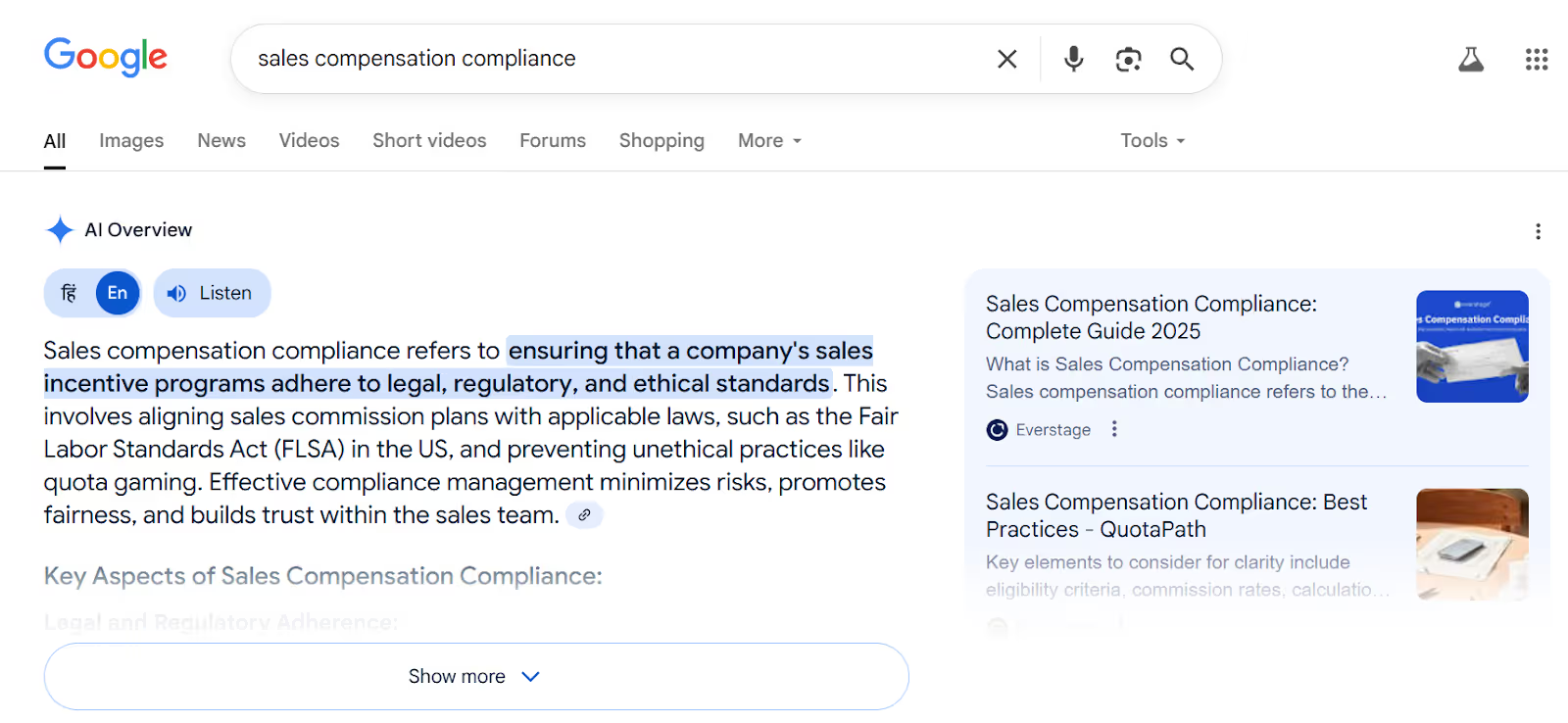
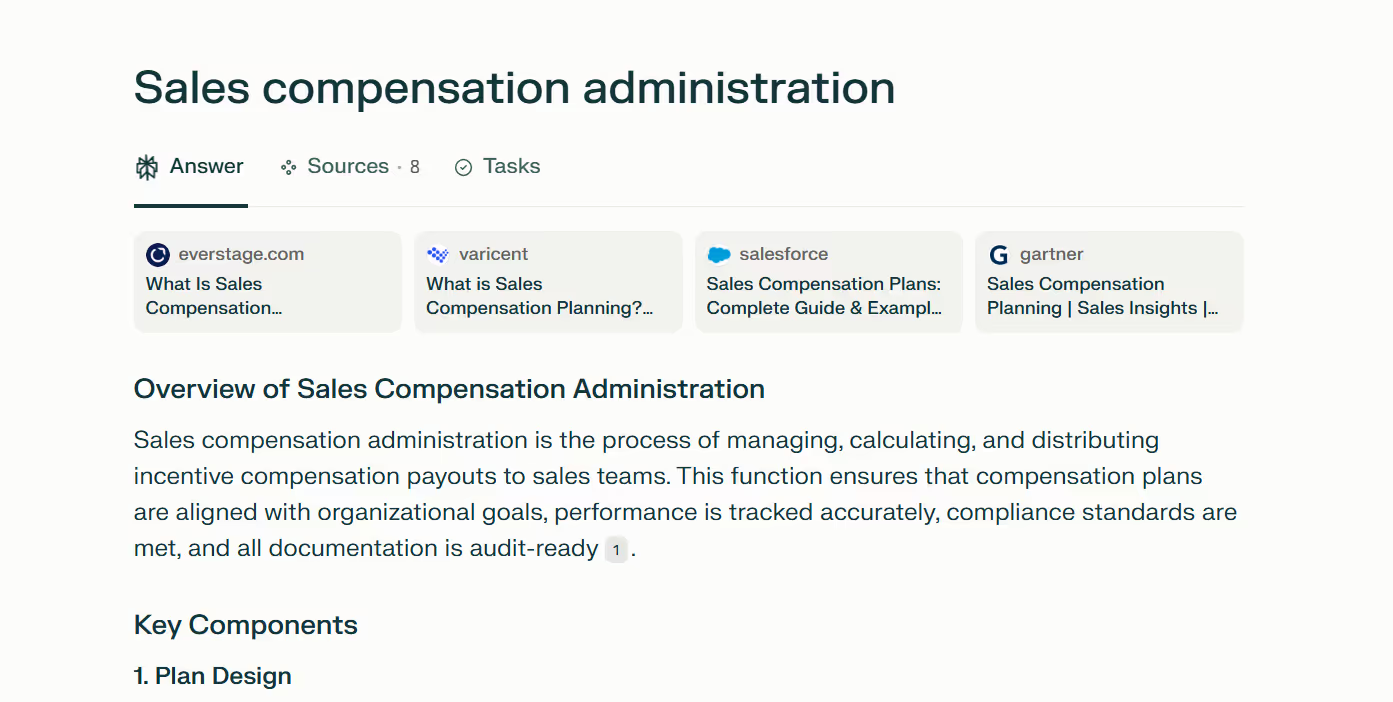
It’s the same approach we used to create more than forty long-form blogs in three months for Everstage, many of which now appear in Google AI Overviews as well as ChatGPT and Perplexity answer results.
Need help in choosing the right AI SEO tools and building workflows that deliver measurable results? Book a call with an AI SEO specialist at Revv Growth.
Now that you know which tools are worth your investment, the next step is understanding how to integrate them into a practical, repeatable SEO workflow. That’s where implementation makes all the difference.
How to Implement AI for SEO (Step-by-Step)
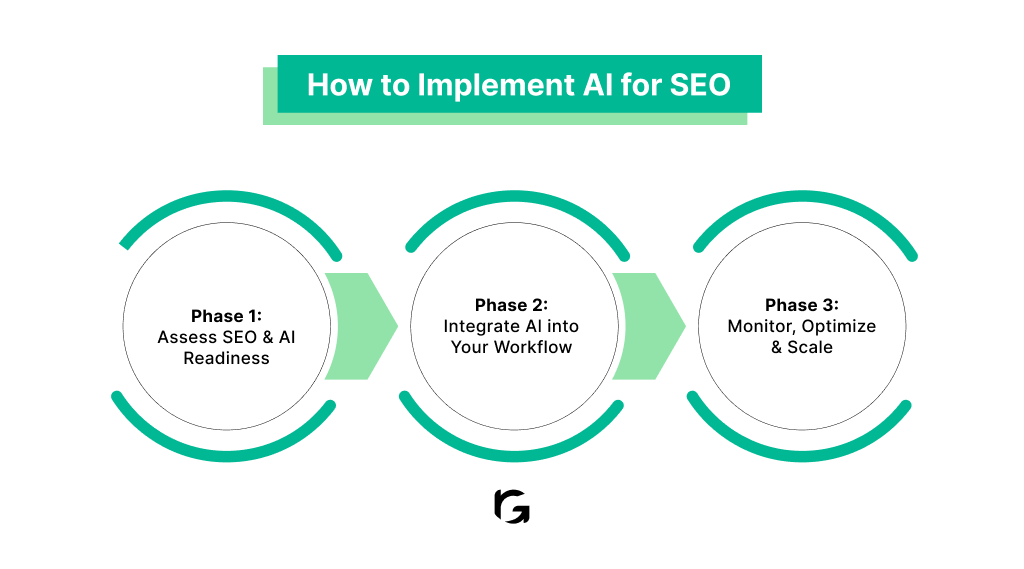
Implementing AI for SEO requires a strategic, phased approach that ensures the technology is used effectively and aligns with your existing workflows. This process involves thorough auditing, integration of AI tools, and continuous monitoring to scale efforts over time.
Here’s how you can break down AI implementation into digestible phases for maximum impact.
Phase 1: SEO Audit & AI Readiness Check
Before integrating AI into your SEO workflows, it’s crucial to evaluate your existing SEO foundation and identify where AI can add the most value. This phase ensures you're prepared to leverage AI’s capabilities and sets the groundwork for a successful AI adoption process.
- Technical Audit: Ensure your site is optimized for AI tools, checking crawlability, site speed, and mobile optimization using tools like Google Search Console.
- Content Audit: Identify content gaps and opportunities for optimization with AI-powered tools like Frase.io and MarketMuse.
- Keyword Opportunity Mapping: Use AI tools to cluster keywords by intent and predict emerging trends, helping you stay ahead of the competition.
- Build Workflow Structure: Integrate AI tools with existing platforms (like Google Analytics), ensuring a seamless workflow.
Phase 2: Adding AI to Your SEO Workflow
In this phase, you begin to integrate AI tools into your ongoing SEO efforts, enhancing processes that are already in place. This ensures that AI amplifies your existing workflows without disrupting your current practices.
- Research & Clustering: Use AI to cluster keywords and identify semantic relationships, improving targeting (Frase.io helps).
- Content Briefs: Automate content brief generation with tools like Surfer SEO to ensure comprehensive, SEO-optimized content creation.
- Human-edited AI Drafts: Let AI help generate drafts quickly, but ensure human oversight for quality, accuracy, and tone.
- Follow E-E-A-T Standards: Use Clearscope to ensure your AI-generated content is fact-checked and authoritative.
Phase 3: AI Monitoring, Iteration & Scaling
In the final phase, AI allows you to scale your efforts by monitoring performance and optimizing processes based on real-time data. AI tools provide continuous insights that help you refine your strategy.
- Track Rankings: Monitor SEO performance and AI-driven insights with tools like SEMrush and Ahrefs.
- Content Refresh: Leverage AI to automatically flag underperforming content and suggest updates.
- Expand Content Clusters: Identify gaps in your content network and grow your topic authority with AI tools like MarketMuse.
AI is transforming SEO workflows, but it’s essential to understand the limitations and potential risks associated with its use.
Before You Trust AI With Your SEO: Key Risks, Constraints & Guidelines
While AI can enhance efficiency, over-reliance or poor implementation can lead to significant SEO challenges. Let’s dive into the key risks, common pitfalls, and guidelines to ensure that AI supports your SEO efforts without affecting performance.
Google’s View on AI Content (Quality, E-E-A-T & Helpful Content)
Google’s stance on AI-generated content has evolved, and it’s essential to align your AI content strategy with Google’s guidelines to avoid penalties.
- Google permits AI-generated content, as long as it adheres to quality standards. AI can be an asset for generating SEO-friendly content when used to enhance user experience rather than manipulate rankings.
- AI content must be reviewed by humans to ensure accuracy, relevance, and tone. Google’s E-E-A-T (Expertise, Authoritativeness, Trustworthiness) standards must be met, and AI-generated content needs to be fact-checked to align with these guidelines, and it must reflect expertise and authority to rank well.
- AI-generated content should be accurate and original. Content that doesn’t align with search intent or is poorly researched risks penalties.
- Google penalizes low-value or thin content. AI content should be comprehensive, unique, and in-depth, not superficial or generic.
Common Pitfalls That Can Hurt Rankings
While AI can streamline SEO processes, there are several risks associated with improper use. Here are the most common pitfalls that can negatively impact rankings:
- AI-generated content requires human review for quality, accuracy, and engagement. Publishing raw AI content without editing can result in errors or a lack of alignment with searcher intent.
- Over-relying on AI can lead to a lack of personalization in your content strategy. Use AI to augment, not replace, human creativity and strategy.
- AI can produce content quickly, but it doesn’t always prioritize accuracy. Inaccurate or shallow content can damage your E-E-A-T and lead to penalties.
- AI might generate content filled with keywords, but overusing them can lead to penalties for keyword stuffing. Focus on semantic relevance rather than keyword density.
- AI-generated pages that don’t offer substantial value will hurt your rankings. Focus on creating comprehensive, user-centric content that addresses the full search query.
- AI tools may overlook technical SEO aspects like site speed, mobile optimization, and structured data. Ensure that AI is complemented by strong technical SEO practices.
Selecting the right AI SEO partner is essential to maximizing the effectiveness of AI in your SEO strategy. A strong partner will guide you through the complexities of AI tools and ensure your workflows are optimized.
Conclusion
AI is transforming how SEO works, offering brands the ability to scale content production, improve search rankings, and build authority at an unprecedented pace.
However, simply using AI tools is not enough.
To achieve long-term success, AI needs to be part of a well-planned strategy with careful oversight and quality control. The right approach ensures that AI-generated content is not only optimized for search engines but also authentic, relevant, and valuable for users.
At Revv Growth, we help businesses implement AI for SEO in a way that aligns with both industry best practices and Google’s guidelines. We combine AI tools with our experience in content strategy, technical SEO, and ongoing optimization to help brands grow sustainably.
If you’re ready to take your SEO to the next level by using AI strategically, not just for content, but for long-term growth, book a call with Revv Growth.
Let us help you build a plan that combines AI-powered workflows with human oversight, ensuring your SEO strategy thrives.
.svg)


.webp)
.avif)