
Quick Answer
Best practices for AI visibility SEO focus on making content easy for AI-driven search systems to understand, extract, and trust.
AI visibility SEO prioritizes clear answers, strong semantic structure, entity-focused content, and intent alignment over traditional keyword tactics. Pages that rank in AI Overviews and answer engines use concise definitions, scannable headings, accurate sources, and topical completeness. Structured content, internal links, and freshness signals help AI systems surface reliable answers across modern search results.
Introduction
If AI visibility is on your radar, it’s probably because you’ve started paying attention to where your content shows up, not just how it ranks.
Some pages get picked up, summarized, or referenced in AI-driven results, while others quietly fade into the background, even when they’re well written and well optimized.
What’s shifting is the way visibility is earned. Content that explains things cleanly, stays focused, and connects ideas naturally is easier for AI systems to work with. When a page makes sense at a glance, it stands a much better chance of being reused or surfaced, without needing aggressive optimization to force the issue.
That’s the lens this guide uses. We’re not here to talk about trends or theory. We’re looking at the practical best practices for AI visibility SEO that help LLMs understand what your content is actually saying, why it matters, and when it should be shown.
The sections ahead break down what to pay attention to and how to apply it, so that your content gets picked up, understood, and surfaced in AI search results.
Here we go!
What AI Visibility SEO Focuses On Today
AI visibility SEO focuses on how content is selected, summarized, and reused inside generative search experiences, not just where it ranks. This includes Google AI Overviews, answer engines, and conversational interfaces where users often get complete answers without clicking through.
In this model, visibility depends on how clearly content can be interpreted and trusted. AI systems favor pages that explain concepts directly, provide enough context to stand alone, and align tightly with search intent. Content that is easy to extract and reuse consistently outperforms content written only for traditional rankings.
This shift moves SEO away from broad, introductory explanations and toward precise, decision-ready information. The most effective strategies for AI visibility enhancement prioritize clarity, structure, and semantic completeness over volume or stylistic complexity.
A 2025 academic paper shows AI search systems have a measurable preference for authoritative, structured, and semantically aligned content over brand-owned content, a key insight for AI visibility optimization.
How AI Systems Choose Content to Display
AI systems do not “rank” content the way traditional search engines do. Instead, they evaluate whether a piece of content can be reliably extracted, summarized, and presented as an answer. Understanding this selection process is key to applying best practices for AI visibility SEO effectively.
How AI evaluates content relevance and clarity
AI systems favor content that explains concepts cleanly and completely within a clear context. Pages that answer a question directly, define terms early, and expand logically are easier for models to interpret and reuse.
Contextual completeness also matters. Content that anticipates related questions and addresses them within the same thematic scope signals higher reliability. This is why fragmented or overly thin pages often fail to appear in AI-generated answers, even if they rank well traditionally.
Why structure matters more than traditional SEO signals
Structure plays a decisive role in AI visibility. Clear H2–H3 hierarchies, short paragraphs, and well-scoped explanations allow AI systems to extract answers quickly and accurately. Dense blocks of text or loosely organized sections make it harder for models to identify what matters.
This shift is one reason many teams see strong SEO performance but limited AI exposure.
AI systems now play a central role in how search results are presented, affecting everything from featured snippets to generative responses. According to a Pew Research Center analysis, when AI summaries appear in search results, user clicks on traditional result links in only 8%, compared with 15% when no AI summary is shown, underscoring how much user behavior shifts toward summaries instead of page visits.
We recognized this shift early and built strategies around it. At Revv Growth, our AI SEO services focus on intent research, semantic structuring, entity alignment, and content systems designed specifically for how AI systems actually evaluate and reuse content, helping clients earn visibility not just in SERPs, but across AI Overviews and answer engines as well.
Best Practices for AI Visibility SEO
The best practices for AI visibility SEO focus on making content understandable, trustworthy, and reusable across AI-driven searches. In 2025, Semrush notes that AI generated summaries known as AI Overviews appeared for nearly a quarter of all search queries, demonstrating how widespread this format has become and why structured, extractable content is essential.
We can see these principles play out clearly in real implementations in our work with Atlan, where applying these best practices systematically helped transform already ranking content into assets that AI systems could confidently extract and surface.
1. Write Clear, Direct Answers AI Can Extract
AI systems consistently favor content that delivers answers upfront. When the core point is delayed or buried, models struggle to identify what should be extracted or summarized.
Strong AI-readable content follows a simple pattern:
- Start with a concise definition or direct answer to the question being addressed
- Expand only after the primary response is clear
- Keep the most important idea visible within the first few lines
This mirrors how AI Overviews and answer engines generate responses. They look for content that clearly states what something is or what to do before moving into supporting context.
Equally important is avoiding long, dense paragraphs. When key ideas are embedded mid-paragraph, extraction confidence drops. Short, focused explanations improve both AI reuse and human comprehension, making this one of the most effective strategies for AI visibility enhancement.
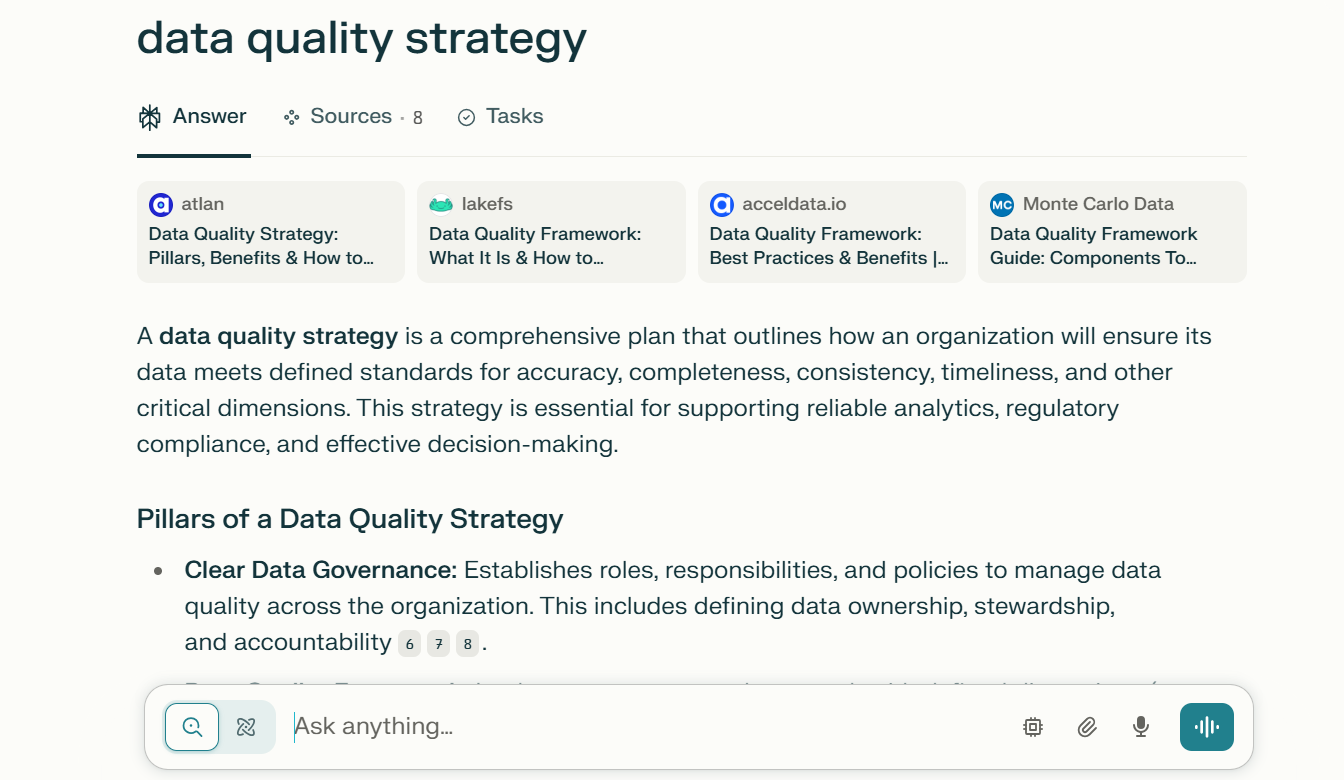
In our work with Atlan, an active metadata platform, we started by refining how individual blog posts communicated their core message. Instead of leading with long narrative introductions, each post was restructured so that:
- Definitions and key answers appear early in the text, typically within the first two paragraphs. This aligns with how AI Overviews extract responses for featured snippets and answer boxes.
- Questions being answered are reflected in the headings themselves. This makes it easier for AI systems to categorize the content semantically.
The effect? Multiple posts that were already ranking in the top 10 SERP positions began being featured in Google’s featured snippets and AI summaries because they clearly answered user queries right up front.

2. Optimize Content Structure for AI Readability
Structure is one of the strongest signals AI systems rely on to understand content hierarchy and intent. A clean structure makes it easier for models to isolate complete, reusable answers.
At a practical level, this means:
- Using a logical H2–H3 hierarchy that reflects how topics relate
- Keeping paragraphs to 2–4 sentences, each covering a single idea
- Introducing bullets or tables only when they improve clarity or comparison
For Atlan’s content, we implemented a deliberate structure that mirrors both human reading patterns and machine parsing strengths:
- H2s broke down major themes (e.g., “What data catalog means”)
- H3s focused on discrete user questions (e.g., “Benefits of a data catalog”)
- Paragraphs were kept short, anticipating both scannability and extractability.
- Bullets and tables were used when comparing concepts or listing benefits, a format that AI models frequently reuse in snippet formats.
Quick tip: A strategic way to prepare content for AI systems is to monitor how your brand or site is already being cited or mentioned across web and social channels to see where visibility gaps exist and prioritize pages that aren’t yet surfacing in AI results.
3. Build Topical Authority Around Core Themes
AI systems prefer content from sources that demonstrate depth, not surface-level relevance. Topical authority signals that your content can be trusted across multiple related questions, not just one.
Building that authority requires consistency:
- Cover core topics comprehensively rather than superficially
- Support primary pages with closely related subtopics
- Use internal linking to reinforce how ideas connect semantically
When content explores a theme from multiple angles such as definitions, best practices, edge cases, and practical guidance, it becomes easier for AI systems to reuse it confidently. This depth reduces ambiguity and increases the likelihood of being cited across different AI-generated responses.
With Atlan, we didn’t just tweak individual posts; we mapped topic clusters built around core themes like data catalog, data lineage, and metadata management. Each cluster included:
- A core pillar article with comprehensive explanations
- Supporting posts that answered related questions
- Internal links that connected related topics logically
This approach ensured that when AI systems evaluated the content to answer queries, the ecosystem looked cohesive and semantically rich. AI extracted content from multiple pages to construct both snippets and narrative summaries, driving higher visibility across multiple keyword sets.
4. Use Entity-Based Optimization Instead of Keyword Stuffing
Modern AI systems understand content through entities and relationships, not repeated keywords. Entity-based optimization focuses on using accurate terminology and conceptually related language that reflects how topics are discussed in reality.
Effective entity-led content typically includes:
- Correct domain terminology used naturally
- Related concepts and supporting terms woven into explanations
- Semantic variations without repetitive phrasing
This approach improves contextual understanding while avoiding over-optimization. By focusing on meaning rather than frequency, content becomes more adaptable across AI Overviews, chat-based answers, and long-tail prompts.
For Atlan, our content strategy emphasized:
- Precise, domain-specific terms like “data lineage,” “data dictionary,” and “data governance”
- Semantic keyword variants that naturally occur in expert conversations
- Conceptual relationships (e.g., linking data catalog benefits to data quality outcomes)
This entity-based approach helped AI systems understand not just what the content was about, but how the topics related to each other, critical for inclusion in longer AI-generated narratives and structured replies.
5. Align Content With AI Search Intent, Not Just Rankings
Ranking well does not guarantee AI visibility. AI systems prioritize whether content aligns with the intent behind the query, not just keyword relevance.
Intent alignment requires clarity on what the reader needs:
- Informational intent → clear explanations and definitions
- Decision-stage intent → actionable guidance, frameworks, or next steps
- Evaluation intent → structured comparisons and criteria
Writing for usefulness rather than word count ensures every section contributes value. AI systems consistently favor content that helps users move forward, rather than content designed only to fill space.
We aligned content for Atlan with this principle by:
- Identifying intent signals from real user queries (not just volume metrics)
- Matching content formats, like FAQ-style headings, to clear informational intent
- Including practical walkthroughs and actionable insights where relevant
This ensured that posts not only ranked in classic SERPs, but were also selected for featured snippets, AI Overviews, and answer box placements because the formatting matched the expected intent structure.
Quick tip: Prioritizing structured content themes with specific question formats (e.g., What/When/Why/How) and schema like FAQs or How‑To listings makes sections more discoverable to AI models and increases the likelihood of being selected as a concise answer block.
In short, AI visibility SEO works when clarity, structure, authority, entities, and intent come together. This is exactly how we approach AI SEO strategy at Revv Growth, both for our clients and for our own content.
Our work typically starts with deep intent and SERP analysis, including how queries surface in AI Overviews and answer engines. From there, we focus on semantic structuring, entity-led optimization, and strengthening topical authority through internal linking and content relationships.
Every piece goes through an AI-aware editorial workflow that prioritizes extractability, contextual completeness, and usefulness, ensuring content is not just ranked, but confidently reused by AI systems.
On-Page SEO Best Practices That Improve AI Visibility
On-page SEO plays a critical role in how AI systems interpret, trust, and reuse content. While traditional on-page techniques still matter, AI visibility depends far more on how clearly meaning, structure, and relationships are expressed on the page.
The following practices focus on improving clarity and semantic understanding in ways that directly influence AI-driven search results.
1. Headings, Formatting, and Context Blocks
Headings act as semantic signposts for AI systems. They help models understand what a section is about and whether it can be reused independently in an AI-generated response. For this reason, clarity consistently outperforms creativity when it comes to heading formulation.
Effective AI-readable pages follow a few structural principles:
- Clear, descriptive headings that state exactly what the section covers
- Introductory context lines placed immediately after headings to explain the purpose of the section
- Neutral, explanatory language that avoids vague or promotional phrasing
These context blocks are especially important because AI systems often extract individual paragraphs without surrounding content. A short intro line ensures that any lifted section still makes sense on its own.
Clean formatting reinforces this clarity. Short paragraphs, restrained emphasis, and consistent spacing help AI systems isolate complete thoughts while also improving human readability.
Quick tip: Framing your headings and sections around user‑centric query patterns rather than generic topic titles helps AI understand both intent and context, which ultimately leads to better snippet placement and readability in answer engines.
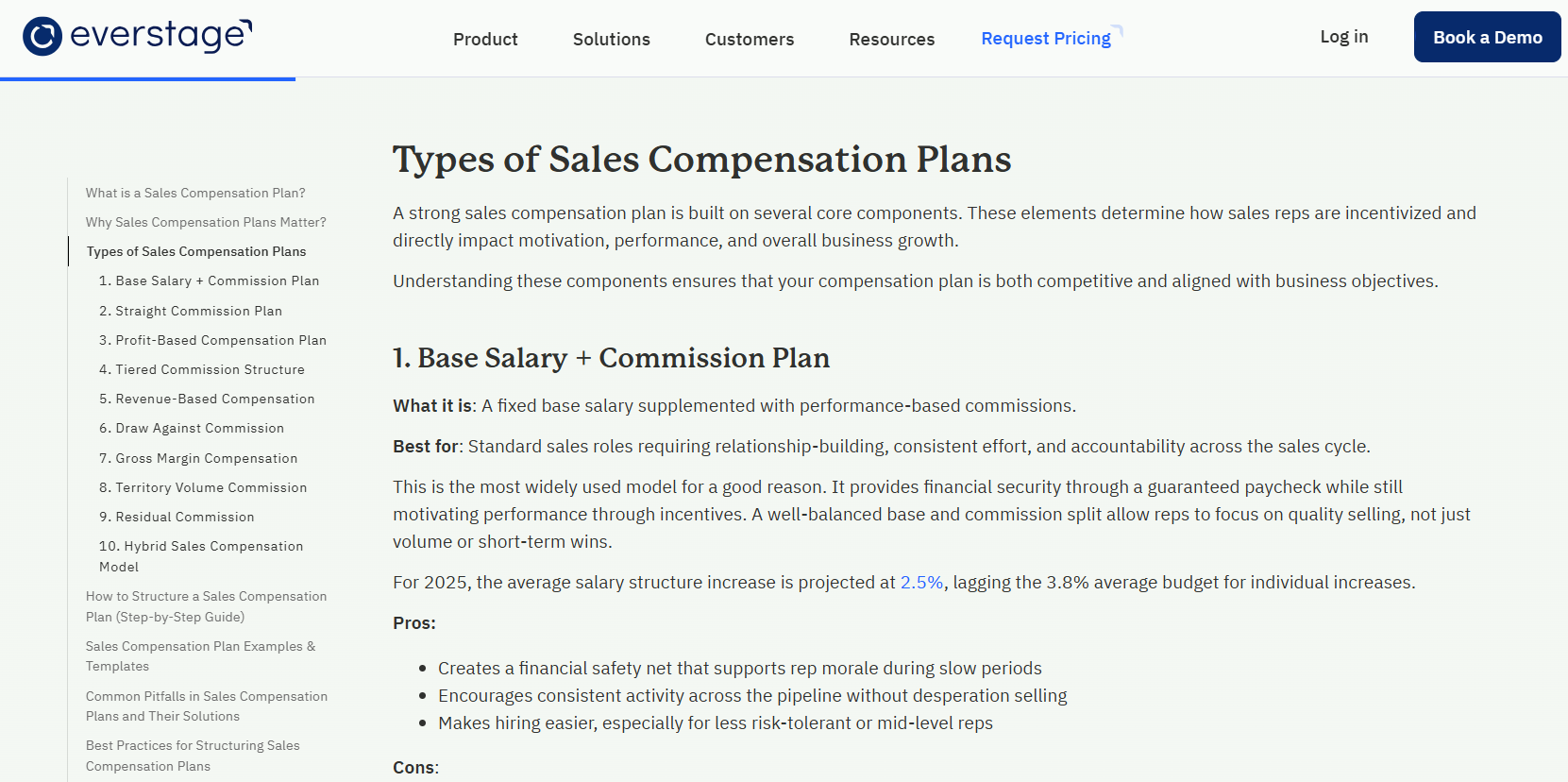
A clear example of this on-page AI visibility best practice in action is our work with Everstage, a sales compensation platform.
For Everstage, content was built from the ground up with AI extraction and reuse in mind. Each page was structured using H2s and H3s informed by SERP analysis, AI Overview patterns, and “People also search for” queries, resulting in headings framed as direct, answerable questions rather than abstract topic labels.
This ensured that every section aligned with what users were actively searching for, while also making each block self-contained and meaningful when surfaced independently in AI-generated responses.
2. Internal Linking to Reinforce Semantic Context
Internal linking supports AI visibility when it strengthens meaning, not when it exists purely for navigation or SEO signaling. Contextual links help AI systems understand how ideas relate across a site and which pages serve as primary sources within a topic.
High-quality internal linking typically focuses on:
- Linking between closely related concepts, not loosely associated pages
- Using anchor text that explains relationships, rather than generic phrases
- Reinforcing topical clusters, where supporting pages feed into core themes
When internal links are applied consistently, AI systems can infer subject depth and authority more confidently. This is why reference blogs discuss internal linking primarily in the context of clarity and topical reinforcement, not link equity or volume.
A well-structured internal linking system also helps AI identify which content is foundational and which content provides supporting context, increasing the likelihood of reuse across AI-generated answers.
Internal linking was handled with the same level of intent for Everstage. Product pages, feature explanations, and related blogs were linked contextually, only where they naturally supported the concept being explained. This helped cluster related topics, reinforce semantic relationships, and build topical authority across the sales compensation domain.
This structure made it easier for AI systems to understand not just individual pages, but Everstage’s depth and credibility across the broader subject area.


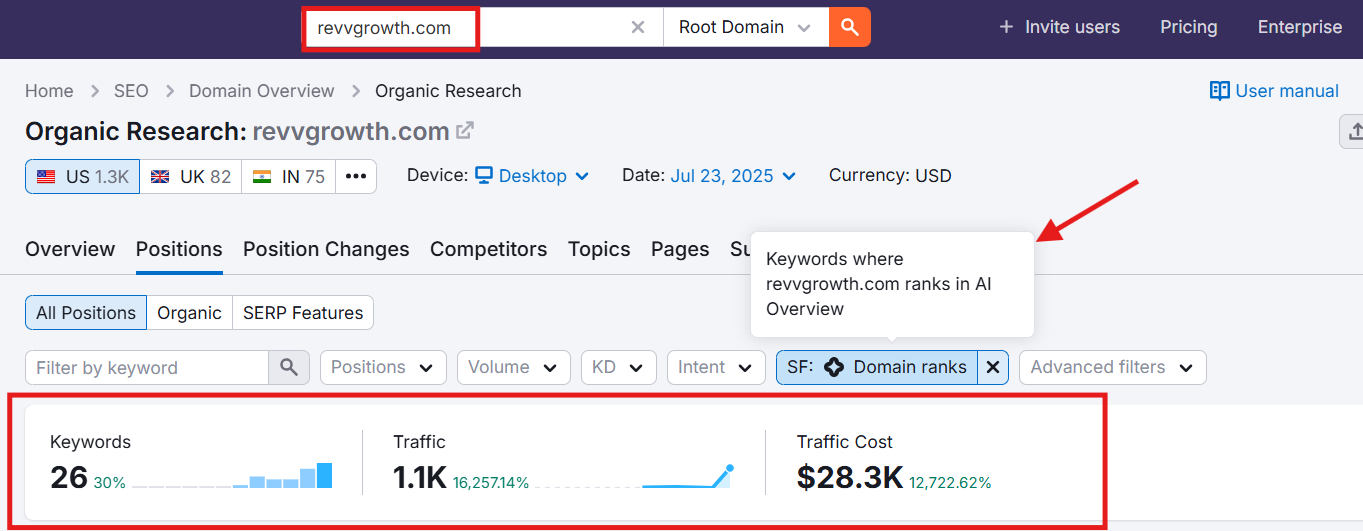
Our AI-powered content engine for Everstage has helped produce over 150 long-form assets in a short period, with most achieving visibility across AI Overviews, ChatGPT, and Perplexity results. These outcomes came from applying on-page best practices systematically, not as isolated optimizations, but as part of a cohesive AI SEO strategy.
This is the value of partnering with an AI SEO agency like Revv Growth. A structured, research-led approach helps content earn AI visibility faster and more predictably than ad-hoc efforts.
If you’re ready to build content that AI systems consistently surface and reuse, you can book a call or schedule a strategy session with us.
Common Mistakes That Reduce AI Visibility
Most AI visibility issues do not come from a lack of effort. They come from applying traditional SEO habits in a search environment that now prioritizes clarity, intent, and semantic understanding. Below are the most common mistakes that quietly limit AI-driven visibility along with simple, practical fixes for each.
- Writing for keywords instead of meaning
Content overloaded with repeated keywords often lacks conceptual clarity, making it harder for AI systems to understand what the page is actually about.
Fix: Write to explain concepts clearly and naturally, using keywords only where they add meaning.
- Poor content structure and formatting
Long paragraphs, vague headings, and inconsistent hierarchy reduce extractability, even if the content itself is strong.
Fix: Use clear H2–H3 structures, short paragraphs, and section intros that stand on their own.
- Thin or repetitive content
Pages that restate the same idea without adding depth signal low usefulness, which AI systems actively avoid reusing.
Fix: Expand coverage horizontally by answering related questions, not vertically by repeating points.
- Ignoring search intent alignment
Content that ranks but does not match whether users want explanations, comparisons, or next steps often gets skipped in AI summaries.
Fix: Match each section to a specific intent such as informational, evaluative, or decision-stage.
- Over-optimizing for traditional SERP tactics
Chasing rankings through outdated tactics like aggressive keyword placement or superficial updates can backfire in AI-driven search.
Fix: Optimize for usefulness, structure, and semantic clarity rather than legacy ranking tricks.
Avoiding these mistakes does not require reinventing your content strategy. It requires shifting focus from surface-level optimization to how content is understood, extracted, and reused by AI systems. When clarity, intent, and structure are handled well, AI visibility becomes a natural outcome rather than a separate goal.
Key Takeaways
AI visibility is earned by how clearly your content communicates meaning, not by how aggressively it is optimized. Content that is easy to understand, easy to extract, and aligned with user intent consistently performs better across AI Overviews and answer engines.
The most reliable patterns we see are:
- Clarity, structure, and intent drive AI visibility. Well-defined headings, short context-setting paragraphs, and intent-aligned sections make content easier for AI systems to reuse with confidence.
- Entity-focused content outperforms keyword-led SEO. Content built around concepts, relationships, and domain terminology is more adaptable across generative responses than content optimized for exact-match phrases.
- Topical authority increases AI trust and reuse. Comprehensive coverage supported by strong internal linking helps AI systems recognize subject depth and select your content as a reliable source.
When these elements work together, content stops competing solely for rankings and starts earning consistent visibility across AI-driven search experiences.
Conclusion
AI visibility SEO is not a new channel or a separate tactic layered on top of traditional SEO. It is the natural evolution of how content quality, structure, and intent alignment are evaluated in AI-driven search experiences.
A major 2025 McKinsey survey found that 88% of organizations now report using AI in at least one business function, up from 78% last year. This growing reliance on AI across industries emphasizes why visibility in AI-driven search must be prioritized in business SEO strategies.
This is where working with an experienced AI SEO partner like Revv Growth makes a difference. A structured, research-led approach helps you build content systems that earn AI visibility predictably, not accidentally.
If you’re ready to evaluate how your content can perform better across AI Overviews and answer engines, you can book a free call with us and let’s get your AI visibility strategy ready.

.svg)


.webp)