


Introduction
Last quarter, a client asked me a question that caught me off guard. Their organic traffic was growing. Their content ranked on Google. Their brand was visible across search. Yet when prospects asked ChatGPT for recommendations in their niche, their name never appeared.
AI-driven search is changing discovery behavior. Buyers increasingly ask ChatGPT direct questions, and adoption is growing. A 2025 Pew survey found that 34% of US adults have used ChatGPT, with 58% of adults under 30 reporting usage.
If your brand is missing there, you’re invisible at a decisive moment in the buying journey.
In this guide, I’ll show you how to rank on ChatGPT using practical strategies. You’ll learn how ChatGPT selects content, how to build authority signals it trusts, and how to optimize for ChatGPT systematically.
If you want expert support implementing this, our team at Revv Growth specializes in ChatGPT SEO and AI visibility strategy.
TL;DR
- ChatGPT does not rank pages like Google. It generates answers based on associations, credible references, and clear topic explanations.
- Topical authority matters. Structured content clusters help AI systems associate your brand with a subject.
- Citation-worthy content improves inclusion. Articles with credible sources, clear definitions, and structured explanations are easier for AI to reference.
- Technical trust signals support visibility. Crawlability, internal linking, schema, and clean architecture reinforce authority.
- Freshness and tracking matter. Updating content and monitoring AI prompts helps maintain relevance and identify gaps.
- External recognition strengthens credibility. Mentions, reviews, and community discussions reinforce brand association.
Let’s break down how ChatGPT decides what to cite.
How ChatGPT Selects and References Content?
ChatGPT does not rank pages the way Google does. It does not assign positions. Instead, it generates answers based on learned associations and, in some implementations, retrieves supporting information.
When someone asks, “What are the best AEO agencies in the US?”, ChatGPT does not scroll search results. It synthesizes a response based on:
- Entities strongly associated with the category
- Brands are repeatedly mentioned in authoritative contexts
- Content that clearly defines and explains the topic
- Signals that reduce uncertainty
In simple terms, AI systems favor stable, validated information.
Clarity matters just as much. Content that defines concepts early, explains processes logically, and covers related subtopics within the same cluster is easier to synthesize. Promotional or scattered pages provide weaker signals.
Ranking on ChatGPT is not about gaming an algorithm. It’s about becoming strongly associated with the topic itself.
Now let’s move from mechanics to execution.
Steps We Follow to Rank on ChatGPT
When we analyzed why some of our blogs appeared in ChatGPT answers and others didn’t, we realized traditional SEO alone wasn’t enough. We rebuilt our strategy around authority, structural clarity, technical integrity, and measurable iteration.
Here’s how.
Step 1: Build Topical Authority
At Revv Growth, we don’t organize content randomly. We have built structured clusters around core themes like AEO, AI SEO, SaaS marketing, and PPC. Each cluster contains foundational guides, advanced strategy pieces, tactical breakdowns, and supporting articles that reinforce the same topic from different angles.
Take our AI SEO cluster as an example. We started with foundational explainers that define what AI visibility means and how generative search differs from traditional SEO.
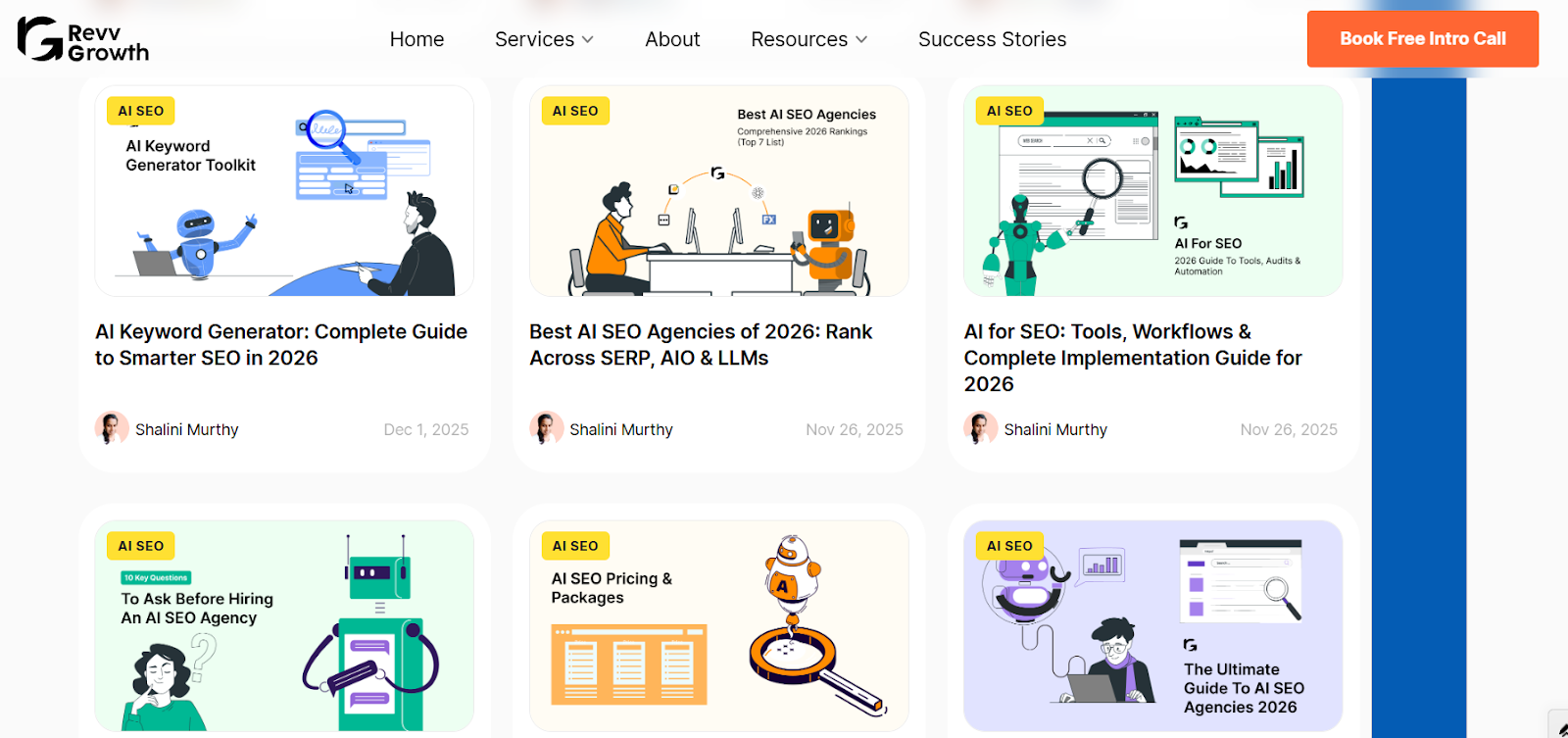
- At the top of the funnel, we publish foundational explainers. These define concepts and answer broad questions.
- In the middle, we share tactical guides and implementation frameworks.
- At the bottom, we create decision-stage content that addresses comparisons, case insights, and execution strategies.
This layered approach does two things. It educates readers comprehensively, and it reinforces topic ownership. When AI systems analyze patterns, they see consistent, structured coverage across awareness, consideration, and decision stages.
Topical authority builds association. But authority alone does not guarantee inclusion in AI answers. Your content must be structured in a way that AI systems can easily extract, interpret, and synthesize.
Let’s talk about how we make our content citation-worthy.
Step 2: Publish Citation-Worthy Content
Authority gets you into the conversation. Citation-worthy structure gets you into the answer.
When we worked on Atlan's content strategy, we noticed something important. The blogs were strong. The insights were valuable. But many articles leaned heavily on explanation without enough external validation. For traditional SEO, it can still perform. For AI visibility, it is weaker.
So we shifted the approach.
Instead of just explaining concepts like data governance and data catalog strategy, we strengthened each piece with:
- Credible third-party statistics from research firms
- References to analyst insights and industry reports
- Real implementation case examples
- Clear, structured definitions within the first 100–150 words
For example, while optimizing a data dictionary blog, we incorporated insights from authoritative sources like USGS and NASA and added contextual external links to strengthen credibility. This shifted the article from purely educational to reference-ready, improving its trust signals for AI visibility.
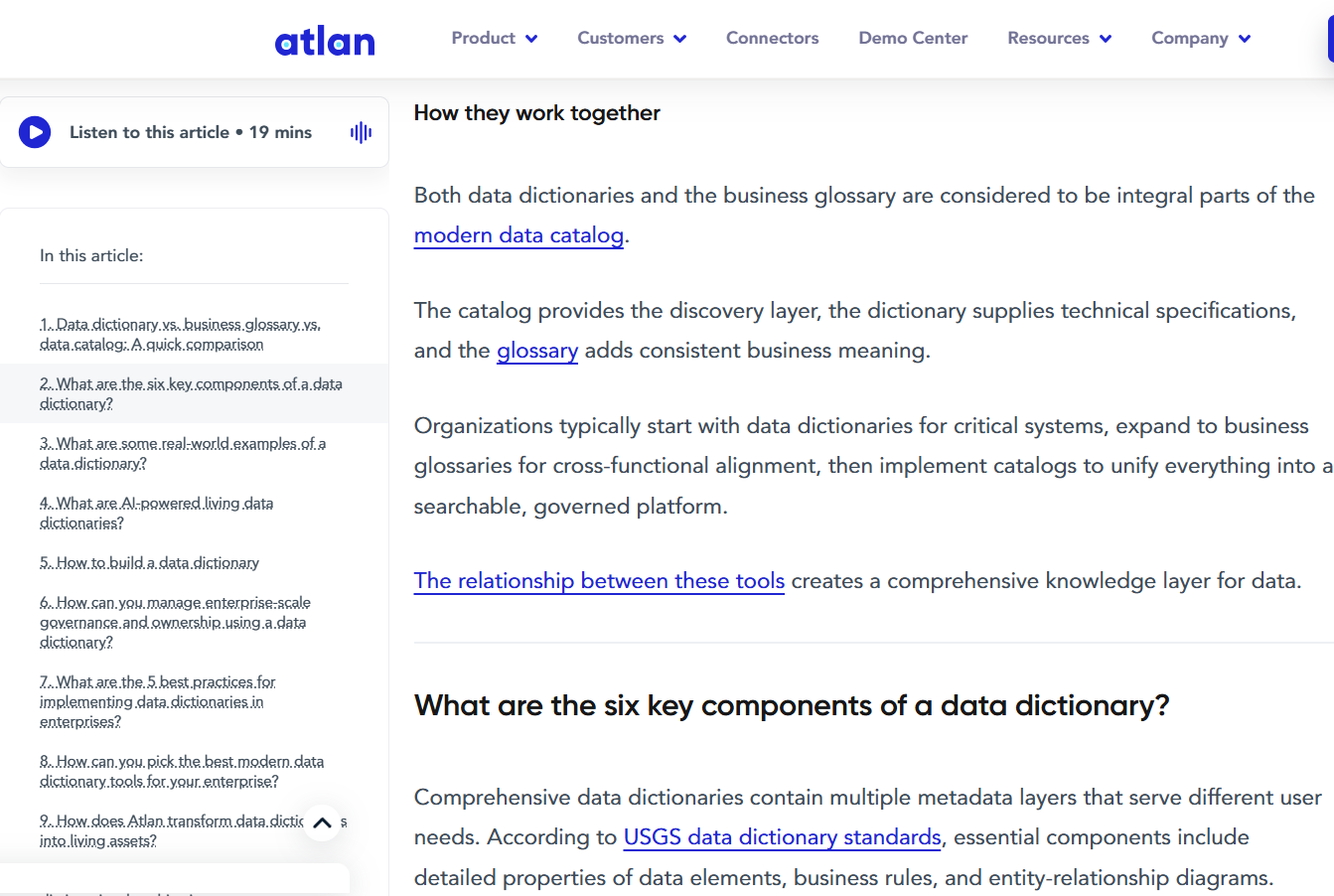
This changed the content from “educational” to “referenceable.”
We also tightened the structure. Each article answered specific sub-questions under clear H2s and H3s. Definitions were crisp. Explanations were direct. Promotional language was reduced.
AI systems favor content that reduces uncertainty. When a model encounters a claim backed by credible sources and a consistent structure, it becomes easier to synthesize and reuse in generated responses.
AI systems rely on accessible, crawlable, and well-structured pages. If indexing is inconsistent or site architecture is unclear, authority signals lose strength.
Let’s look at the technical trust signals that quietly influence AI visibility.
Step 3: Improve Technical Trust Signals
Strong content cannot compensate for weak infrastructure.
Technical trust operates at two levels: structure and infrastructure.
On the structural side, our LLM Search Optimization Techniques article is a good illustration. The content moves logically from defining the concept to outlining core techniques, to tools, case studies, pitfalls, and implementation steps. Each section builds on the previous one. That predictable hierarchy reduces ambiguity and makes interpretation easier for AI systems.
But structure alone is not enough.
At the infrastructure level, we audit crawl paths, eliminate competing pages, ensure secure HTTPS implementation, and maintain clean internal linking across clusters. Where relevant, a structured schema clarifies context and authorship. Clear author bios reinforce expertise.
When structural precision meets technical integrity, authority becomes easier to interpret and more likely to surface. With structure and technical integrity in place, visibility becomes sustainable.
The next factor is consistency over time. Here’s how we maintain content freshness to support long-term ChatGPT visibility.
Step 4: Maintain Content Freshness
AI visibility is not permanent. We’ve seen articles maintain strong search performance yet gradually disappear from AI-generated answers because the framing no longer reflected how the topic was being discussed.
Freshness is not about changing publish dates. It is about strengthening relevance. When new research emerges, we integrate it into existing sections instead of creating disconnected posts.
For example, we monitor emerging terminology shifts inside AI answers. If a new phrase begins appearing consistently across responses, we incorporate it into existing cluster pages before it becomes mainstream.
We also revisit statistics, refine examples, and remove sections that no longer add depth. The goal is continuity. Authority compounds when content evolves with the industry instead of remaining frozen in its original context.
Next, let’s look at how we measure visibility and adapt based on real performance signals.
Step 5: Track Performance and Adapt
Optimization without measurement quickly turns into guesswork. As AI search grows, teams need structured ways to monitor how their content appears in AI-generated responses.
We start by building a list of high-intent prompts aligned with our topic clusters. These prompts typically fall into three categories: definition queries, implementation queries, and comparison or vendor queries. Testing across these intent layers helps reveal where your brand appears and where competitors dominate.
Next, we monitor AI responses over time. Tools such as Peec AI, Profound, and Knowatoa help track brand mentions and visibility across AI platforms like ChatGPT and Perplexity. These tools allow teams to identify which prompts reference their content and how inclusion changes as content evolves.
For example, while testing prompts related to AI visibility strategy, we noticed our content appeared in educational queries but not in decision-stage prompts. The responses favored structured implementation guidance and comparative framing.
Instead of publishing new articles, we expanded existing cluster pages to strengthen execution-focused sections and clarify decision-stage positioning. Over time, inclusion improved across both informational and buyer-intent queries.
You now understand the mechanics, the framework, and the practical execution. The remaining question is strategic.
At what point does optimizing for ChatGPT shift from experimentation to a deliberate investment?
Actionable Steps You Can Take
Everything we’ve discussed so far reflects how we approach ChatGPT SEO internally. But you don’t need a full-scale overhaul to begin improving AI visibility. You can start with a structured, practical process.
Here’s how to optimize for ChatGPT within your own ecosystem.
1. Research Relevant Prompts
Start where your buyers start: with questions.
Instead of focusing only on keywords, identify high-intent prompts your audience would realistically ask ChatGPT. These are usually conversational, comparison-driven, or decision-focused queries. There are several ways to find these prompts.
First, analyze Google’s “People Also Ask” and “People also search for” sections. These questions reflect real user intent and often translate directly into AI-style prompts.
Second, use question research tools such as AlsoAsked, AnswerThePublic, and People Also Ask Explorer. These tools surface clusters of related questions that users frequently ask about a topic.
Third, review AI-generated answers directly in ChatGPT, Perplexity, or Gemini. Ask your target queries and observe how questions are framed. This reveals the conversational patterns users follow.
For example, instead of targeting a keyword like “AI SEO agency,” map prompts such as:
- “How do I improve visibility in AI search results?”
- “Which companies help brands rank on ChatGPT?”
- “What is the difference between traditional SEO and ChatGPT SEO?”
These prompts reveal intent layers. Once identified, structure your content to answer them directly under clear subheadings. The goal is alignment, not keyword density.
2. Review Existing AI Answers
Before creating new content, analyze how AI systems currently answer those prompts.
Look at:
- What type of brands are being referenced
- Whether answers are definition-heavy or tactical
- If comparisons are included
- How structured the explanations are
You’ll start seeing patterns. Some answers prioritize step-by-step breakdowns. Others prioritize concise definitions followed by examples. Your content should fill structural gaps, not duplicate what already exists.
3. Identify Content Gaps
Next, evaluate your current content against those AI answer patterns.
Ask:
- Are we covering all intent layers?
- Do we define the topic clearly at the beginning?
- Are we providing implementation details or just an explanation?
- Are we missing comparison or decision-stage framing?
Often, the issue is not the absence of content but insufficient depth. Expanding an existing article strategically is more powerful than publishing another surface-level blog.
4. Improve Search Visibility Foundations
Even though AI systems generate answers, they still rely on accessible and interpretable content ecosystems.
Ensure your core pages:
- Are crawlable and logically linked
- Load efficiently
- Use consistent heading hierarchy
- Clearly attribute authorship and expertise
Remove internal competition where two pages target the same primary intent. Strengthen contextual linking across clusters. Stability improves inclusion probability.
5. Use Reviews and Community Mentions
If your brand is mentioned in credible publications, industry roundups, or community discussions, those references reinforce entity association. Encourage satisfied clients to leave detailed reviews. Participate in expert panels. Contribute insights where your audience gathers.
AI systems detect patterns of recognition. Repeated third-party validation strengthens credibility.
These steps do not require complex tooling. They require discipline and clarity. Now, the final question becomes strategic rather than tactical.
When Should You Invest in a ChatGPT SEO Agency?
You don’t need to prioritize ChatGPT SEO immediately. But it becomes important when clear signals appear in your market.
Consider investing in a ChatGPT SEO agency when:
- Your buyers use AI tools for research. Prospects are asking ChatGPT, Perplexity, or Gemini questions about your category before visiting websites.
- Competitors appear in AI-generated answers. If competing brands are already cited in AI responses for core industry queries, authority signals are forming around them.
- Your industry relies on education and expertise. SaaS, consulting, data, and B2B categories often depend on definitions, frameworks, and thought leadership that AI tools reference.
- Your content ranks on Google but not in AI answers. This gap often indicates missing authority, citation signals, or structural clarity.
- You want to influence how your category is explained. Early visibility allows your brand to shape definitions, comparisons, and best practices within AI-generated responses.
- AI search is becoming part of your buyers’ decision journey. When prospects use AI tools to shortlist vendors, appearing in those answers becomes strategically valuable.
When these signals start appearing, ChatGPT SEO moves from experimentation to a deliberate growth investment.
Key Takeaways
- Topical authority matters more than individual articles. AI systems associate brands with subjects based on consistent coverage across multiple related pieces.
- Content must be citation-worthy. Articles that include credible sources, clear definitions, and structured explanations are easier for AI systems to synthesize.
- Structure improves extractability. Logical headings, defined sections, and concise explanations help AI models interpret and reuse information.
- Technical integrity strengthens trust signals. Clean site architecture, crawlability, schema, and strong internal linking support visibility.
- Content freshness maintains relevance. Updating terminology, examples, and research ensures your content reflects how the industry currently discusses a topic.
- AI visibility requires measurement. Tracking prompt inclusion reveals where authority is strong and where coverage gaps still exist.
- External recognition reinforces association. Mentions, reviews, and citations across the ecosystem strengthen credibility signals for AI systems.
If you’re unsure where your brand stands today or how to prioritize AI visibility, let’s make it simple. Book a call with us, and we’ll walk you through where you’re visible, where you’re missing, and what to fix first.
Because in AI-driven search, showing up early shapes everything that follows.
.svg)
.webp)