


TL;DR
- AEO tracking tools measure AI search visibility. They monitor brand mentions, citations, sentiment, share of voice, and competitor presence across AI platforms.
- The six leading tools serve different needs. Profound offers enterprise intelligence, Ahrefs and Semrush support SEO teams, HubSpot connects insights to marketing workflows, Otterly.ai offers affordable monitoring, and Peec AI supports agencies and multi-market tracking.
- Choose based on tracking requirements. Compare prompt limits, AI engine coverage, citation insights, geographic tracking, and pricing before selecting a platform.
- Tracking alone does not improve visibility. Use the findings to prioritize content optimization, technical improvements, and third-party authority building.
Traditional rank tracking tells you whether a page moved from position eight to position four. AI search creates a different measurement problem. You need to know whether ChatGPT recommends your brand, which page Perplexity cites, whether Gemini describes a competitor more favorably, and how those answers change across prompts and markets.
That is what AEO tracking tools are built to measure.
We compared six platforms for different workflows, from focused daily monitoring to enterprise citation intelligence. The goal is to help you choose based on the AI visibility questions your team actually needs answered.
Best AEO tracking tools at a glance
The best AEO tracking tools in 2026 are Profound, Ahrefs Brand Radar, Semrush AI Visibility Toolkit, HubSpot AEO, Otterly.ai, and Peec AI. They all monitor AI visibility, but each solves a different measurement problem.
How we evaluated these tools: We compared each platform specifically for AEO tracking and measurement across prompt monitoring, citations, mentions, sentiment, share of voice, engine coverage, geographic tracking, reporting, and integrations. Product capabilities, pricing, and platform coverage were verified using current official documentation and public product information.
These platforms focus on measurement. If you also need research, content optimization, and execution software, our GEO tools comparison covers that broader category.
6 Best AEO tracking tools in 2026
If you have not established what should be tracked yet, our AEO audit checklist can help you define the prompts, competitors, citations, and visibility gaps worth measuring before you choose a platform.
1. Profound: Best for enterprise AI visibility intelligence
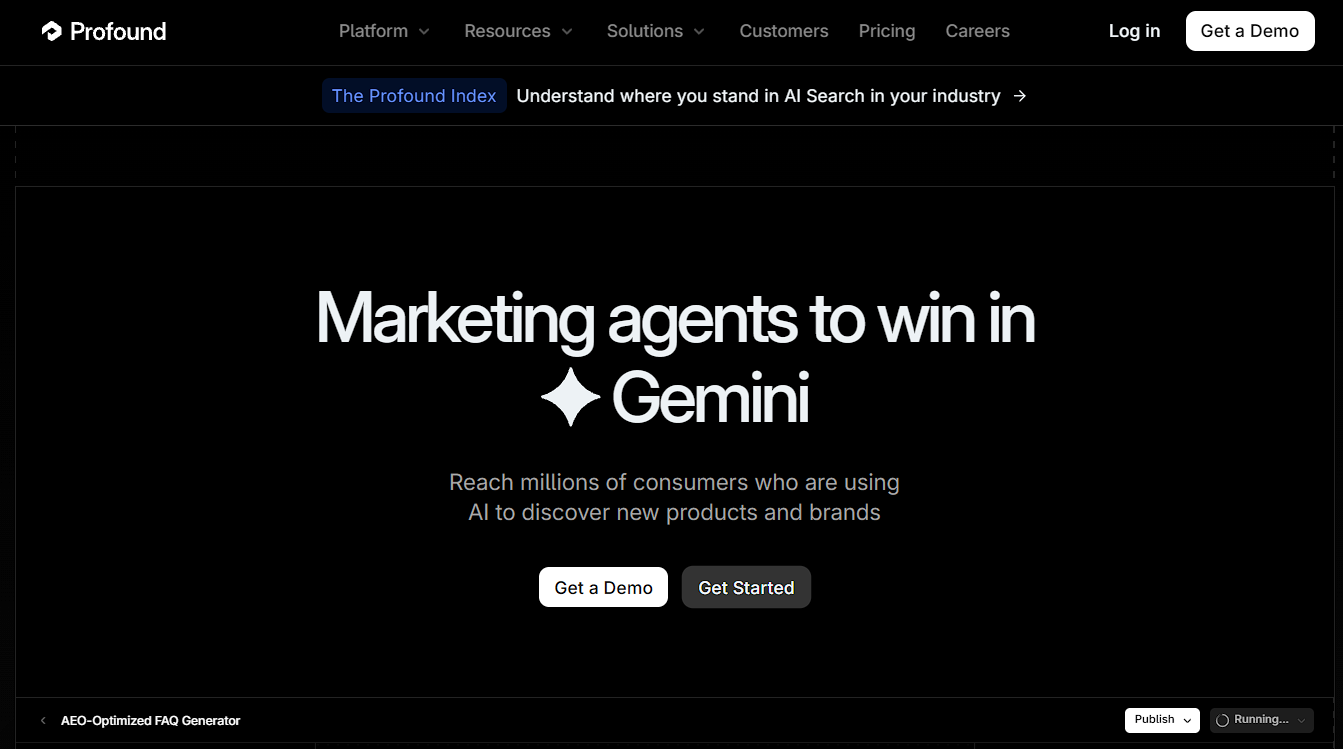
Profound is designed for teams that want to understand the mechanics behind AI visibility rather than monitor a single score. Its Answer Engine Insights product tracks brand presence, competitor mentions, citations, sentiment, and source patterns across supported AI platforms.
What does Profound track in AI search?
Profound gives teams a detailed view of where a brand appears and what influences those appearances:
- Presence across AI answers: Visibility score, share of voice, average position, and sentiment show how often the brand appears, how prominently it is positioned, and how it is described.
- Sources shaping responses: Cited domains, individual pages, and source categories reveal which websites repeatedly influence AI-generated answers.
- Performance by audience and market: Results can be compared by prompt, platform, topic, region, persona, tag, and competitor.
The source-level detail is particularly useful for separating an owned-content gap from an external authority gap.
How does Profound help improve AI visibility?
The strongest use case is finding the sources influencing AI answers. A team can:
- Identify publishers and third-party sites repeatedly cited for important prompts.
- Compare sources supporting competitors with those supporting your brand.
- Determine whether the gap requires stronger owned content or external authority.
Profound also connects visibility data with FactCheck and agent-based workflows, helping teams trace inaccurate brand information and turn findings into content or optimization priorities.
Who is Profound best for, and what are its limitations?
Profound is best suited to enterprise marketing, SEO, and brand teams that need granular citation data, competitive benchmarking, regional analysis, and reporting across multiple AI platforms.
The platform offers considerably more depth than a basic AI visibility tracker, which can also mean more setup, analysis, and budget. Smaller teams may want to consider whether the pricing and platform depth match the scale of their monitoring needs.
2. Ahrefs Brand Radar: Best for connecting search demand with AI visibility
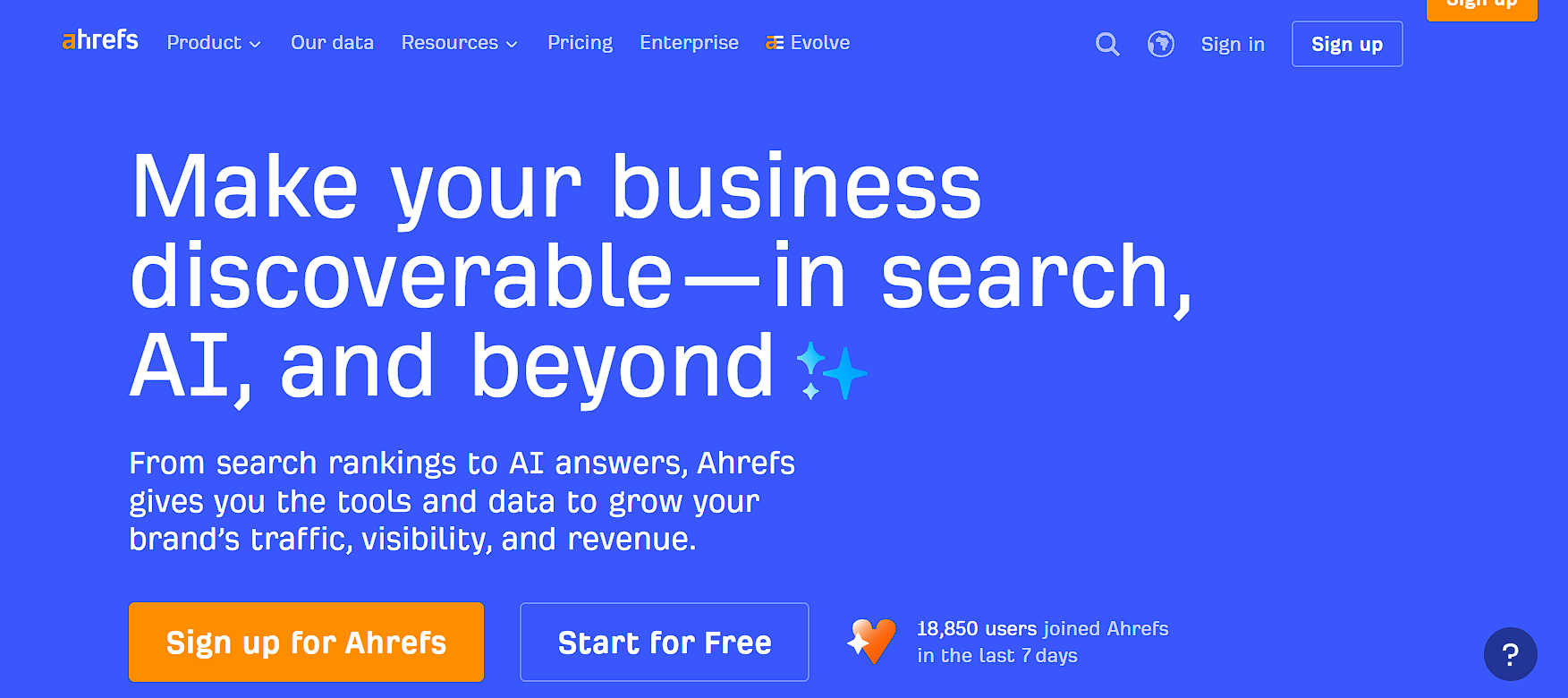
Ahrefs now has a dedicated AI visibility product through Brand Radar. Its main advantage is the connection between AI visibility and the wider search and web datasets many SEO teams already use.
What does Ahrefs Brand Radar track in AI search?
Brand Radar combines AI discovery with Ahrefs' wider search and web datasets:
- Reach and exposure: Brand mentions, estimated impressions, and AI share of voice indicate how much visibility a brand is receiving compared with competitors.
- Pages earning attention: Cited domains and URLs show which owned and third-party pages appear within AI responses.
- Discovery and ongoing monitoring: The AI Visibility Index surfaces existing prompt opportunities, while Custom Prompts follows selected buyer questions over time.
Teams can also inspect the underlying AI responses and connect these findings with Ahrefs' wider search, web, Reddit, YouTube, and AI traffic datasets.
How does Ahrefs Brand Radar help improve AI visibility?
Brand Radar is particularly useful for prompt discovery. Instead of relying only on questions your team has already thought of, you can search the visibility index to uncover categories and prompts where competitors already appear.
From there, teams can:
- Find commercially relevant prompts and related content gaps.
- Review the pages and sources associated with competitor visibility.
- Move priority questions into Custom Prompts for ongoing monitoring.
Ahrefs can also connect cited pages with AI bot visits and referral traffic, helping teams see whether AI visibility is generating downstream visits.
Who is Ahrefs Brand Radar best for, and what are its limitations?
Brand Radar is a strong fit for SEO and content teams already using Ahrefs, especially when they want to connect AI visibility with keyword research, content performance, web visibility, and search demand.
Its indexed data is better suited to opportunity discovery than to being a complete record of everything people ask AI assistants. Questions around coverage within specific niches also make it worth checking how well the database represents your market. Ahrefs has expanded the index substantially, but custom prompt tracking remains important for highly specific buyer questions.
3. Semrush AI Visibility Toolkit: Best For Competitor Prompt Gaps
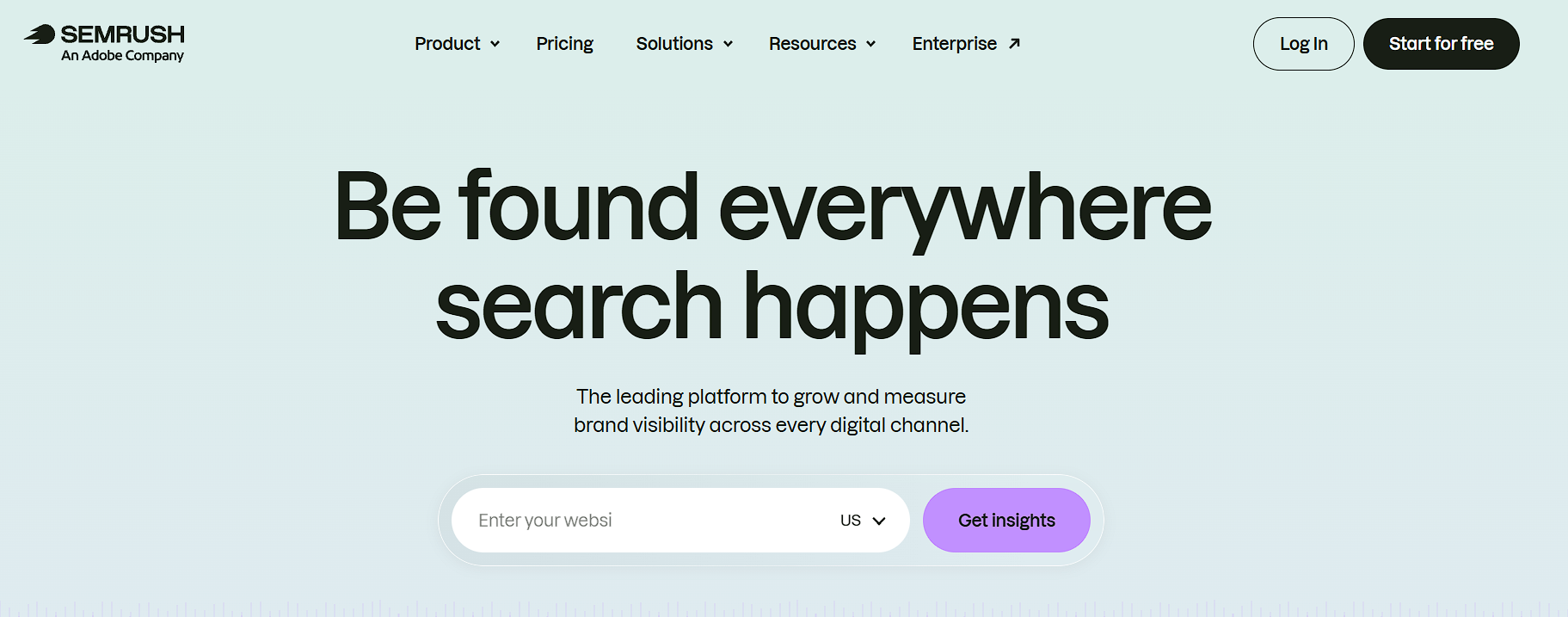
Semrush now offers a dedicated AI Visibility Toolkit covering competitor research, prompt discovery, citations, sentiment, and ongoing custom prompt monitoring.
What does Semrush AI Visibility Toolkit track in AI search?
Semrush is especially useful for understanding where a brand is gaining or losing ground against competitors:
- Visibility over time: AI Visibility, mentions, sentiment, geographic distribution, and historical trends show how brand presence changes.
- Where competitors are ahead: Topic, prompt, and competitor data reveal questions where other brands appear, and yours does not.
- Which sources support those results: Cited pages and domains show the websites contributing to competitor and brand exposure.
Together, these views help teams understand whether a gap comes from missing content, weaker third-party presence, or both.
How does Semrush help improve AI visibility?
The most useful workflow is separating two different problems:
- Prompt gaps: Competitors appear for relevant buyer questions while your brand does not.
- Source gaps: External websites supporting competing brands are missing from your citation footprint.
Teams can use those findings to prioritize new or updated content, identify third-party visibility opportunities, investigate technical issues affecting AI crawler access, and move important prompts into ongoing tracking.
Because the toolkit sits within Semrush, these findings can also feed into existing SEO, competitive research, and content workflows.
Who is Semrush AI Visibility Toolkit best for, and what are its limitations?
The toolkit is a natural fit for teams already using Semrush that want AI competitor research alongside their existing SEO data instead of adding another standalone analytics platform.
Its visibility metrics are most useful for tracking direction and competitive movement over time. They should not be treated as an exact measure of everything happening across AI platforms. This distinction becomes especially important when interpreting visibility scores or trying to connect a small change to one specific optimization.
4. HubSpot AEO: Best For Turning Visibility Findings Into Marketing Actions
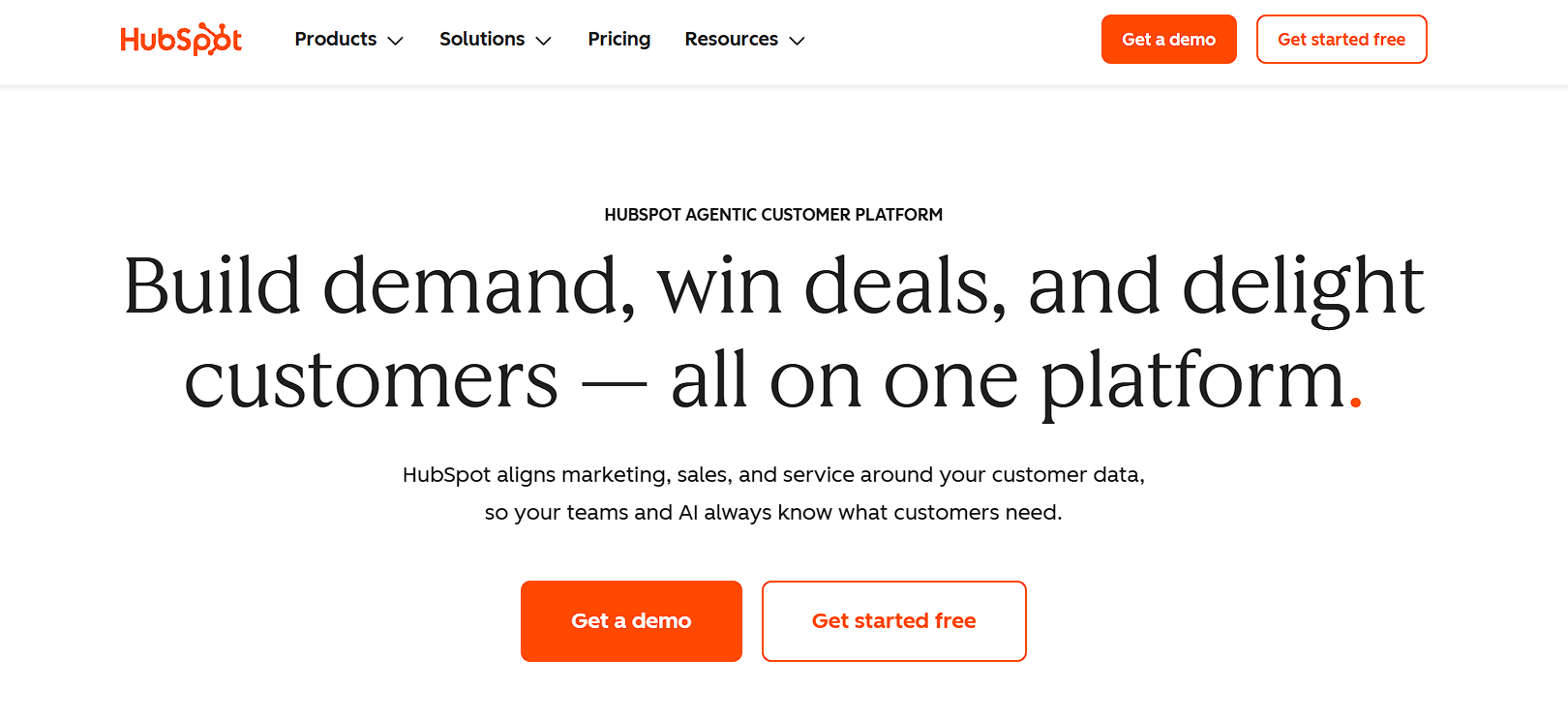
HubSpot approaches AEO as part of a wider marketing workflow. It combines prompt monitoring with citations, sentiment, competitive visibility, and recommendations rather than leaving teams with a dashboard to interpret on their own.
What does HubSpot AEO track in AI search?
HubSpot focuses on connecting AI visibility with the marketing context around it:
- How the brand appears: Visibility score, individual prompt performance, and sentiment show whether the brand is present and how it is represented.
- How competitors compare: Share of voice and competitor comparisons highlight areas where other brands receive stronger exposure.
- What sits behind the answer: Domains, pages, content types, buyer journey stages, and product relevance add context to the sources appearing for each prompt.
Teams can also inspect the actual AI response behind an individual tracked prompt.
How does HubSpot AEO help improve AI visibility?
HubSpot's differentiator is what happens after a gap is identified.
The platform can turn visibility and citation findings into actions such as:
- Updating or creating content around uncovered questions.
- Strengthening third-party visibility around priority topics.
- Addressing gaps connected with important prompts and campaigns.
For teams using Marketing Hub, those findings remain closer to the content, CRM, and campaign workflows they already use.
Who is HubSpot AEO best for, and what are its limitations?
HubSpot AEO is best suited to HubSpot-centered marketing teams that want a shorter path from visibility data to content and campaign execution.
Its core tracking currently focuses on ChatGPT, Gemini, and Perplexity, so teams that need a wider range of models may require a more specialized platform.
Prompt selection also needs human review. A 30-day test of HubSpot AEO found that some automatically suggested prompts were too leading and worked better after being rewritten in neutral language. This makes prompt quality an important part of the initial setup.
5. Otterly.Ai: Best For Affordable Daily AEO Monitoring
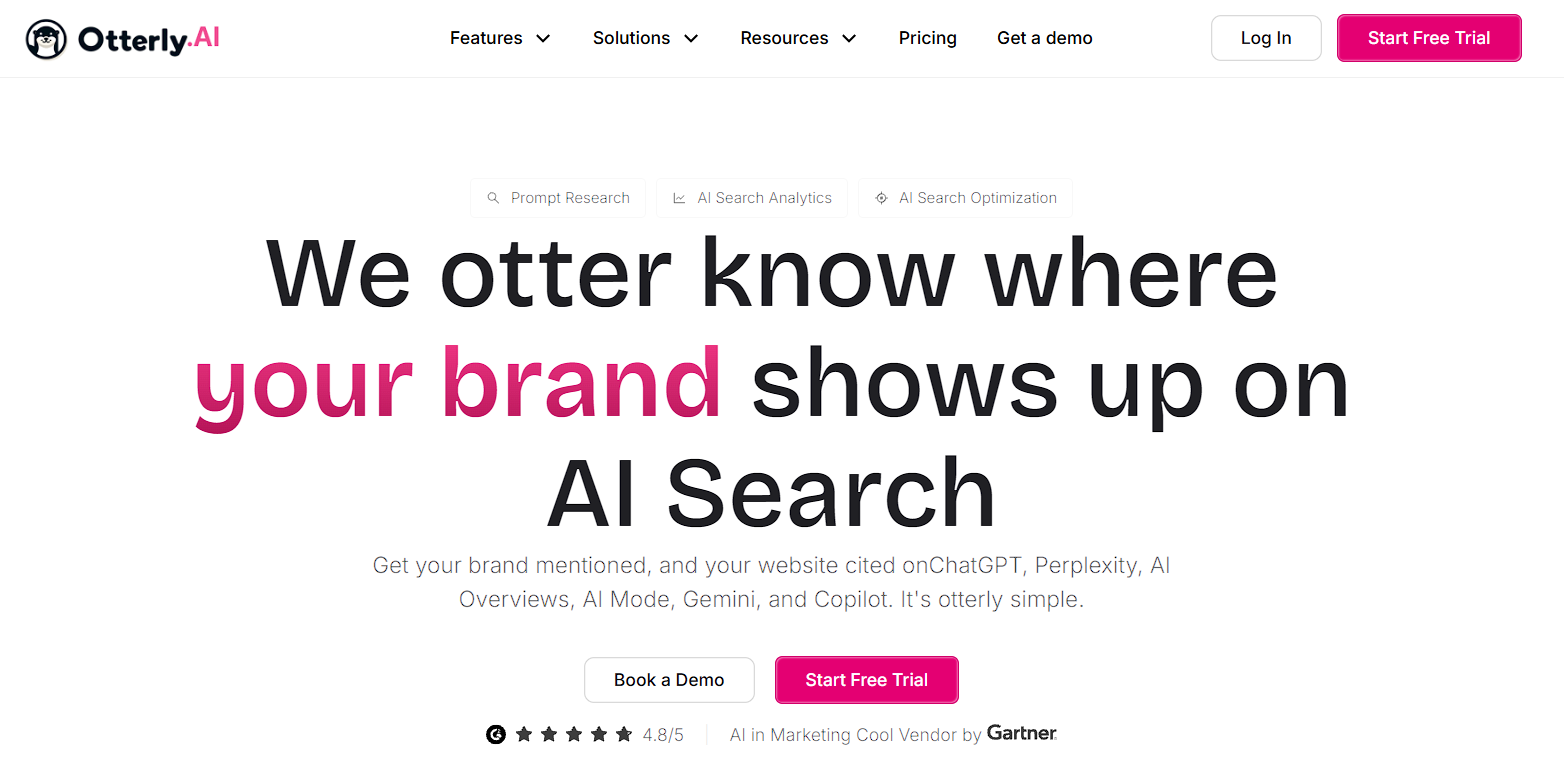
Otterly.AI gives smaller teams a focused way to monitor AI visibility without starting with an enterprise analytics platform.
Its value comes from simplifying repeated monitoring rather than trying to provide every possible intelligence layer.
What does Otterly.AI track in AI search?
Otterly keeps its reporting focused on the signals teams are most likely to review regularly:
- Day-to-day visibility: Brand coverage, mentions, share of voice, and average position show whether presence is improving or declining.
- Competitive standing: Sentiment and competitor visibility show how the brand is positioned alongside alternatives.
- Prompt and source detail: Individual prompt results, cited domains, and source URLs reveal which questions and pages are driving those changes.
Teams can also open individual AI responses to see exactly how the brand and cited sources appear.
How does Otterly.AI help improve AI visibility?
Otterly helps teams move from a visibility change to the prompts and sources behind it.
The platform can help teams:
- Find prompts where competitors appear, and their brand does not.
- Identify domains and URLs repeatedly used by AI engines.
- Prioritize content gaps and third-party visibility opportunities.
Its prompt research feature can also build monitoring sets from keywords, URLs, brand information, and industry context.
Who is Otterly.AI best for, and what are its limitations?
Otterly is a practical option for solo marketers, small SEO teams, and companies building their first repeatable AI visibility monitoring process.
Its dataset depends heavily on the prompts added to the platform. Otterly does not surface brand mentions for questions outside the tracked set, historical data starts after a prompt is added, and monitoring the same prompt across several countries uses additional allocations.
Its focused approach makes it particularly useful for AI visibility monitoring, while teams needing a broader SEO stack may still pair it with other SEO and AI tracking platforms.
6. Peec AI: Best For Agencies And Multi-Market Tracking
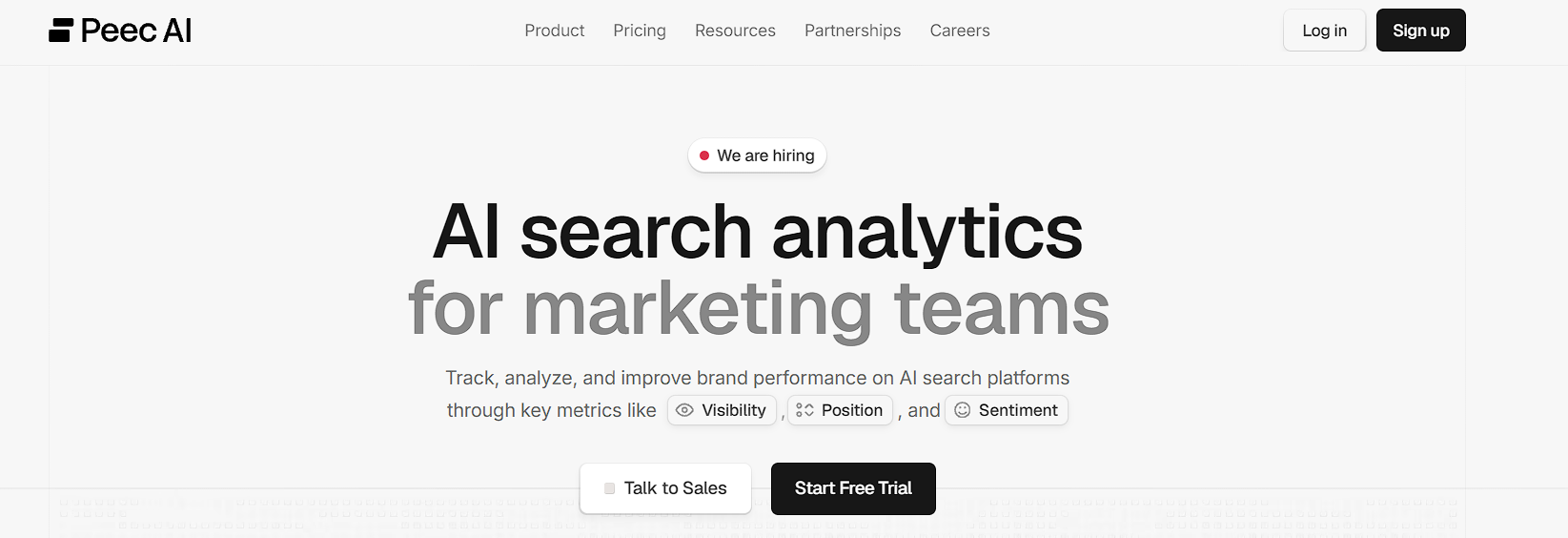
Peec AI keeps visibility, position, sentiment, and share of voice separate instead of compressing every signal into one score. That makes it particularly useful when results need to be compared across several models, projects, or markets.
What does Peec AI track in AI search?
Peec is structured around comparing results across brands, models, and markets:
- Visibility and positioning: Visibility, average position, share of voice, and sentiment show how strongly the brand appears within AI answers.
- Competitors and supporting sources: Competitor results plus cited domains and URLs reveal who is gaining exposure and which websites are influencing it.
- Differences across markets and models: Results can be broken down by AI model, country, topic, persona, prompt tag, or funnel stage.
These breakdowns make it easier to see whether an overall change is coming from one model, market, or group of prompts.
How does Peec AI help improve AI visibility?
Peec helps teams identify whether an opportunity sits in owned content or external sources.
Teams can:
- Find prompts where competitors outperform the brand.
- Identify the sites and URLs influencing those responses.
- Isolate content, citation, and market-specific gaps.
The same analysis can be segmented by model, country, persona, topic, or funnel stage, which is particularly useful when different clients or markets require separate strategies.
Who is Peec AI best for, and what are its limitations?
Peec is well suited to agencies, global brands, and marketing teams managing several projects, markets, or AI models. Agency plans support multi-client workflows, while higher tiers add broader project, reporting, and integration capabilities.
The main consideration is how quickly usage expands. The number of prompts, models, and markets being monitored affects the required plan capacity, so a setup that starts small can become more resource-intensive as coverage grows. This is worth considering when comparing Peec with other AI visibility platforms, particularly for agencies or international teams tracking several environments at once.
AEO tracking tools pricing comparison
Entry pricing needs context. A plan monitoring 25 prompts on three AI engines is a very different purchase from a program tracking hundreds of prompts across several models and locations.
Before choosing a plan, calculate the actual number of prompts, models, competitors, and countries you want to monitor rather than comparing headline prices alone.
Which AEO Tracking Tool Is Best For You?
Once the tracker starts producing data, our AEO strategy framework explains how those findings can move into content, technical, entity, and authority priorities.
Choose the platform based on the measurement problem you actually have:
- If you have under 25–50 prompts: Otterly or HubSpot can be enough.
- If you already pay for an SEO suite: compare Ahrefs and Semrush before adding another standalone subscription.
- If citation sources matter more than simple mentions: Profound deserves stronger consideration.
- If you manage clients or multiple markets: Peec becomes more attractive.
- If you need strategy and execution as well as measurement: the tool alone will not solve the problem.
Three criteria consistently come up when teams compare AI visibility tools: how much citation and source detail the platform shows, whether it tracks multiple AI models side by side, and whether visibility is measured relative to competitors or only in isolation. A growing number of teams are using that framework to shortlist tools before comparing price.
Keep one limitation in mind with every platform: these tools repeatedly sample defined prompts. They can show that visibility, sentiment, citations, or competitor presence changed, but they cannot prove exactly why an AI model changed its response.
If your team needs help acting on what the tracker finds, RevvGrowth's AEO services connect measurement with the content, technical, entity, and citation work needed to improve AI visibility.
.svg)


.webp)
.avif)