Introduction
When AI search engines generate an answer, different sources can serve different purposes. One website might provide supporting data, another a practical explanation, and a third a recommendation that influences a buying decision. Where does your content fit into that answer?
Building citation-optimized content begins with understanding the role your information can play in AI-generated responses. It involves anticipating follow-up questions, addressing overlooked concerns, and publishing evidence that readers can independently verify.
Achieving this requires a structured approach that extends from initial research to content creation and editorial validation.
We'll walk you through a seven-step framework for creating citation-worthy content, highlight common mistakes that weaken citation potential, and explain how to measure your optimization efforts across AI search platforms.
How to build citation-optimized content: A Revv Growth framework
A 2026 study by Mahe Chen and Nick Koudas analyzed 158,099 AI-generated answers containing 468,037 citations. Researchers found that pages closely aligned with user questions earned more citations. Our seven-step framework builds on this principle, covering everything from buyer prompt research to pre-publication validation.
1. Identify buyer prompts and citation opportunities
Keyword research reveals what people search for, while buyer prompts provide deeper insights into their requirements and decision-making criteria. Understanding these nuances helps you create content that addresses specific questions across the buying journey.
As part of our content research process, we gather buyer questions from:
- Sales conversations, product demonstrations, and customer objections.
- Google Search Console queries and long-tail search terms.
- Customer reviews, support tickets, and community discussions.
- Follow-up questions generated across AI search platforms.
- Competitor comparisons and product evaluation queries.
When developing content for Revv Growth, we expand target keywords into buyer prompts to capture specific needs at different buying stages. For instance, when targeting AEO-related keywords, we identify questions marketing leaders might ask while exploring, evaluating, or selecting an agency.
Mapping related prompts to existing or planned pages helps us cover different buyer needs without creating competing pieces of content. You can apply the same approach to your content library before deciding which pages to optimize or create.
Also read: How to Choose Prompts to Track for AEO (+ Free Template)
2. Analyze the sources AI engines already cite
Once you have identified priority prompts, examine the sources currently referenced in AI-generated answers. Reviewing these sources helps establish what information is already available and where your content can contribute additional value.
Through our answer engine optimization services, we conduct competitive citation analysis to uncover opportunities across commercially relevant buyer queries.
You can follow a similar process:
- Run priority prompts across ChatGPT, Perplexity, Gemini, and Google AI Overviews.
- Record cited URLs, content types, and the information supporting each answer.
- Examine the depth, relevance, and credibility of the cited content.
- Identify unanswered questions, outdated information, or missing decision-making criteria.
- Prioritize gaps that align with your brand's expertise and offerings.
The following hypothetical example illustrates how citation analysis can inform content optimization decisions for a CRM provider.
Repeat your analysis across multiple sessions and platforms before finalizing content priorities. Recurring citation patterns provide a stronger foundation for optimization than an individual AI-generated response.
3. Address information gaps with original insights
Identifying information gaps is only valuable if your content contributes something meaningful to existing answers. Repackaging information from competing pages makes it difficult to establish a distinctive reason for AI engines to reference your website.
In its May 2026 generative AI search guidelines, Google emphasizes unique perspectives, first-hand experience, and information that extends beyond common knowledge.
We recommend developing original insights through the following sources:
- Subject matter expert interviews: Capture technical knowledge, implementation challenges, and experience-backed recommendations.
- First-party research: Publish findings from customer surveys, product usage patterns, and internal experiments.
- Customer experiences: Document specific business challenges, implementation approaches, and measurable outcomes.
- Proprietary frameworks: Develop decision-making models, evaluation criteria, and methodologies based on your expertise.
For example, instead of publishing generic recommendations for reducing customer churn, analyze anonymized customer data to identify behaviors preceding cancellations. Explain how you identified those patterns and how businesses can use the findings to improve retention.
Our expert advice: Before approving a content outline, identify at least one insight your brand is uniquely positioned to provide. Involve your product, sales, or customer success teams when existing research cannot deliver that perspective.
4. Structure content around direct, self-contained answers
Original insights need to be presented in a format that readers can easily understand and AI systems can retrieve. Burying important findings beneath lengthy explanations makes relevant information harder to identify.
We follow an answer-first approach by placing the primary response immediately below a relevant heading. Supporting explanations, evidence, and examples follow the initial answer to provide additional context.
Choose content formats based on the information your audience needs.
Consider how answer-first writing can transform a generic explanation into a more useful and contextually complete response.
Before optimization:
Effective customer onboarding involves several activities that help businesses improve product adoption and customer satisfaction.
After optimization:
Customer onboarding improves product adoption by helping users complete initial setup, understand essential features, and achieve their first meaningful outcome. Businesses can measure onboarding effectiveness through activation rates, onboarding completion rates, and time to value.
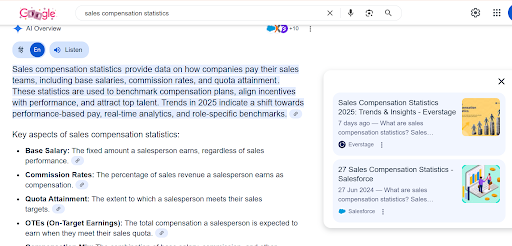
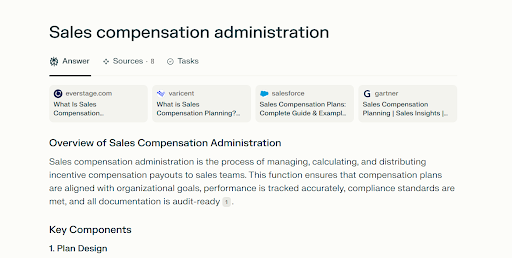
We applied similar content restructuring practices while working with Everstage, organizing detailed explanations around question-led headings and direct responses. As part of our broader AEO engagement, Everstage earned citations across ChatGPT, Perplexity, and Gemini.
5. Strengthen claims with credible evidence and expert perspectives
While direct answers improve readability, supporting evidence gives your audience a reliable basis for evaluating those answers. Statistics, expert insights, and documented outcomes can strengthen content credibility when presented with appropriate context.
When incorporating evidence into your content:
- Reference original research or official documentation rather than secondary publications.
- Include relevant publication dates, sample sizes, and research scope when interpreting findings.
- Place source links close to the claims they support.
- Attribute expert recommendations to individuals with relevant professional experience.
- Explain client outcomes alongside the original challenge and implementation approach.
For instance, our AI citation strategy for Atlan demonstrates the impact of an integrated SEO, AEO, and GEO content strategy. Over our three-year partnership, Atlan achieved:
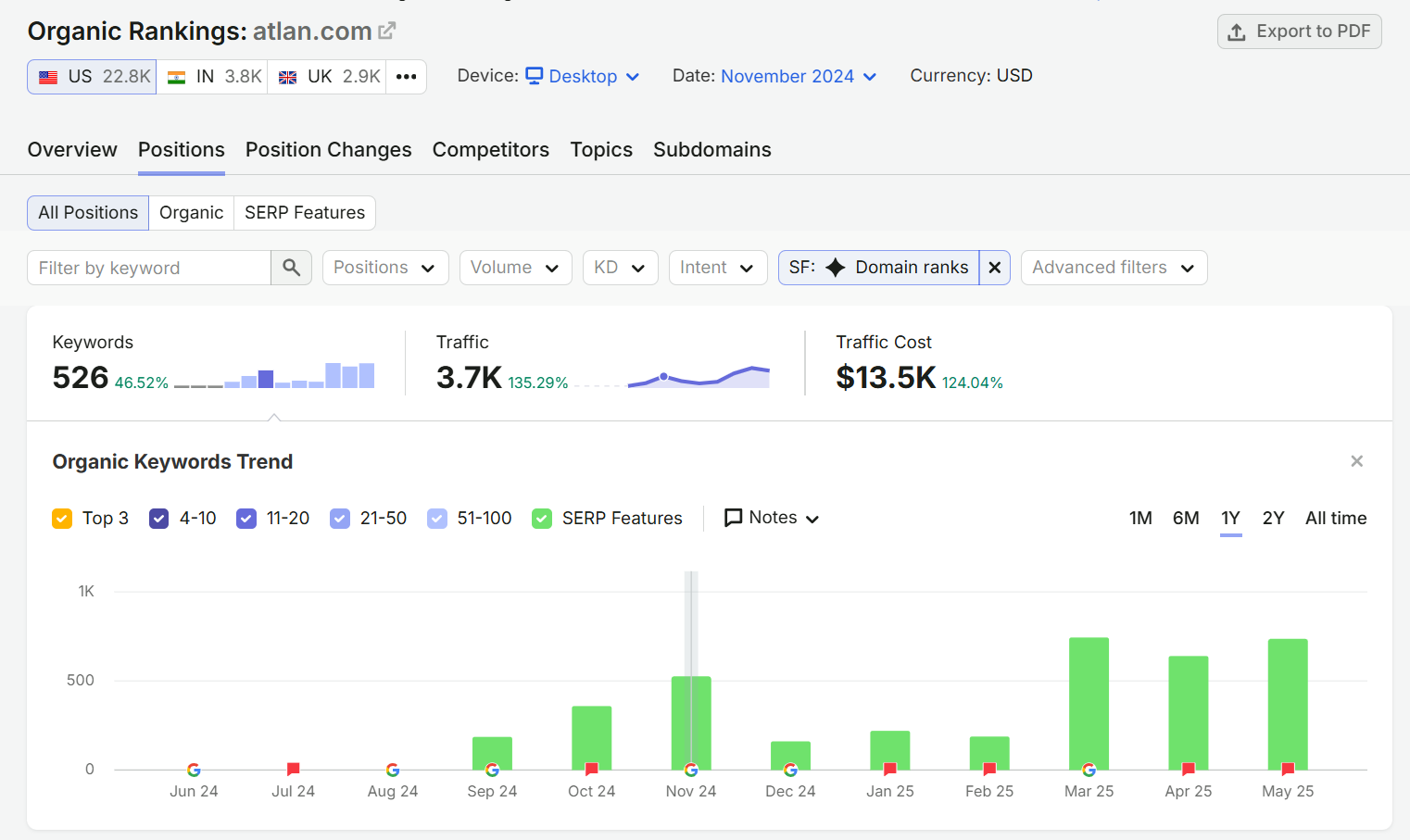
Connecting measurable results with the methodology behind them makes the content more useful to buyers evaluating similar strategies.
Our expert advice: Maintain a source repository for important content assets. Record original URLs, publication dates, research methodologies, and supported claims to simplify editorial verification and future content updates.
6. Establish entity clarity and contextual relevance
Entity optimization helps establish clear relationships between your brand, offerings, industry concepts, and use cases. Consistent terminology reduces ambiguity when readers and AI systems interpret information across your website.
Consider the difference between the following product descriptions.
Before optimization:
Our platform helps businesses streamline operations and manage their data more effectively.
After optimization:
A data catalog platform helps organizations discover, classify, and govern data assets across databases, warehouses, and business intelligence tools.
The second description establishes a specific product category, explains its capabilities, and connects them with relevant technologies.
You can improve entity clarity across your content by following these practices:
- Use consistent product, feature, and category names.
- Connect product capabilities with specific use cases and business challenges.
- Explain industry terminology and expand unfamiliar acronyms.
- Link related content to provide additional context around complex topics.
- Maintain consistent product positioning across service pages, blogs, and case studies.
We incorporate entity optimization into our broader AEO strategy by building interconnected content clusters. This helps establish relevant relationships between individual pages while providing comprehensive coverage of the topics buyers research.
7. Validate content using our citation-readiness framework
Even well-researched, structured content can contain outdated facts, ambiguous answers, or unsupported claims. A dedicated pre-publication review helps identify weaknesses that conventional SEO checks might overlook.
At Revv Growth, we use our proprietary 29-point AEO Citation Scorer to evaluate content across six dimensions: extractability, authority, relevance, freshness, accessibility, and repetition.
You can incorporate these dimensions into your own editorial validation process.
Google's spam policies also discourage producing content at scale without adding value for users. Increasing publishing frequency without maintaining editorial standards can therefore undermine both organic search performance and AI visibility.
Once you've addressed these issues, the next priority is determining whether your content changes are translating into measurable citation gains.
How to measure the effectiveness of AI citation optimization
Measuring AI citation optimization requires tracking how frequently AI platforms reference your content, which buyer prompts trigger citations, and whether those citations generate website engagement. Monitoring these metrics at the individual URL level helps you identify which content improvements are delivering results.
Before optimizing your pages, establish a performance baseline and record the changes you implement. Track the following metrics to assess progress against that baseline.
At Revv Growth, we connect citation performance with website engagement to understand its commercial impact. For instance, our AEO and GEO initiatives for OvalEdge helped increase monthly AI referral sessions from 100 to 278, representing a 178% increase.
While citation growth indicates stronger visibility, referral traffic and conversions help establish whether that visibility contributes to business outcomes. Both are important when measuring the success of your AI search strategy.
Our recommendation: Maintain a URL-level optimization log alongside your citation reports. Record changes to content structure, evidence, and topic coverage to identify which improvements may have contributed to stronger citation performance.
Turn your existing content into a reliable source for AI search
Your existing content library may hold untapped citation opportunities. Prioritize relevant pages and close information gaps to improve AI search visibility without increasing content production.
At Revv Growth, our AEO services combine competitive citation analysis, buyer prompt research, content optimization, entity mapping, and performance monitoring.
We identify where competitors earn citations, evaluate your existing content against buyer questions, and prioritize improvements based on commercial relevance. Our approach strengthens your brand’s presence in AI-generated answers during product discovery, research, and purchase decisions.
Whether you need to optimize existing assets or develop new citation-worthy content, we help you build a scalable strategy aligned with your growth objectives.