


A few weeks ago, we jumped on what was supposed to be a simple sync about our LinkedIn automation. But within minutes, it became clear the real problem wasn’t the AI. It was our workflow.
To turn a single blog into newsletters or LinkedIn posts, the team still had to open the article, copy sections, paste them into ChatGPT, rewrite prompts, fix tone, and repeat the cycle. Doing this across dozens of blogs meant hours lost every week on mechanical steps instead of strategy.
That call made the bottleneck unmistakable. We didn’t need better prompting. We needed a system that could take a URL, extract the right idea, and generate publish-ready content instantly. That shift is what led us to rebuild the automation from the ground up.
That conversation made us step back and examine the entire process from scratch.
The Problem That Was Slowing Everyone Down
The deeper we looked, the more obvious the real bottleneck became. In theory, converting a blog into a newsletter and a set of LinkedIn posts should have been quick and repeatable. In reality, it became a massive time drain. The team had to open each blog, copy sections, paste them into ChatGPT, rewrite prompts, fix tone, and repeat the cycle for every single blog each week. Doing this across a library of more than a hundred blogs meant hours of mechanical work that added no strategic value.
Our first attempt at automation did not solve the problem either. The workflow was functional, but the content lacked depth and the human tone we needed. The AI kept treating the blog as a whole instead of selecting one strong idea and building a focused post around it. It became clear we were not trying to automate copy-pasting. We were trying to automate thinking, structure and story selection.
Another limitation surfaced when we explored improving the model. The tools could not scrape high-performing LinkedIn posts or extract the attributes that made them work. They could only pull what appears in Google Search, which offered no meaningful insight. That forced us to define our own structure instead of relying on external signals.
This led to a simple but powerful framework. Each blog would produce three posts with distinct purposes: one structured with a clear hook and takeaway, one conversational and human, and one analytical with the logic behind the idea. This immediately fixed most tone issues and gave us the repeatable system we had been missing from the start.
How the New LinkedIn and Newsletter Automation Works
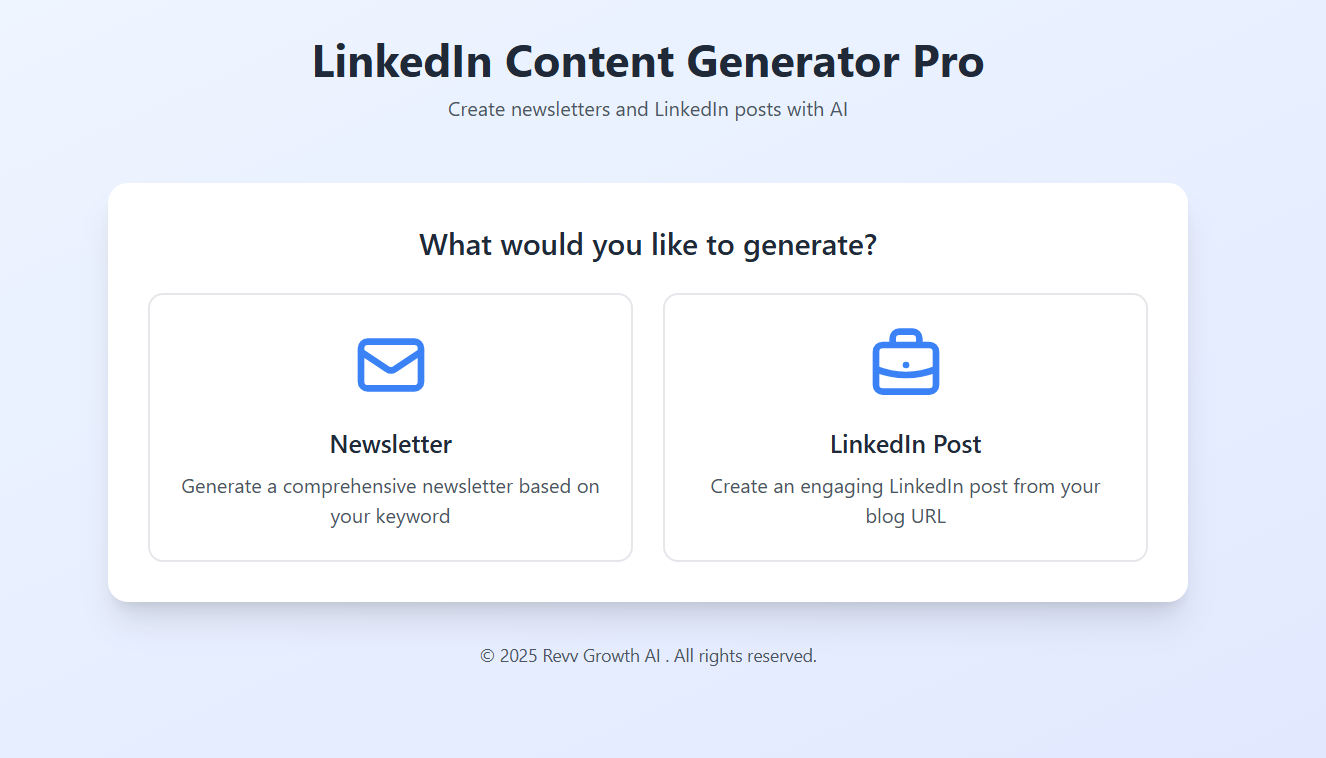
The LinkedIn Post Generator: Turning One Blog Into Three Platform-Ready Posts
This tool is designed purely for LinkedIn content. It takes a long-form blog and breaks it into sharp, platform-ready posts that feel human and founder-led. Here is how it works:
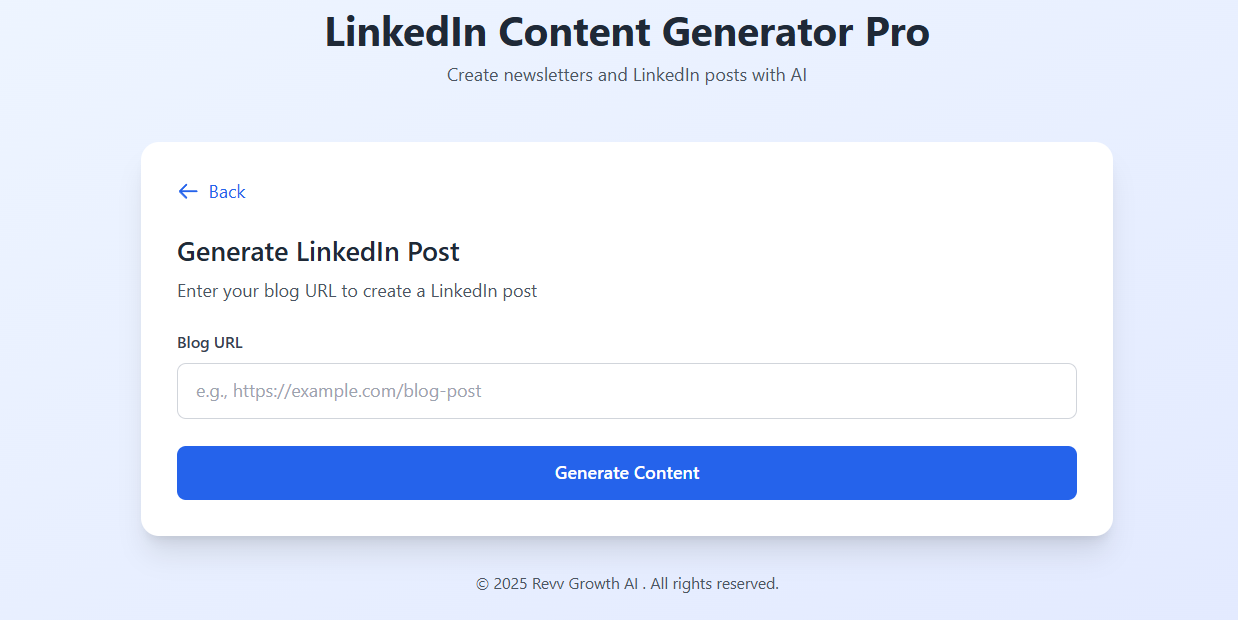
Step 1: Paste the Blog URL
You simply drop the blog link into the tool. There is no need to copy text, write a prompt or decide what angle to take. The system handles that thinking.
Step 2: The System Scrapes the Blog
The automation reads the entire blog and extracts the elements using Apify:
- the core idea
- supporting insights
- context
- notable phrases or arguments.
It condenses this into a clean input for Gemini, AI model.
Step 3: The Workflow Routes the Request
The backend recognises that the request is for LinkedIn. It sends the data through the LinkedIn-specific branch, which applies the right structure and tone rules.
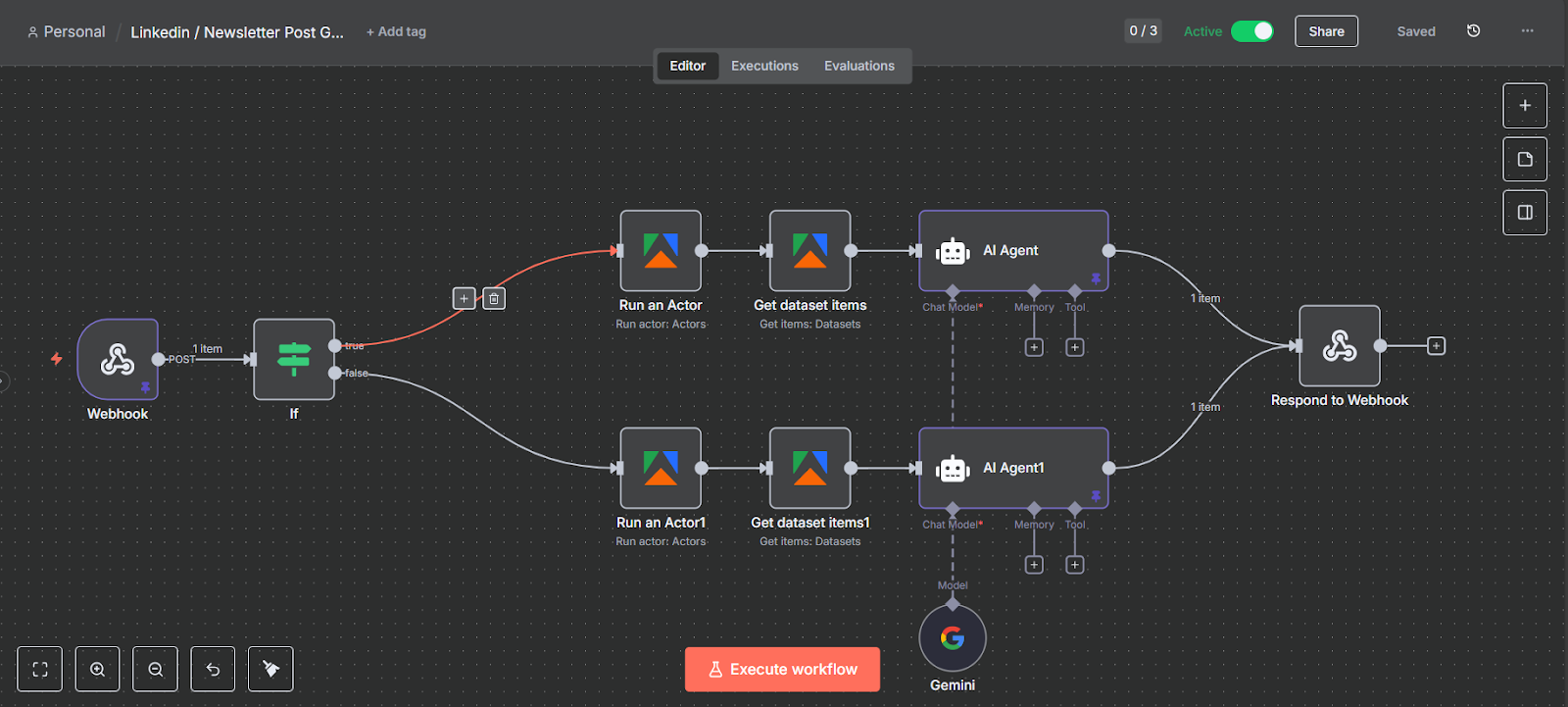
Step 4: The AI Generates Three Distinct Posts
Based on the predefined framework, the system creates three versions from the same blog, each with a different purpose:
- Structured Post: a strong hook, clear positioning and a tight takeaway
- Conversational Post: simple, relatable, and written like a personal note
- Analytical Post: logic-driven, offering the “why” behind the idea
All three posts are built around a single idea from the blog, not a summary of the entire article.
Step 5: The Output Appears Instantly
The posts show up in the interface within seconds. No rewriting, no prompt fixing and no editing required. They are ready to publish immediately.
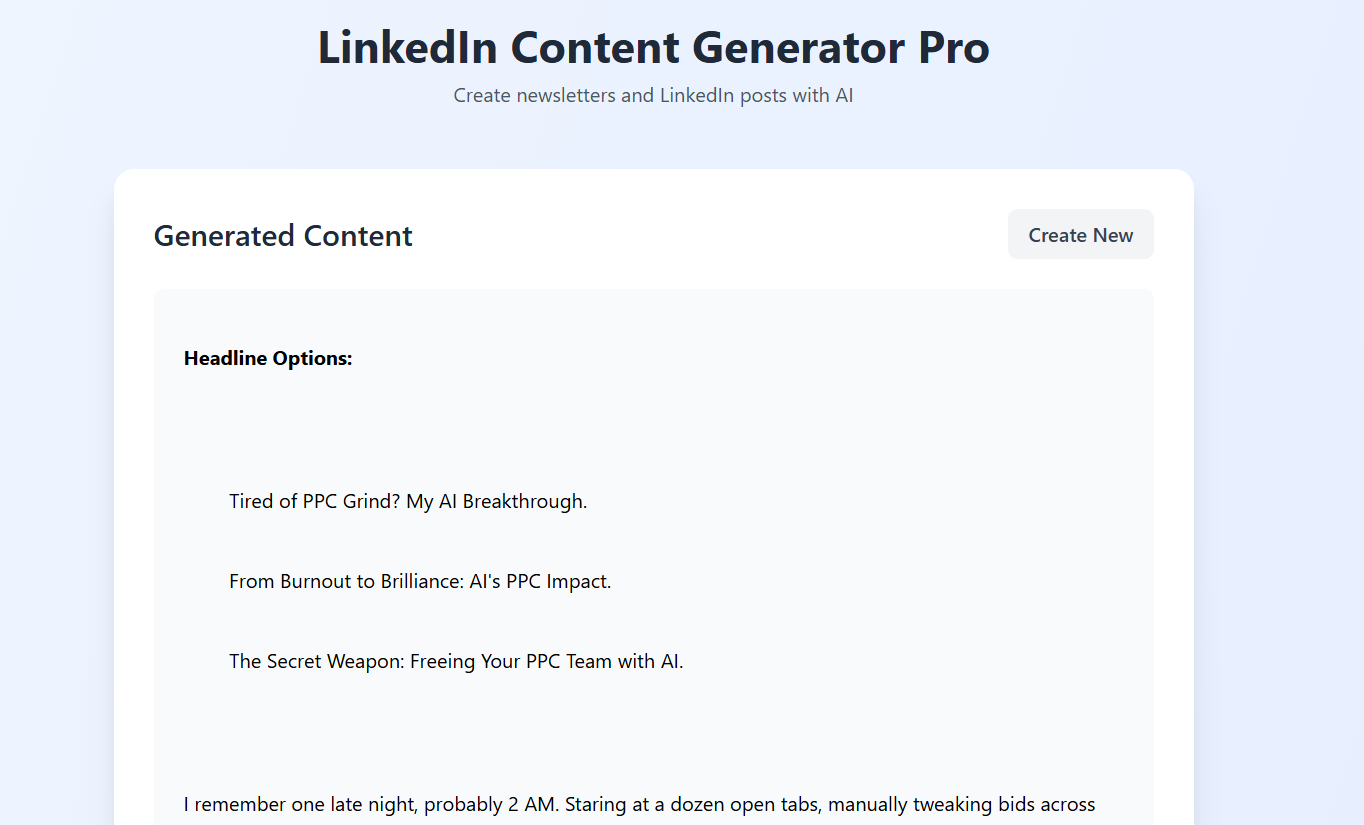
The Newsletter Engine: Producing Deep, Founder-Led Narratives in Seconds
This tool follows a similar flow but is designed to create richer, more narrative-driven newsletters. Here is how it works:
Step 1: Paste the Blog URL and Add a Primary Keyword
This tool needs one extra input: a primary keyword. That keyword helps shape the newsletter’s focus, angle and search relevance.
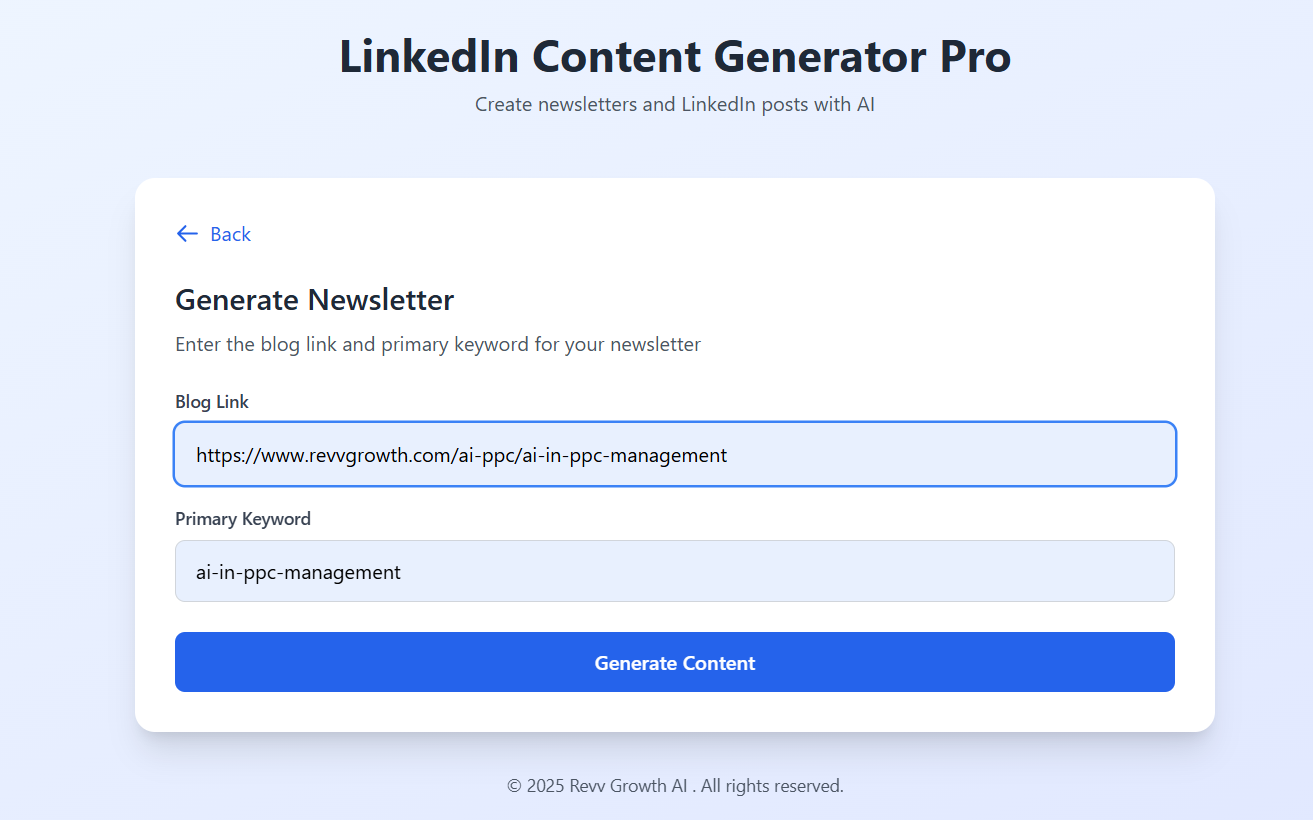
Step 2: The System Scrapes the Blog
The automation reads the blog and extracts themes, context and potential angles. It then pairs this with the selected keyword to determine what direction the newsletter should take.
Step 3: The Workflow Routes the Request
The backend identifies this as a newsletter request, not a LinkedIn post. It shifts into the newsletter workflow, which uses a different structure, tone and depth.
Step 4: The AI Generates Two In-Depth Newsletters
The system writes two newsletter versions, each built around a single strong take from the blog.
Both versions are:
- founder-led
- human and raw
- deep, not surface-level
- focused on providing real value rather than summarising the blog
Step 5: The Output Is Delivered in Seconds
Both newsletters appear instantly in the interface. No adjustments needed. They are complete and ready to schedule or publish.
Why This Workflow Changed Everything
The biggest shift was that the system stopped acting like a repurposing tool and started behaving like a thinking tool. Instead of compressing a blog into a generic summary, it identifies one strong idea, builds a clear narrative around it, applies the right tone and creates multiple variations that feel fresh. This is the difference between rewritten content and content that actually understands the message. In B2B SaaS, that difference matters.
What proved the workflow worked was simple: the team began using the posts internally and found them valuable. The content went deeper, carried real insight and felt ready to publish without editing. Adoption happened naturally, which is always the best validation.
The newsletter generator became another major unlock. Each blog now produces two focused newsletters that reflect one angle, one message and one meaningful takeaway, written in a human, founder-style tone. Seeing the system generate full newsletters in seconds immediately showed how many hours this would save each week.
The final piece that keeps the system sharp is the feedback loop. Issues get flagged, refined and re-tested. Nothing is automated and forgotten. The workflow evolves because the team actively reviews outputs and contributes improvements.
In the end, the new system solved several major problems at once:
- Manual work shrank from hours to seconds, with instant content from a single URL.
- Founder-style tone became consistent across writers and platforms.
- Every blog now produces five high-quality assets three LinkedIn posts and two newsletters.
- Content is no longer shallow repurposing but idea-driven and audience-focused.
- Team adoption has accelerated, and the workflow is becoming part of daily operations.
This is what happens when structure, clarity and the right system come together.
What Other B2B SaaS Teams Can Take Away From This
For any GTM or marketing team, the real lesson is simple: the bottleneck is rarely content creation. The bottleneck is translating long-form content into platform-ready pieces. Most blogs already contain strong ideas, hooks, insights, examples and opinions. The challenge is turning those elements into clear, focused posts for each channel.
The workflow we built solves exactly that. It understands the ideas in a blog, selects the right angle, structures the narrative, keeps the tone consistent and creates depth rather than shallow summaries. Teams that put a system like this in place spend less time firefighting and more time scaling.
Final Thoughts: The Real Win Was the Team, Not the Tech
This was never just a story about AI or automation. It was about the people behind it and how each person stepped in to improve the process. The workflow got better because the team noticed gaps, clarified what was needed, rebuilt what was not working and offered thoughtful feedback at every stage.
That is what I am most proud of. There is nothing better than seeing a team challenge a process, refine it and create something stronger together. Today we have a workflow that saves time, maintains quality and preserves the human tone our brand depends on.
For any B2B SaaS marketer or founder facing similar challenges, the lesson is simple. The breakthrough does not come from adding more tools. It comes from creating better structure. Once that part is right, everything else becomes much easier.
Still repurposing blogs manually for LinkedIn and newsletters?
We automated the entire flow and cut hours of repetitive work without losing depth, tone or strategy. If you’re exploring automation for your content operations, connect with me on LinkedIn. I’m happy to walk you through what worked for us and how you can adapt it for your team.
– Karthick Raajha
Founder, Revv Growth
.svg)


.webp)
.avif)