Introduction
Found yet another cold pitch from a "best content marketing agency" on your LinkedIn DM or inbox?
They must have promised a traffic and lead boost. And you probably hesitated because you’ve been overwhelmed with such promises, and now you’re left wondering: “What really makes an agency the ‘right’ one for us?
Whether you’re running a B2B SaaS company, scaling a digital business, or managing marketing on a tight budget, it’s easy to feel overwhelmed with so many claims and options around you.
And we get it. That’s why this post isn’t about a generic checklist. Instead, we’re diving into exactly what to look for when choosing the right content marketing agency, especially one that’s tailored to your B2B or SaaS growth.
And yes, we’ll even show you what it looks like to partner with a trusted agency like Revv Growth, with real-world results and strategies that actually drive success.
We’ll also get real about trade-offs. Marketers point out how many companies are shifting from in-house teams to outsourcing to agencies for better cost-effectiveness and flexibility. For companies facing this shift, partnering with a content marketing firm can suddenly make perfect sense.
By the end of this guide, you’ll have clear steps for choosing the right agency, what to look for, and how to ensure a partnership that drives real growth. Let’s get started!
Why Choosing the Right Content Marketing Agency is Crucial
Content marketing is now nearly universal in B2B. According to Market Growth Reports, around 91% of B2B marketers used content marketing strategies in 2024, meaning standing out requires depth, specialization, and competitive execution, not surface-level content. This is possible when you partner with the best content marketing agency.
The best content marketing agency drives measurable growth with strategic content that attracts qualified audiences and increases traffic, leads, and revenue. The best agency provides full-funnel services, including SEO content, distribution, analytics, and performance reporting.
Businesses compare agencies based on expertise, case studies, reviews, pricing, and proven ROI. The best agency aligns content strategy with business goals and delivers results across channels. Companies choose the best content marketing agency to scale content production, improve search visibility, and accelerate pipeline growth. Agencies that use AI-powered workflows and niche industry experience deliver the strongest outcomes.
Key Reasons Why Choosing the Right Agency Matters:
- Maximizing ROI: The right agency will help you make the most of your marketing budget by creating content that attracts your target audience and converts them into leads or customers.
- Building Brand Authority: Through high-quality, well-optimized content, a great agency will help establish your brand as an authority in your industry.
- Optimizing SEO, AEO & GEO: Agencies with strong SEO and AI SEO expertise will improve your SERP and AI visibility, ensuring that your content ranks well and attracts organic traffic from places where your prospects are actively searching.
- Consistency: A good agency will provide a steady flow of content, ensuring that you maintain engagement with your audience and never miss an opportunity to drive traffic or nurture leads.
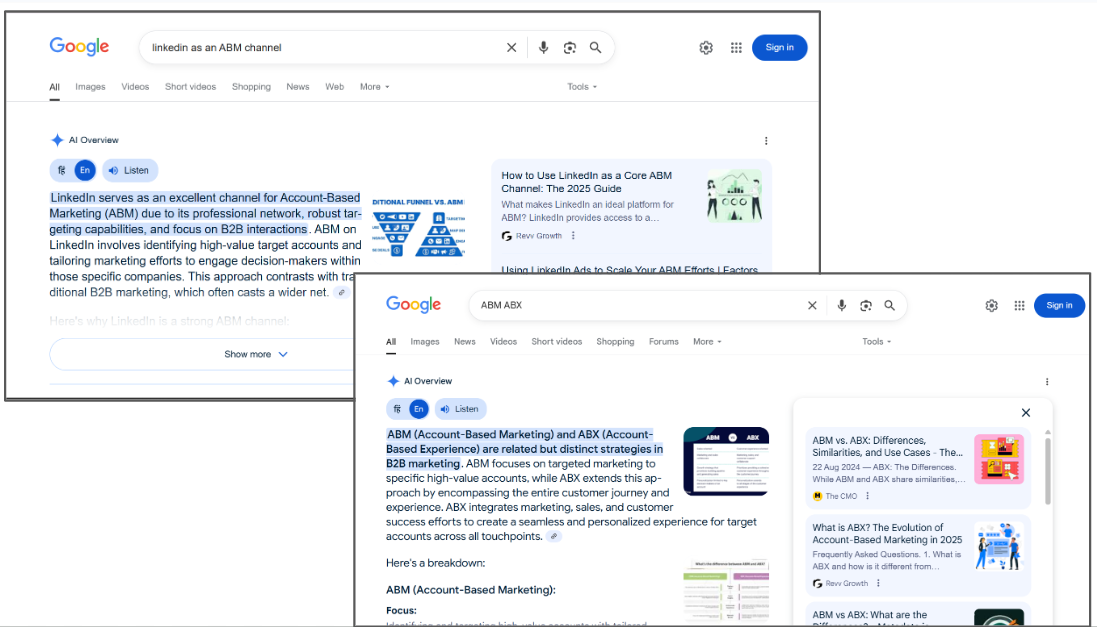
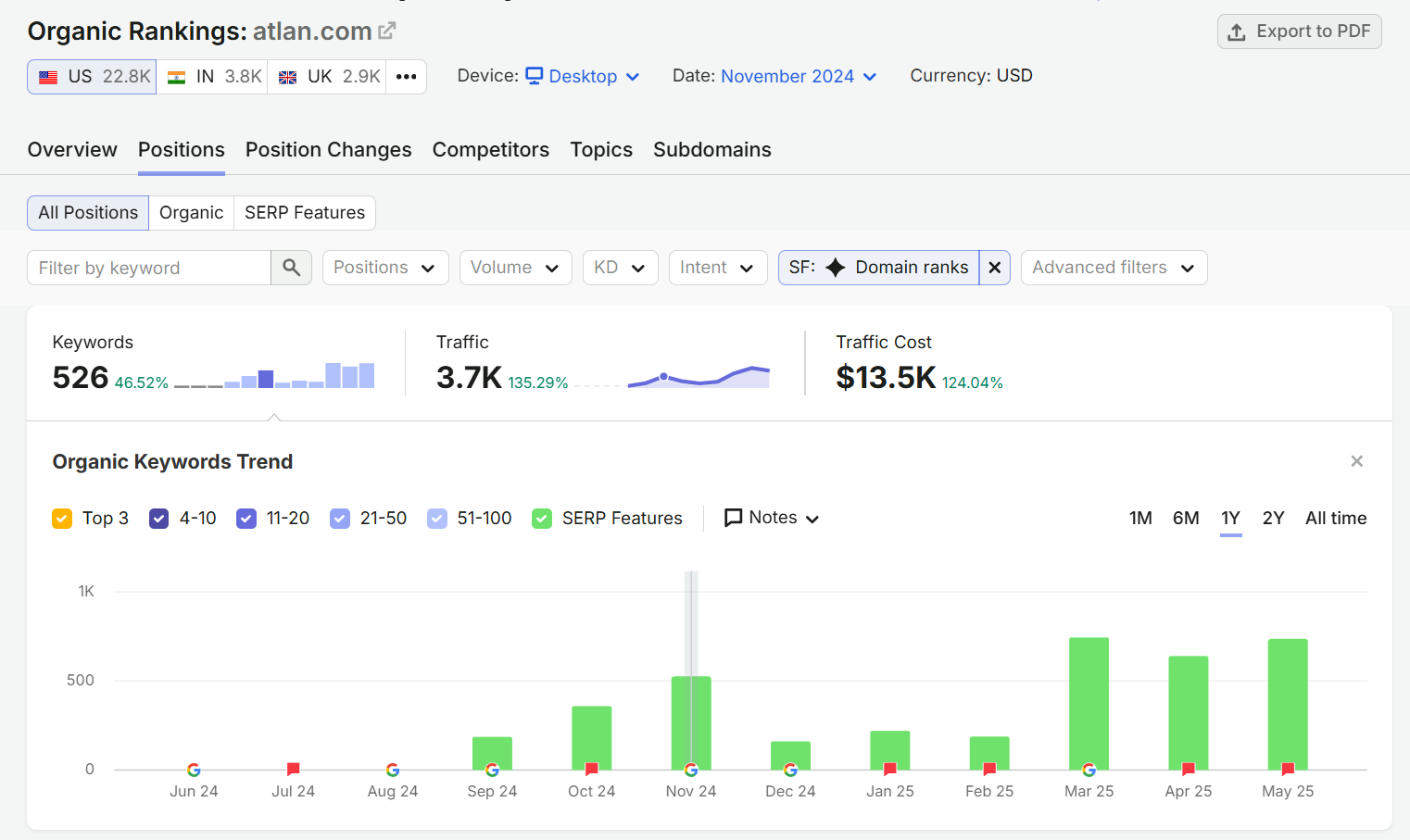
For instance, consider the success story of Atlan, a data collaboration platform, which partnered with Revv Growth. By focusing on securing featured snippets and optimizing content for SEO, we helped them achieve a 40% increase in organic traffic, as well as a significant improvement in lead generation. This is a clear example of how the right agency can help you achieve measurable, impactful results.


When you choose an agency that understands your specific needs and goals, you’re more likely to see positive, long-term outcomes from your content marketing efforts.
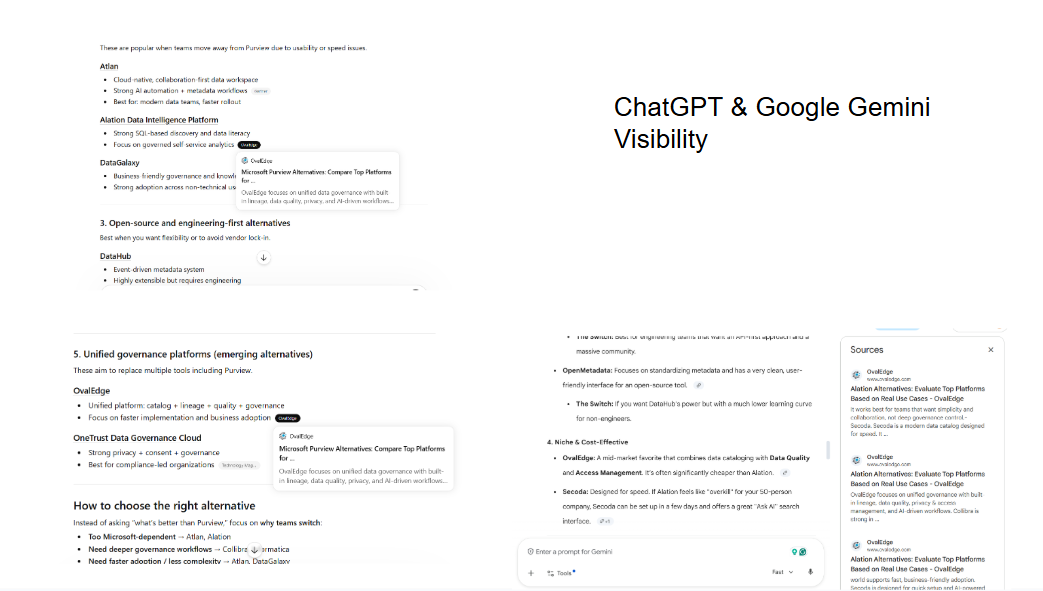
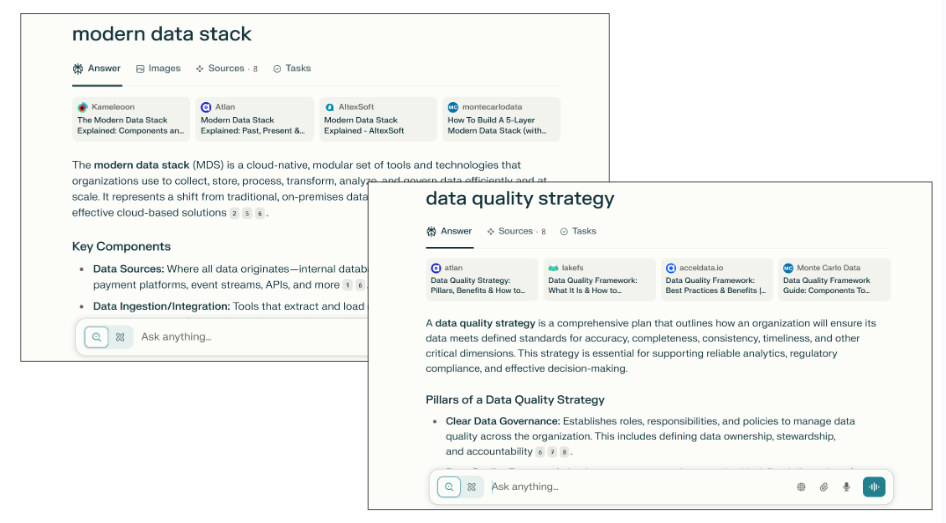
Read the full case study → Our content strategy for Atlan helped them gain visibility on Google’s AI Overview and LLMs
In the next section, we’ll break down the critical steps to help you choose the best content marketing agency for your business.
Step-by-Step Guide to Choosing the Best Content Marketing Agency
Choosing the right content marketing agency isn’t just about picking the agency with the flashiest portfolio or the lowest price. It’s about finding a partner who truly understands your business goals, audience, and content needs. Here’s a step-by-step guide to help you make the best choice for your business.
Step 1: Define Your Content Goals
Before you even begin researching agencies, it's essential to define what you want to achieve with your content marketing strategy. Your goals will dictate the type of agency that best fits your needs.
- Business Objectives: Do you need to increase organic traffic, improve SEO rankings, generate more leads, or raise brand awareness? Knowing your primary objectives will help you find an agency that specializes in your area of need.
- Audience: Understanding your target audience is key to choosing the right agency. Are you targeting other businesses (B2B), or are you a SaaS company looking to appeal to both small businesses and enterprises? The right agency will have experience crafting content for your specific audience.
- Content Needs: Determine what types of content you'll need. Are you focused on blog posts, whitepapers, case studies, social media content, or a combination of everything? Agencies that specialize in content creation can provide more tailored recommendations.
- Budget & Scope: It's also important to have a clear understanding of your budget and the scale of support you require. Are you looking for ongoing content creation, or do you just need a one-off campaign? This will influence whether you go with a boutique content marketing agency or a larger firm with a broader service offering.
Step 2: Check Agency Portfolio & Case Studies
Once you’ve defined your goals, it’s time to evaluate potential agencies. One of the best ways to gauge an agency’s capabilities is by reviewing their portfolio and case studies.
- Relevant Experience: Look for agencies that have experience in your industry. If you're a SaaS company, for instance, you'll want to find agencies that specialize in SaaS content marketing, as they will have a deeper understanding of the specific challenges your business faces.
- Case Studies: Review their previous work, particularly case studies that showcase measurable results. For example, did they help a client increase organic traffic by 30% like Revv Growth did for Atlan, or did they generate more qualified leads for a B2B business? Solid case studies provide evidence that the agency can deliver on its promises.
At Revv Growth, we feature our client success stories to showcase the tangible impact of our work and to provide our prospects with concrete evidence of our expertise and the results we can deliver. By showcasing such measurable outcomes, we aim to make it easier for you to see the potential value in partnering with us.
- Proven Success: Top-tier agencies should be able to provide data to back up their claims. Look for case studies that show not just creative content, but also tangible results like improved search rankings, higher click-through rates, and increased conversions.
Step 3: Evaluate Agency Strategy & Process
The strategy and process an agency uses to create and distribute content are crucial to the success of your content marketing efforts.
- Content Strategy: Does the agency provide a custom content strategy aligned with your business goals? A one-size-fits-all approach rarely works, so look for an agency that tailors its strategy to your needs.
- Content Development Process: Ask about the agency's content creation and approval process. This includes everything from idea generation to final approval and publishing. It’s important to know how they collaborate with clients and whether they provide the flexibility you need.
- SEO & Distribution: Make sure the agency has a strong understanding of SEO. How will they ensure that your content is optimized for search engines? Additionally, ask about their content distribution strategy and how will they ensure your content reaches the right audience?
- Timeliness & Scalability: Can the agency scale its operations to meet your growing content needs as your business expands? If you’re a SaaS company expecting rapid growth, this is an important factor to consider.
Step 4: Compare Proposals & Pricing
Once you’ve narrowed down your options, it’s time to evaluate the proposals and pricing from each agency.
- Proposal Breakdown: A good proposal should include a clear scope of work, detailed deliverables, and realistic timelines. Ensure that all aspects of the content creation process are outlined, from ideation to reporting.
- Pricing Models: Understand the agency’s pricing model. Do they work on retainer, per-piece, or project-based pricing? Make sure the pricing model aligns with your budget and the level of service you require.
- Flexibility: Agencies should offer some level of flexibility in their pricing. Can they scale their services based on your business's growth or adjust their approach if your needs change?
Step 5: Finalize Your Choice & Start the Collaboration
After evaluating portfolios, proposals, and strategies, it’s time to make your final choice. Look for an agency that not only has a proven track record but also aligns with your company's values, culture, and vision.
- Agency Fit: Ensure that the agency you select feels like a true partner. Do they understand your business, your audience, and your content needs? Are they aligned with your vision for long-term growth?
- Set Expectations: It’s crucial to set clear expectations at the start of the partnership. Outline deliverables, deadlines, and reporting expectations upfront to ensure both parties are on the same page.
- Begin the Partnership: Once everything is in place, start with a clear action plan. Kick off with initial priorities and set milestones for the first phase of your content marketing strategy.
As you navigate the process of selecting the right content marketing agency, remember that this decision is about finding a strategic partner that will help you achieve your business objectives and elevate your brand's presence in the market.
At Revv Growth, we understand that every business is unique, which is why we tailor our approach to meet your specific needs. If you're looking for an agency that delivers results, is committed to your growth, and brings measurable success to the table, we’d love to partner with you.
Key Services Offered by Top Content Marketing Agencies
The strongest content partners offer more than writing support. The best content marketing agencies operate as strategic growth enablers.
A b2b content marketing agency should provide a full ecosystem of services that support planning, production, optimization, and performance measurement. The following capabilities are essential when evaluating whether an agency can drive sustainable, measurable marketing impact.
1. Content Strategy & Planning
Strong content outcomes begin with strategic clarity like understanding market demand, diagnosing competitive gaps, and mapping content to measurable revenue goals. The agencies that consistently drive growth don’t start with writing; they start by building an intelligence-led foundation that guides every decision.
A high-performing strategy includes:
- Research-driven audience and ICP mapping
The focus is on real buyer behavior, pain points, and conversion drivers. In B2B SaaS, messaging must align with complex multi-stakeholder decisions, where accuracy, clarity, and credibility matter more than volume.
- Search and SERP intelligence grounded in high-intent opportunities
Top agencies prioritize queries with commercial impact and AI Overview visibility instead of chasing vanity keywords. This means identifying semantic clusters, competitive whitespace, and snippet-eligible opportunities.
- Content architecture aligned with pipeline outcomes
Roadmaps connect TOFU discovery, MOFU evaluation, and BOFU conversion assets, not independent deliverables.
Strategy determines whether content acts as an operational activity or a compounding growth system.
2. Content Creation & Production
Content creation is the process of transforming expertise, data, and insights into assets that rank, convince, and convert. A credible content creation marketing agency should demonstrate the ability to produce depth, not volume.
Excellence in production should include:
- Multiple well-crafted content formats tied to funnel intent
Long-form blogs, reports, playbooks, landing pages, and conversion assets are structured to influence revenue, and not word count.
- Hybrid human + AI editorial model, tightly quality-controlled
Leading agencies combine AI acceleration with deep human editing to ensure context, accuracy, structure, search intent, and brand voice integrity.
- Evidence-driven narrative development
Real examples, real metrics, customer stories, competitive positioning, and credible source integration.
- Content that moves beyond education into persuasion
Content must answer objections, support sales conversations, and differentiate through proof, not claims.
Low-quality content gets ignored. High-quality content becomes reference material inside the buying process.
According to a 2025 global survey by McKinsey, 88% of organizations now report using AI in at least one business function, showing a clear signal that AI-assisted workflows are fast becoming a baseline expectation for competitive marketing execution.
3. SEO & Technical Content Optimization
Content that isn’t discoverable can’t drive commercial impact. A high-performing seo content marketing agency uses technical execution and search intelligence to turn content into defensible visibility across search and AI ecosystems.
Key capabilities include:
- Technical execution that strengthens authority signals
Internal linking structure, schema markup, optimized metadata, search intent alignment, Core Web Vitals performance, structured headings, and content depth.
- SEO frameworks based on real ranking conditions, not checklists
Audits, AI Overview opportunity discovery, competitive analysis, and pillar–cluster models designed to scale topical authority.
- Continuous performance iteration instead of publish-and-hope
Monitoring ranking movement, refreshing declining content, repurposing top performers, and identifying snippets or overview gaps.
This system transforms visibility from chance to precision.
4. Content Distribution & Repurposing
The role of a digital content marketing agency is not limited to publishing. It is also ensuring content reaches the right audience, through the right channels, at the right moment in their buying journey.
What effective distribution systems include:
- Cross-channel distribution mapped to funnel stages
High-performing agencies build distribution engines across SEO, LinkedIn, email sequences, communities, partner amplification, and sales enablement to maximize reach instead of relying solely on organic search timing.
- Repurposing long-form content into modular growth assets
One strategic piece should convert into multiple formats like social posts, infographics, leadership threads, short videos, carousels, email modules, and snippet-targeted variants. This extends content lifespan and increases touchpoints without multiplying effort.
- Syndication to expand topic authority and trust
Structured partnerships and third-party placements help accelerate authority-building outside owned channels, increasing brand recall and click-through efficiency.
- Distribution frameworks driven by performance signals
Insights around channel-level conversion and audience interaction dictate iteration cycles, enabling systematic improvements instead of random pushes.
The best agencies treat distribution as a core growth lever, not an add-on service.
5. Analytics, Reporting & Performance Tracking
A high-quality content marketing firm runs on data, not assumptions. Reporting must translate activity into business outcome clarity, showing how content contributes to discovery, conversion, and revenue.
The strongest analytics systems provide:
- Outcome-based KPI measurement linked to revenue
Traffic quality, ranking movement, engagement depth, demo influence, and pipeline contribution, not vanity metrics like impressions or article count.
In fact, HubSpot reports that 41% of marketers now measure the success of content programs based on sales impact, underscoring the need for strategies aligned to revenue goals rather than superficial activity metrics.
- Transparent dashboards with actionable narrative insights
Reporting explains why performance moved, what actions drove results, and what adjustments will accelerate impact next.
- Continuous optimization loops
Every asset is monitored, updated, and iterated based on data, not published once and abandoned. This includes refresh cycles, conversion experiments, and ranking-gap improvement mapping.
When analytics and action combine, content stops being output and becomes a compounding growth engine.
If you’re evaluating agencies based on the capabilities above, here’s the simplest way to understand how we approach partnership.
Revv Growth operates as a content and SEO execution engine for B2B SaaS companies, owning strategy, production, optimization, and performance under one integrated system. Our process combines AI-powered insights with human editorial expertise to deliver faster production, stronger search performance, and compounding results over time.
Our workflow includes structured keyword and SERP analysis, AI-assisted outline creation, human-led writing, optimization, technical SEO (AEO & GEO), snippet targeting, and continuous updates based on ranking performance. This exact system helped MockFlow secure multiple snippet wins and LLM visibility within weeks.


If you’re exploring partners, that’s the level of execution and accountability you should expect. Book a free session with our experts to talk strategy and measurable results you can expect for your business.
How to Evaluate Agency Proposals: Questions to Ask
Once initial conversations and capability reviews are complete, proposals become the deciding factor. At this stage, the goal isn’t to compare pricing; it’s to compare clarity, methodology, alignment, and accountability. The right questions reveal whether an agency can think strategically, execute reliably, and deliver measurable outcomes instead of deliverables without direction.
Here are the most important questions to ask when reviewing proposals:
- What is your process for research, content development, and approval?
The agency should outline step-by-step workflows (strategy → briefs → creation → SEO optimization → approvals → publishing), not general statements like “we’ll handle content creation.”
- Can you share specific case studies relevant to our ICP and industry?
Results for unrelated industries offer little insight. Look for examples where challenges, approach, and measurable outcomes are clearly documented.
- How do you measure success, and what KPIs will we track together?
Ask how they link content to pipeline influence, search performance, and conversion, not just vanity metrics like impressions or article count.
- What tools do you use for SEO research, optimization, and analytics?
This indicates maturity in execution and reveals whether decisions are data-driven or intuition-based.
- What is your communication rhythm and reporting structure?
Strong partners operate transparently with predictable checkpoints, not reactive email chains.
- What makes your approach different from other agencies?
If they cannot articulate this clearly, differentiation likely doesn’t exist.
Good proposals replace uncertainty with confidence. Weak proposals increase risk and misalignment before work even begins.
In-House vs Agency vs Freelancer: Which Option is Best for You?
Choosing between internal hiring, freelancer support, or a boutique content marketing agency depends on scale, speed, expertise requirements, and growth priorities. Each model has strengths and constraints, so there is no universal answer. The right choice aligns with capability gaps and resource realities.
Agency vs In-House vs Freelancer Comparison
Why Agencies Win for SaaS & High-Growth Teams
Tilting toward agencies makes sense when:
- You need faster go-to-market momentum without ramping up internal hiring cycles.
- You need specialized skills (SEO, AEO/GEO, research, design, content ops) that one person can’t cover.
- You need a repeatable content engine, not sporadic production.
- You want performance accountability instead of task execution.
- You’re competing in saturated categories where technical SEO and strategic distribution determine visibility.
An agency isn’t merely about outsourcing writing; it’s about gaining a full team of strategists, writers, SEO engineers, editors, designers, and distribution operators working as an extension of your marketing function.
When the objective is measurable growth and not just publishing content, agencies consistently outperform internal and freelance models.
SaaS-Specific Considerations When Choosing a Content Marketing Agency
Content execution in SaaS is fundamentally different from traditional industries. Complex products, technical buying committees, and long sales cycles require deeper expertise, structured enablement content, and SEO strategies that compete in saturated categories. This context makes the choice of a content marketing partner more critical, because generic approaches cannot drive meaningful results for SaaS teams.
Below are the core challenges and how the best agencies solve them.
Challenges SaaS Companies Face in Content Marketing
- Sophisticated product messaging
SaaS platforms involve technical concepts, multiple use cases, and category-specific language. Turning complexity into clarity requires domain knowledge and structured storytelling rather than surface-level writing.
- Long and multi-stakeholder sales cycles
SaaS buying involves product, security, finance, leadership, and end-user personas. Content must support every decision stage from awareness to technical validation to ROI proof.
- High competitive SEO landscapes
SaaS markets are crowded and mature, making top rankings difficult without strong search intent mapping, topic authority building, and performance iteration.
- Pressure to show measurable ROI
Every asset must contribute to revenue influence, pipeline acceleration, or ranking growth. Content without performance metrics is invisible.
And this is where strong SaaS content marketing truly differentiates itself. More than volume or checking the SEO box, it’s about shaping perception and influencing decisions before prospects ever compare features or talk to sales. As Madhav Bhandari, Head of Marketing at Storylane, notes:
“In any software category, everyone has the same table-stakes features. Ultimately you’re selling your point of view and the relationship you build through content. Competing on features is a losing battle, and this is where content tilts the advantage in your favor.”
How the Best Agencies Address SaaS Content Needs
- Messaging frameworks and content arcs built for decision committees
Mapping content to technical personas, pain points, evaluation triggers, and proof formats such as case studies and comparison guides.
- SEO engines designed to win in competitive categories
Topic clusters, snippet strategy, AEO and GEO optimization, and continuous refresh cycles to build domain authority and ranking velocity.
- Content for full-funnel activation
TOFU (thought leadership), MOFU (case studies and product education), and BOFU (proof assets like ROI calculators and implementation breakdowns).
- Performance accountability from research to publish to optimization
Agencies own improvement cycles driven by analytics, not one-time content delivery.
With these needs, agencies become strategic partners rather than outsourced writers, enabling faster growth and reduced operational load.
For SaaS teams that need both speed and depth, the right content and AI SEO agency brings more than writing capacity. It brings a repeatable growth engine. That is how we approach content programs at Revv Growth.
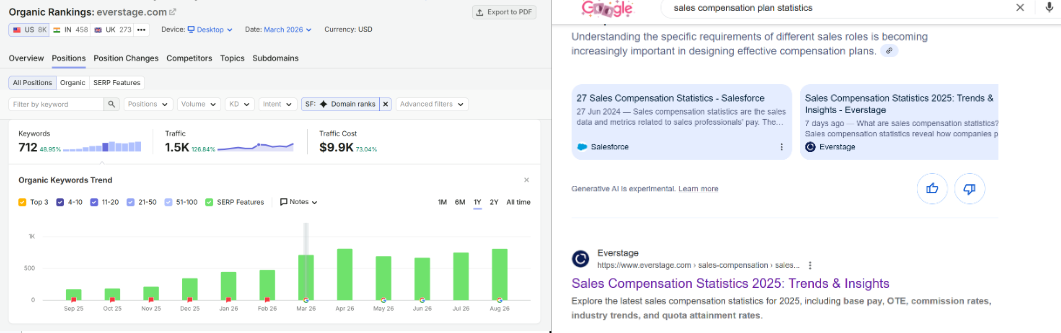
For example, we’ve built a content engine for Everstage, a sales compensation and management platform. The content engine includes an AI-assisted workflow grounded in intent research, SERP and AI Overview analysis, structured drafting, Clearscope optimization, technical SEO layering, and human editorial polish. This engine has helped us produce 100+ long-form assets in just a few months, most of which now rank on Page 1 SERP and surface in AI Overview, ChatGPT, and Perplexity results.


That is the level of execution and accountability SaaS brands should expect from the best content marketing agency. Book a strategy session if you want to evaluate whether this approach is right for your team.
Why Partner With Revv Growth as Your Content Marketing Agency
Selecting a content marketing partner should mean more than outsourcing deliverables. For SaaS companies competing in saturated markets, the right agency must combine strategic depth, execution speed, and performance accountability. And the need for smarter content systems is rising fast.
A recent industry analysis reveals that AI-powered search tools had captured roughly 5.6% of U.S. desktop search traffic as of mid-2025, more than double from the previous year, reshaping how audiences discover content and how brands compete for visibility.
At Revv Growth, we help you meet your audience exactly where they are searching. We work as an extension of your team and build content systems that drive measurable business outcomes rather than just output volume. Our focus is scaling organic and AI-driven visibility while creating content that supports full-funnel growth.
What differentiates Revv Growth from traditional content vendors
- A full-stack AI-powered content and SEO engine
Built on intent research, SERP and AI Overview analysis, prompt-assisted drafting, Clearscope/Frase scoring, schema markup, internal linking architecture, and expert editorial polish. This enables fast turnaround without sacrificing depth or quality.
- Outcome-linked execution, not task delivery
Every asset is tied to ranking goals, traffic quality, AI visibility, and revenue influence, instead of page count or word count targets.
- Scalable publishing volume with governance and consistency
Our AI content engine workflow allows us to ship multiple long-form pieces, with multiple assets ranking on Page 1 and surfacing in Google AI Overview, ChatGPT and Perplexity results, just like our own blogs.

- End-to-end capability across content, SEO, distribution and demand generation
One partner instead of fragmented freelancers, reducing management overhead and accelerating GTM speed.
If your priority is to build a predictable, repeatable content growth engine that compounds over time, Revv Growth is structured for performance at scale. Our expertise and personalized content strategy has positioned us as one of the leading content marketing agencies that brands rely on.
Conclusion: Making the Right Choice for Your Business
Research Dive estimates that the global content marketing market will grow from US$413.3 billion in 2022 to US$1.95 trillion by 2032, growing at a CAGR of nearly 17%. As investment accelerates, companies without scalable content engines risk rapidly falling behind competitors that move faster.
Choosing the best content marketing agency is ultimately about finding a partner that can think strategically, execute reliably, and deliver results that compound over time.
The right agency should bring clarity to your roadmap, deepen your competitive position, and accelerate growth through content that educates, differentiates, and converts. Whether you are scaling SEO, building category authority, or supporting a long sales cycle, the strongest partner is the one who can own outcomes, not just production tasks.
If you are evaluating whether an agency model is the right fit, a short conversation can help you understand the opportunities ahead and what is realistically achievable for your brand.
Book a free strategy session with Revv Growth and explore what a scalable content engine could look like for your business.


.webp)