

Introduction
PPC advertising is getting more competitive every year, and the pressure to deliver results with less budget is growing. That’s why many marketers are turning to AI PPC management to handle the tasks that used to take hours of manual work.
Instead of constantly adjusting bids, testing ads, and monitoring reports, AI-powered platforms optimize your pay-per-click campaigns in real time. They analyze performance data, predict which ads will convert, and reallocate spend to maximize return on investment.
The shift is already happening. The impact is real and substantial. McKinsey estimates that generative AI could boost global productivity by up to $4.4 trillion annually, with marketing and sales among the four functional groups that could capture 75 percent of that gain.
For marketers, agencies, and business owners, this is a competitive edge. In this guide, we’ll break down what AI PPC management is, review the top AI PPC tools for 2026, and help you decide which platform fits your campaign goals.
What is AI PPC management?
AI PPC management is the use of artificial intelligence to run and optimize pay-per-click campaigns. It relies on machine learning and predictive models to make real-time decisions about bids, budgets, and targeting.
Unlike traditional PPC automation, which follows fixed rules (for example, lowering a bid when cost per click gets too high), AI adapts as campaigns run. It studies patterns in user behavior, intent signals, and performance data to predict what will work best and then adjusts instantly.
The core technologies behind AI PPC include:
- Machine learning that identifies trends and improves with more data
- Predictive modeling that forecasts campaign outcomes before actions are taken
Marketers choose AI PPC management because it delivers:
- Higher return on ad spend (ROAS)
- Less manual work on repetitive tasks
- Smarter audience targeting and budget use
In short, AI PPC management takes campaign optimization from static and reactive to dynamic and predictive.
Top AI PPC tools and platforms to consider
AI PPC tools vary in complexity and cost. Some are designed for small businesses that need quick automation, while others are built for agencies and enterprises managing millions in ad spend. Here are the top platforms in 2025, with their features, use cases, and results.
Google Ads Smart Bidding
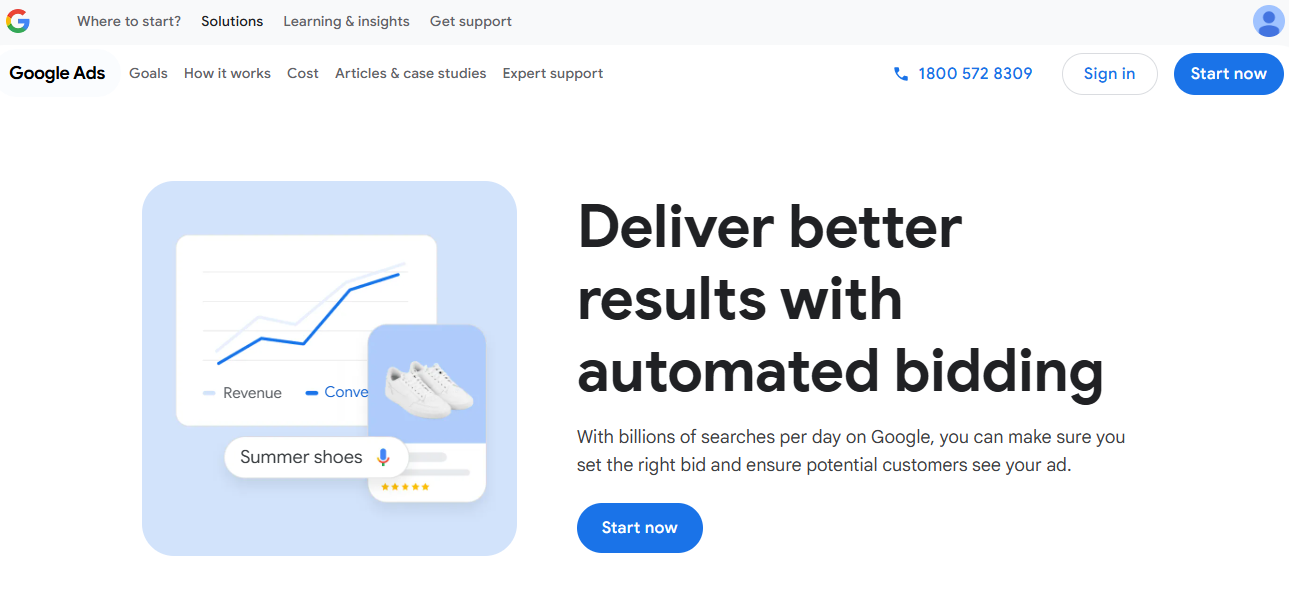
Google Ads Smart Bidding is built into the platform and uses machine learning to adjust bids for every auction in real time. It evaluates signals like device, location, and user intent to align with goals such as Target CPA (Cost per Acquisition), Target ROAS (Return on Ad Spend), Maximize Conversions, or Maximize Conversion Value. This makes it a practical choice for advertisers who want AI PPC automation without new tools.
Key features:
- It adjusts bids at the auction level using signals like device type, time of day, and user intent.
- It supports advanced strategies, including Target CPA and Target ROAS, that directly optimize toward conversion efficiency and revenue growth.
- It leverages auction-time bidding, which recalculates values for every impression rather than relying on scheduled bid updates.
- It integrates natively across Search, Display, and Shopping campaigns, which reduces the need for third-party bidding tools.
Smart bidding is best for advertisers who want efficiency and scale. Its ability to process thousands of bid changes instantly delivers measurable performance gains. The tradeoff is transparency: Google does not disclose how its algorithm weighs signals, which limits control for some users. For most advertisers, however, it remains the easiest and most accessible form of automated PPC.
Adzooma
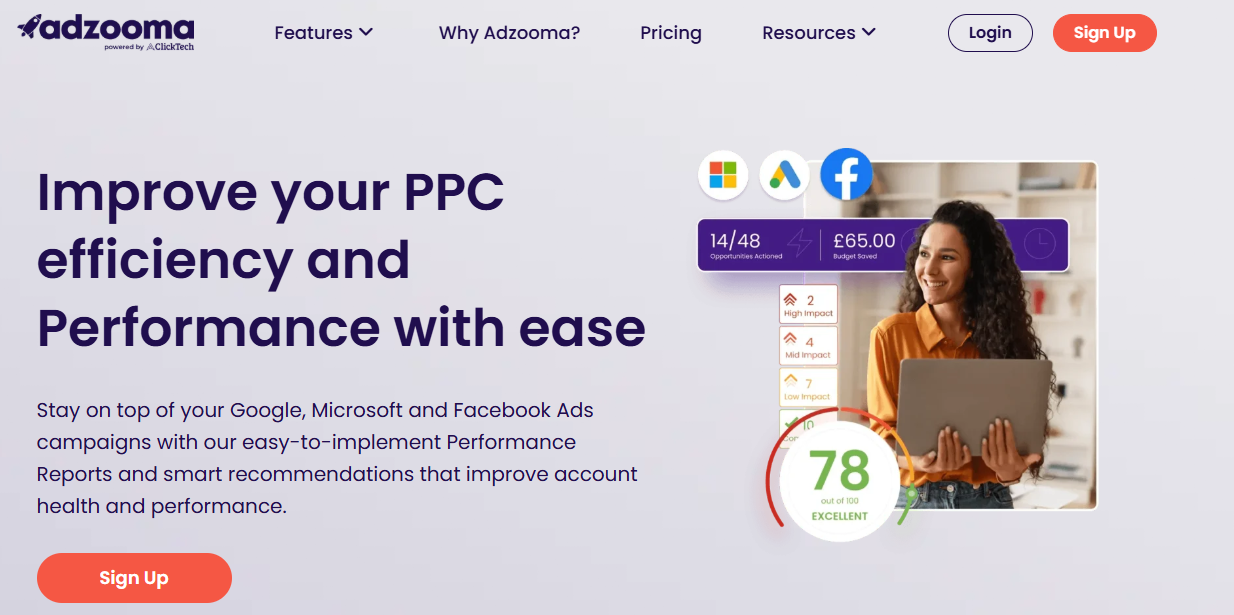
Adzooma is designed for small businesses and solo marketers who want automation without complexity. It connects with Google, Microsoft, and Facebook Ads to provide AI-powered audits and one-click optimizations. With a freemium model and an easy-to-use dashboard, it offers a low-cost entry into AI PPC management.
Key features:
- It provides Opportunity Engine, which analyzes campaign data and delivers tailored recommendations with the option to apply fixes instantly.
- It offers cross-platform account audits, highlighting wasted spend and underperforming campaigns across Google, Microsoft, and Facebook Ads.
- It gives access to custom automation rules that allow smaller teams to schedule optimizations without technical knowledge.
- It integrates workflow reporting, which consolidates campaign data into a simplified dashboard for faster decision-making.
Adzooma does not publish enterprise-level case studies, but user reviews highlight improved efficiency and faster optimization cycles for small teams. It is best suited for marketers who need simple automation and cross-platform visibility on a budget. While it lacks advanced predictive modeling, it fills an important role as an entry-level AI PPC tool.
Skai (formerly Kenshoo)
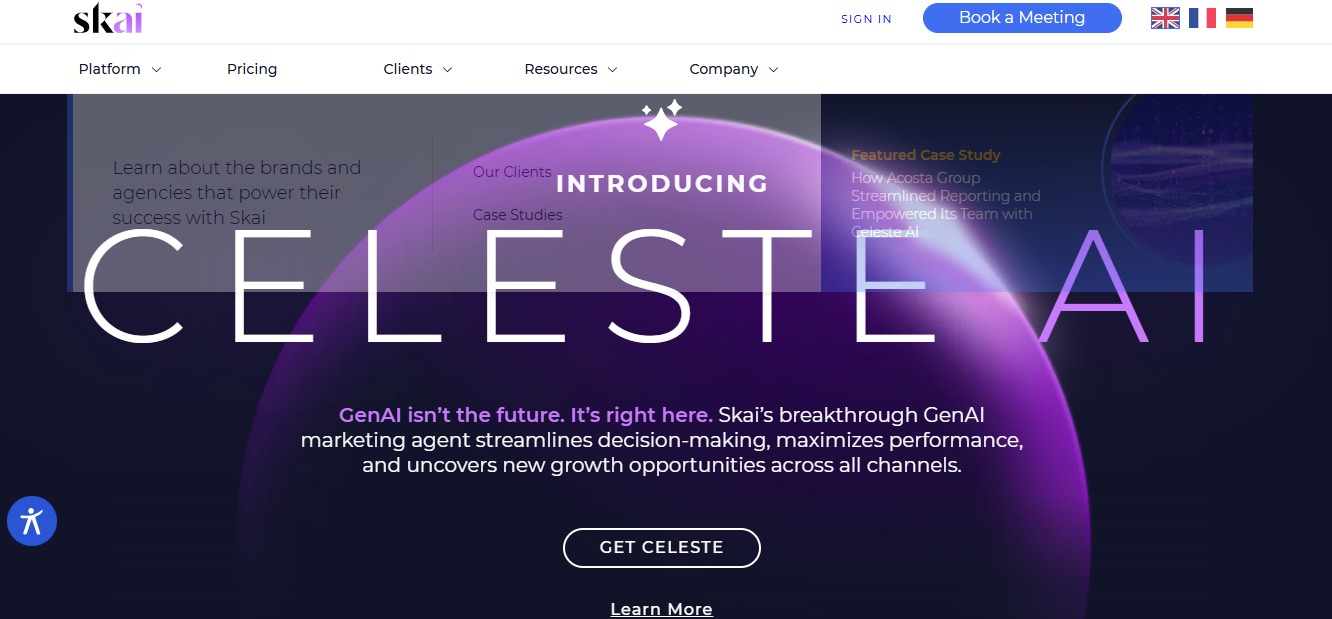
Skai is an enterprise-grade AI PPC Management platform that handles large-scale, cross-channel campaigns. It integrates search, social, and retail Media campaigns into one system, offering predictive modeling and customer intelligence for better targeting and budget forecasting. This makes it a top choice for advertisers managing multi-million dollar budgets.
Key features:
- It provides Budget Navigator, which forecasts and allocates spend dynamically across campaigns to maximize performance.
- It uses Impact Navigator, an AI tool that simulates outcomes from budget or strategy changes before they are implemented.
- It integrates customer intelligence data, enabling advertisers to create audience clusters based on behavioral, transactional, and intent signals.
- It supports cross-channel campaign management, allowing teams to oversee Google, Amazon, Facebook, TikTok, and retail media in one system.
Skai is ideal for large advertisers and agencies that need accuracy and forecasting power. A Fortune 50 electronics brand saw a 467% lift in conversions and a 60% drop in CPA after adopting Skai for Amazon campaigns. Its drawbacks are cost and complexity, which make it less suitable for SMBs. For enterprises, though, it remains one of the most advanced AI PPC tools available.
Revealbot
Revealbot is designed for social and e-commerce brands that need to test creatives and scale campaigns quickly. It specializes in Meta and TikTok automation, with rule-based workflows, scheduling, and real-time alerts to cut down on manual monitoring.
Key features:
- It provides a visual rule builder that allows advertisers to automate ad scaling, pausing, or budget shifts without coding.
- It offers creative testing automation, which rotates and measures ad variations to identify winners faster.
- It integrates advanced scheduling, allowing teams to launch or pause campaigns automatically at optimal times.
- It provides performance alerts and dashboards that notify teams of anomalies and highlight optimization opportunities in real time.
Revealbot is best for brands that run high-volume paid social campaigns. A case study reported advertisers reducing wasted spend by 76% and saving six hours daily on management while scaling ad spend by over 1,160%. It is less comprehensive for search advertising, but for social-driven businesses, Revealbot is one of the most effective automated PPC tools.
Optmyzr
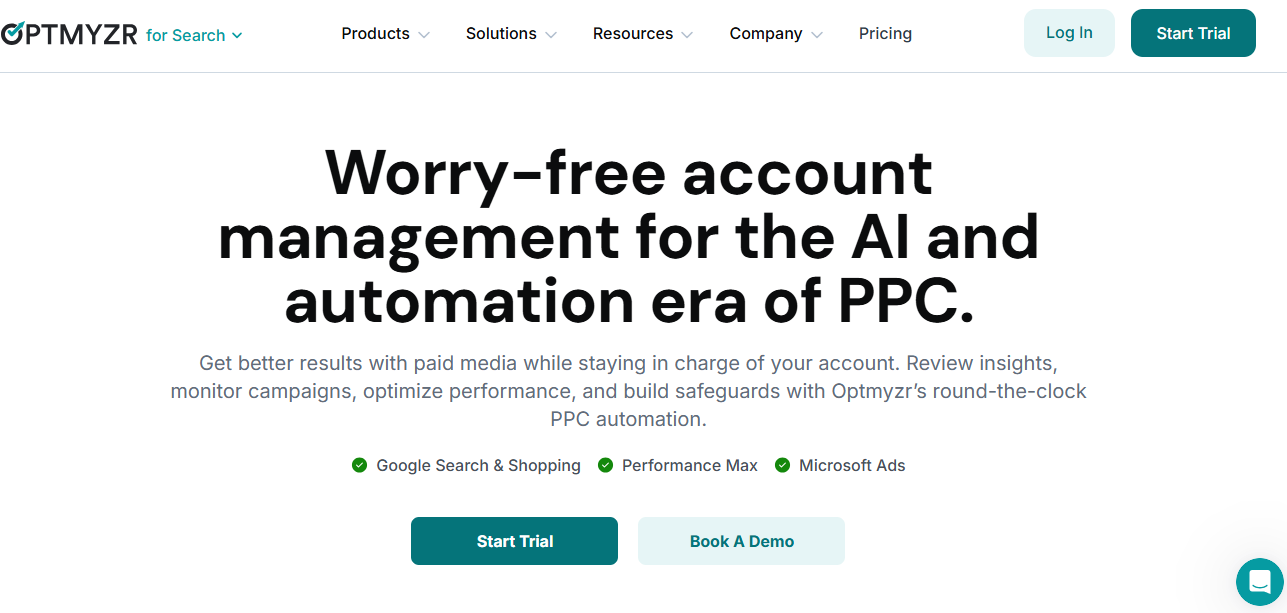
Optmyzr blends AI suggestions with customizable automation for agencies and teams managing multiple accounts. It supports one-click optimizations, detailed reporting, and workflow automation to save time across client portfolios. Its balance of AI and control makes it especially valuable for agencies.
Key features:
- It offers Rule Engine, which lets advertisers combine AI recommendations with custom conditions for layered automation.
- It provides Campaign Automator, which builds campaigns and ad groups automatically from data feeds such as product catalogs.
- It includes Shopping Campaign Builder and Auditor, which streamlines Google Shopping setup and identifies wasted spend in product feeds.
- It provides Custom Alerts, which notify account managers of performance anomalies or budget pacing issues in real time.
Optmyzr is best suited for agencies and power users who want automation without losing flexibility. In one case, Matthieu Tran-Van achieved a 28% revenue increase and saved 20 hours per week using Optmyzr.
Another agency, Mabo, cut management hours by 56% and sped up bid management by 42%. The platform requires onboarding effort, but its capabilities make it one of the strongest AI PPC management tools for agencies in 2025.
AI PPC management tool comparison table
Choosing between PPC platforms often comes down to how they handle bidding, automation, and cross-channel management. To make the decision easier, here’s a checklist-style table comparing the core features and pricing of the top AI PPC tools in 2025.
When evaluating tools, focus on how they align with your campaign goals rather than just their automation claims. For example, Smart Bidding is perfect for quick adoption on Google, while Revealbot excels in scaling creative-heavy campaigns on social. Skai brings forecasting power to enterprises, and Optmyzr gives agencies a high level of customization.
How AI works in PPC management
AI works in PPC management by automating bidding, reallocating budgets, refining audience targeting, and generating predictive insights in real time. Instead of waiting to analyze yesterday’s results, AI looks at millions of signals as they happen and makes adjustments instantly.
That’s why more marketers are shifting budget into AI-powered PPC: it’s faster, smarter, and simply more profitable.
At RevvGrowth, we’ve seen firsthand how AI transforms paid campaigns. When we plug AI tools into client accounts, we’re not just “saving time”; we’re reallocating budgets to the right channels, scaling high-performing ads, and giving our clients visibility they didn’t think was possible.
Here’s how it actually works under the hood:
AI-driven bidding and budget allocation
Forget the old “set it and check it weekly” model. AI recalculates bids for every single auction, deciding in milliseconds whether to push harder or pull back.
- It automatically adjusts bids to hit performance goals like Target CPA (Cost per Acquisition) or Target ROAS (Return on Ad Spend).
- It shifts spending toward campaigns and keywords that are converting right now.
- It uses dayparting to spend more during peak conversion hours and less when traffic is cold.
- It fine-tunes bids across devices, so mobile-heavy audiences don’t eat up desktop ROI.
Advertisers are already seeing measurable results from this approach. In one Reddit case, a Google Ads manager reported lowering customer acquisition costs by nearly 30 percent after moving to AI-driven bidding. Real-time optimization helped shift the budget toward converting traffic and cut wasted spend significantly.
Smarter audience targeting with machine learning
Targeting by age, gender, or location is yesterday’s playbook. AI digs deeper. It predicts intent, clusters audiences based on behavior, and constantly refines who should see your ads.
- It builds lookalike models from your best customers and scales them.
- It syncs audience targeting across platforms so you’re not chasing different segments on Google and Meta.
- It learns from every click, updating models in real time instead of waiting for “manual refreshes.”
On Reddit, advertisers shared that they use observation mode for audience segments first. Once performance data is strong, they either expand or exclude those segments, which makes campaigns leaner and more efficient.
Real-time reporting and predictive analytics
Static dashboards tell you what happened yesterday. AI tells you what’s happening now and what’s about to happen tomorrow.
- It sends anomaly alerts when spending spikes or conversion rates dip.
- It forecasts budget pacing so you don’t burn through ad dollars mid-month.
- It surfaces insights, not just numbers, showing you where to act.
One Redditor shared that automating reports using tools like Supermetrics has made their workflow far more efficient, reducing manual work and enabling deeper insights each week.
This is where RevvGrowth adds an edge. Most businesses don’t have time to sift through AI dashboards and act fast. We build reporting flows that highlight the “why” behind performance shifts, so teams know exactly what to do next.
AI vs traditional PPC management
AI PPC management is changing how campaigns perform. Instead of relying on static rules and manual tweaks, advertisers now get real-time optimization, sharper targeting, and insights they can act on immediately. Here’s how AI stacks up against traditional PPC:
- Bidding strategies: Manual bidding is rule-based. You set a max CPC or CPA target and adjust when results dip, but the market has already moved. AI bidding reacts in the moment, factoring in signals like query context, remarketing lists, device type, and time of day. That means bids reflect real conditions, not outdated assumptions, and budgets go further.
- Audience segmentation: Old-school targeting stops at demographics or broad interests. AI builds predictive clusters using behavior, purchase history, and intent data. It also creates lookalike audiences and syncs them across platforms, which means retargeting is more precise and impressions aren’t wasted on the wrong users.
- Performance reporting: Static dashboards tell you what happened; AI-powered reporting explains why it happened, alerts you to anomalies, and recommends optimizations. McKinsey finds that organizations using AI across marketing see up to 20% higher overall ROI.
At RevvGrowth, we don’t just automate PPC; we pair AI-driven insight with human strategy. That translates to campaigns that move faster and perform better, without losing sight of your goals.
How to choose the right AI PPC platform
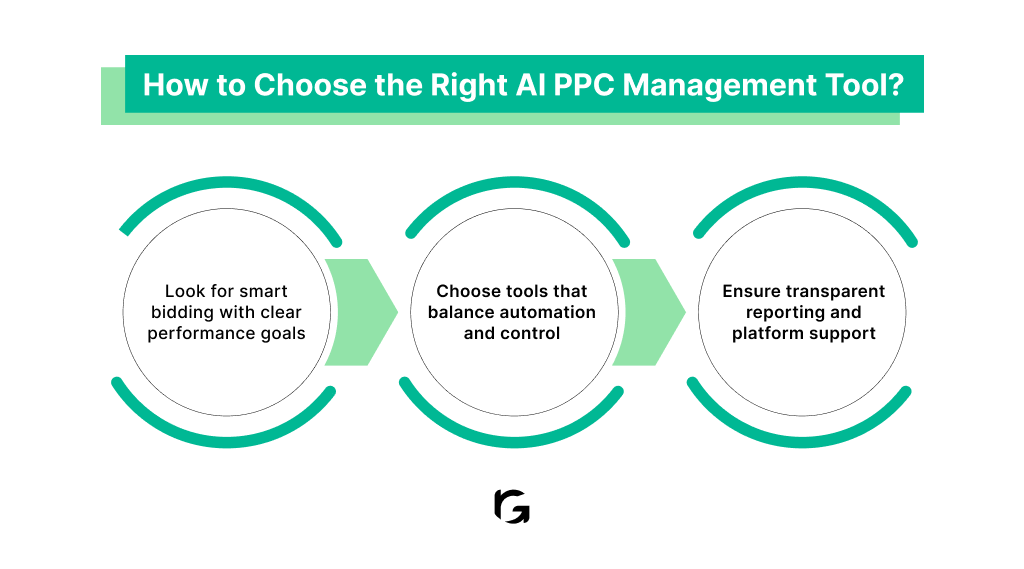
Choosing the right PPC platform can be tricky. Every tool promises automation, efficiency, and better results, but not all of them deliver. The best approach is to focus on features that actually impact performance, then match them to your campaign goals.
Key features to look for
- Conversion-focused bidding: A strong platform should optimize directly toward your goals, whether that is cost per acquisition (CPA), return on ad spend (ROAS), or revenue.
- Flexible automation: Look for rule-based options that you can customize. Automation should save time but still let you step in when strategy requires it.
- Creative testing at scale: Good platforms can rotate different ad variations, track which ones perform, and automatically push budget toward the winners.
- Clear reporting and integrations: Reporting should explain why performance changes, not just show numbers. It should also connect smoothly with the ad channels and analytics tools you already use.
Matching tools to your campaign goals
Different businesses benefit from different platforms. A simple way to think about it is:
Red flags to avoid
Some tools look powerful on the surface, but create problems later. Watch out for:
- Opaque decision-making: If the system does not explain why bids or budgets change, you lose control.
- Weak creative support: Platforms that ignore ad testing and scaling often stall growth.
- Rigid automation: Tools that claim to run “hands-free” usually leave little room for strategic adjustments.
- Unclear pricing: Vague or hidden pricing structures can lead to costs that spiral as campaigns scale.
Choosing a platform is only the first step. The real difference comes from how you use it, so let’s tie it all together and see why investing in smarter PPC management is worth it.
Conclusion
What would it mean for your business if every dollar you spent on ads worked harder? That is exactly what AI-powered PPC makes possible. Smarter bidding ensures you are not overspending, better targeting puts your ads in front of people who actually convert, and real-time reporting tells you what to fix before performance slips.
The advantage is simple: less wasted spend, faster scaling, and decisions you can trust. The question is not whether automation works; it is whether you are ready to use it before your competitors do.
The best way to find out is to test it in your own account. Start with a free PPC audit to see where automation fits your growth strategy and where human oversight adds the most value. Book your PPC audit with RevvGrowth today and turn automated PPC into measurable growth.
.svg)
.webp)