


Introduction
When we talk about making content better, we usually mean making it easier for search engines to find- which is called Search Engine Optimization (SEO). But just aiming to please search engines isn't the main goal. Instead, it's about creating content that people like. By making informative, interesting, and easy to understand content, it becomes more appealing to search engines. This is because search engines want to show users the best content. So, the focus should be on making content that really connects with your audience, answers their questions, and helps them. If you do this, your content will be more enjoyable for readers and get noticed more by search engines.
What is content optimization?
Content optimization means making content better so that more people can see it, like it, and find it useful. This makes sure the content is good, using the right words that people search for, writing catchy titles and descriptions, and getting important websites to link to it.
July 2025 update:
The core theme of the update was a double-down on quality, experience, and original insight in a rapidly evolving, AI-driven search landscape.
- Focus on People-First Content (Helpful Content 2.0): The update heavily refined its ability to reward content that is genuinely helpful, reliable, and written by and for people. Sites with thin, generic, or mass-produced AI content that lacked original insight were hit hard.
- The Rise of Experience (E-E-A-T): The "Experience" factor within E-E-A-T (Experience, Expertise, Authoritativeness, Trustworthiness) received an even greater emphasis. Content that demonstrates real-world use, personal knowledge, or unique data was favored over purely academic or summarized information.
- AI Overviews Integration: The rollout and visibility of AI Overviews (AI-generated summaries in search results) increased significantly. This means content must be structured to be "Answer Engine Optimisation (AEO) ready"—clear, concise, and structured (using schema, strong headers) to be pulled into a featured snippet or AI summary.
- Continued Volatility: The update took over two weeks to roll out (June 30 to around July 17, 2025), and volatility in rankings remained high even after the official completion, indicating ongoing adjustments.
So, the lession is Prioritize original, high-quality content that demonstrates real-world experience and clear author credibility over mass-produced, generic content.
Why is content optimization important?
Making your online content better is very important for doing well online. Even if your content is really good, it might not show up high on Google's search results if you don't make it better.When you optimize your content, you're more likely to be seen on the first page. This means more people will find your website.
1. Get more websites to link to yours
If other companies see your content and think it's useful, they'll start linking to your website. This makes your website more important in Google's eyes, which helps you show up higher in search results....
2. Get more people interested in your brand
Making your content better means more people will find and connect with your business. Good content helps you build a good relationship with customers.
3. Get more potential customers
A big plus of making your content better is that it helps you find potential customers. When your content shows up in search results, people will visit your website, which means you can sell more and grow your audience.
4. Make your business look like a top choice
When your content is better, your brand seems more trustworthy. The more you show up in search results, the more respect you get, which makes customers trust you more.
SaaS SEO Content Impact: Long-form SaaS SEO content (2,000+ words) generates 56% more leads, with 70% of backlinks targeting blogs over product pages.
How to optimize content for SEO?
When we worked with Atlan, we created content that's not just good for SEO but also optimized to gain traffic and achieve higher visibility on search engines. Their blogs were already doing pretty well, landing in the top 10 when people searched for things online. But Atlan wanted more; they aimed to get their blogs featured right at the top of search results in a special box called a "featured snippet." This box is the first thing people see, so it can really boost visits to a website.To do this, we mixed our usual tips for writing good online content with some special steps just for Atlan:
1. Understand your audience:
We always start by figuring out who the readers are and what they're looking for. For Atlan, we found out what exactly makes Google show a blog in the featured snippet box:

2. Write useful content:
We took Atlan's already optimized blogs and tweaked them to be even more useful and easy to read for featured snippets. We paid special attention to making them fit what Google looks for when choosing blogs for the featured snippet:

3. Keep your content fresh:
Updating and improving content is key. For Atlan, this meant making their blogs just right for getting that top spot in search results. Since Google likes new and updated content, we chose to update the content every two weeks and made sure it was well formatted.
4. Use links and pictures wisely:
Good content isn't just about words. We made sure their blogs had the right links and images to help them stand out.
5. Tell Google about the updates:
After sprucing up the blogs, we let Google know to check them out again. We watched closely to see how they did and made changes when necessary.This approach helped Atlan's blogs not just rank well but get featured in the top spot more often. It wasn't only about being seen first; it helped bring a lot more people to their site. This story shows how adding some extra steps to usual writing tips can make a big difference.
How to optimize content for conversions?
1. Choose topics and keywords that sell
The first step is to pick a topic that can help you make sales. When you pick a keyword, make sure it's something people are really looking to buy or learn more about. To find good keywords, you can use tools like Ubersuggest. Also, websites like Reddit and Quora are good places to find topics. If what you're selling matches these keywords, even better! For example, we found the topic "How are search engine algorithms impacting keyword targeting?

This topic serves our niche and is relevant for us.
2. Make your call-to-action stronger
Content that gets people to act always has a call-to-action (CTA). This could be asking readers to sign up for emails or guiding them to products. While CTAs are often at the end of a page or post, they can be in the middle too, like asking for email signups halfway through a post.
What to avoid when optimizing content?
When you're trying to make your website better for Google searches, it's easy to think you should use all the advice you find. But, doing too much can actually be a bad thing. Sometimes, it won't help, and it might even make your website look worse to Google. Here's what you shouldn't do:...
1. Going overboard with SEO:
Yes, it's possible to try too hard to make your website perfect for Google. One way people do this is by putting too many keywords everywhere. This is known as SEO over-optimization. Instead, you should aim to make your content interesting and useful for the people visiting your website, not just for Google.
2. Match what people are looking for:
Make sure what you write or show on your website is exactly what people want to find. You don't need to make your articles or pages super long just to try to look better. Google and people using Google aren't always looking for the thing that's the longest. We checked this out with some tests to see what's really going on.
3. Don't push too hard to sell something:
When you're writing to sell something, if you're too pushy, people won't like it and they might leave. It's like when someone tries to sell you something in a store and they won't let you just look around.
4. Keep your titles real:
When you make a title for something, don't make it too flashy or over-the-top. Sometimes, if a title looks like it's just trying to get you to click on it, people won't bother. They like titles that tell them what they're really going to get....
Top 5 SEO content optimization tools to try in 2026
If you want your website to be noticed more easily on Google or other search engines, there are some great tools you can use in 2024. These tools help you make your articles and web pages better, so more people find them:
1. Ahrefs Content Explorer:

This tool is like a map that helps you find articles that a lot of people visit and share. It shows you topics that are popular but not many people have written about them yet. This way, you can write about these topics and get more visitors to your site. Most Loved Feature: Content Gap Analysis- It's great for finding under-covered topics with high audience interest, helping you attract more traffic by filling those gaps.
2. SEMRush Writing Assistant:
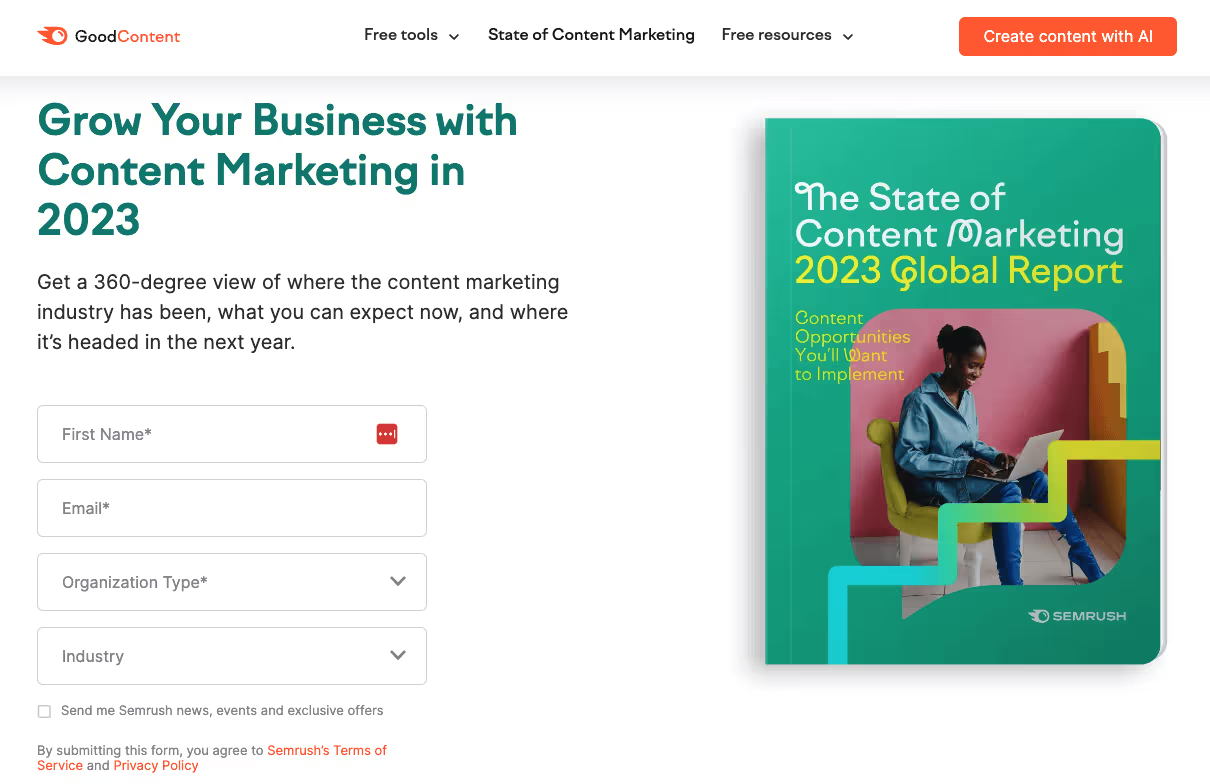
SEMRush is a smart helper when you write. It gives you advice to make your writing better for Google. It tells you if your writing is easy to read and if you're using the right words that people are looking for. You can use this helper in Google Docs or WordPress. Most Loved Feature: SEO Recommendations- Offers real-time SEO advice while you write in Google Docs or WordPress, enhancing your content's search engine visibility.
3. Yoast SEO:

If you use WordPress for your website, Yoast SEO is like a guide. It helps you make your pages better for the internet. So that it is easy to read. It gives you tips on how to make catchy titles and what to add in your article summary. It also makes it easier for Google to understand what your website is about, so more people can find it. Most Loved Feature: Readability and SEO Analysis- It improves both the SEO and readability of your content, making it more attractive to both search engines and readers.
4. Clearscope:

Clearscope uses smart technology to give you tips on how to make your articles more interesting and about things people are searching for. It looks at the best articles out there and tells you what words or topics you might be missing. This helps you add them to your article to make it better. Most Loved Feature: Content Optimization Recommendations- Analyzes top content and suggests what keywords or topics to include, ensuring your articles are comprehensive and engaging.
5. Surfer SEO:

Surfer SEO provides the best tips to make your website more popular. It looks at many things that can make your article show up higher in search results. It even checks what your competition is doing and gives you advice on how to write better or how long your articles should be. Most Loved Feature: Competitor Analysis and Content Strategy- Helps you outsmart the competition with data-driven insights on content strategy and optimization.
Wrap up
Content optimization is about making your business and messages clear to search engines so they can show your content to the right people. If search engines don't understand your content, they can't help others find it. This process also involves making your content interesting and useful so that when people do find it, they'll want to engage with it. Even an average article that's well-optimized will get more attention than a well-written article that's not optimized.Even though search engines are complex and always changing, by following some good tips on optimization, you can make sure your content ranks well. This gives your business a better chance of being noticed by more people. Want to learn more about making your website better and easier to find? Check out our page at Revv Growth for more tips and help!
FAQs
- How to make content rank for SaaS?
Target long-tail keywords, publish 20+ pages monthly, and optimize for featured snippets with fresh updates every 2 weeks. - What does optimize content for search engines mean in SaaS?
It involves keyword placement, readability scores, internal linking, and schema for better crawlability and user signals like 52-second avg. dwell time. - Optimize content for SEO: key 2026 steps?
Use tools for content gaps, focus on E-E-A-T, and build backlinks (25-60/month avg. for SaaS), prioritizing bottom-funnel intent. - How do you optimize content for SEO effectively?
Conduct audience research, add CTAs mid-content, avoid stuffing, and monitor post-March 2024 updates for quality focus. - Best practices for SaaS SEO content?
Create full-funnel assets (guides, comparisons), ensure mobile UX, and leverage rich snippets for 22% top-3 CTR boost.
.svg)


.webp)
.avif)