


From the time we started using GEO tools, we noticed a gap in how teams measured marketing visibility.
Brands were appearing in AI conversations, getting cited by platforms like ChatGPT and Perplexity, and influencing buyer decisions, but traditional analytics could not capture it.
We saw that AI platforms were shaping buyer decisions long before website analytics showed the impact. Using GEO tools helped us bridge that gap by showing where our brand appeared in AI answers, how often our content was cited, and where we could improve visibility.
Based on what we learned, we compared 9 GEO tools based on features, pricing, and use cases to help you find the right tool for your team.
Quick comparison: the 9 GEO tools worth knowing in 2026
There’s a lot of discussion around which GEO tools are best for AI optimization. To make the choice easier, we shortlisted 9 tools. Here’s a quick overview before we dive into each one.
Before choosing a GEO tool, it is important to understand the signals that actually indicate progress. Tracking GEO metrics like visibility share, citations, and AI mentions can help teams evaluate whether their GEO efforts are improving.
Budget-friendly tools for startups and small teams
A 2026 benchmark found that B2B brands appeared in only 3% of AI-generated answers, showing why teams need to start paying attention to AI visibility. So, if you’re a startup or small team not ready to invest heavily in GEO tools, these two affordable options can help you get started.
1. Otterly AI
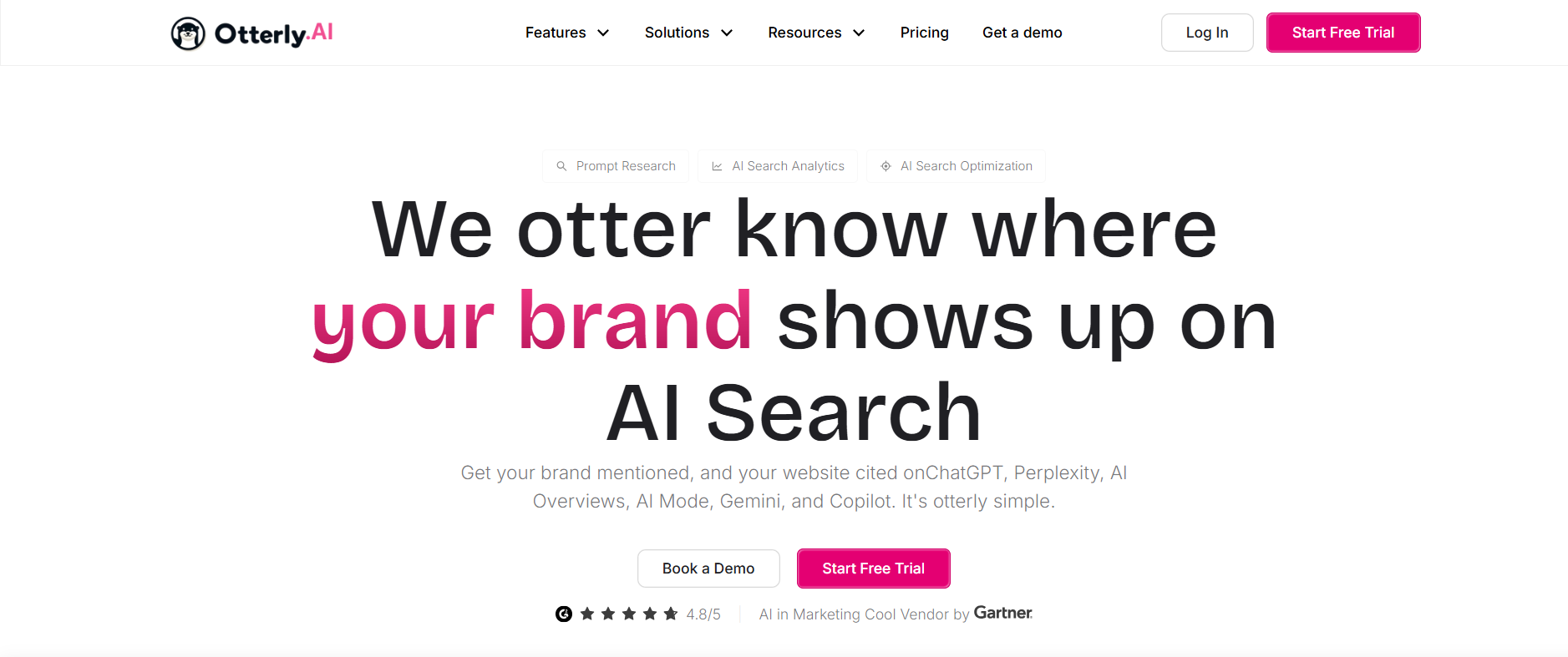
Otterly.AI is an AI visibility tracker built to show exactly how your brand shows up on ChatGPT, Google AI Overviews, Perplexity, and Microsoft Copilot.
It's positioned as one of the fastest, most affordable ways to start monitoring your brand's presence in AI search.
How does this actually help your GEO?
It shows exactly when and how often your brand comes up across four major AI tools, and which of your pages actually got linked when it did. You see the same for your competitors on identical questions, so you know immediately if one of them is winning ground you didn't know you were losing.
Who will benefit from using this?
If you have a small team or are a solo marketer exploring GEO for the first time, Otterly AI is a simple tool to start with. It helps you track AI visibility without a steep learning curve, making it easier to understand where your brand appears and where you can improve.
However, its AI platform coverage depends on the plan you choose. If you need tracking across Gemini or Google’s newer AI Mode, you’ll need to add those separately.
What will it actually cost you?
The Lite plan starts at $29 a month for 15 tracked questions. Standard ($189) and Premium ($489) raise that limit. Gemini and AI Mode are available as paid add-ons, roughly $9 to $149 a month each, on top of whichever plan you're on.
2. Peec AI
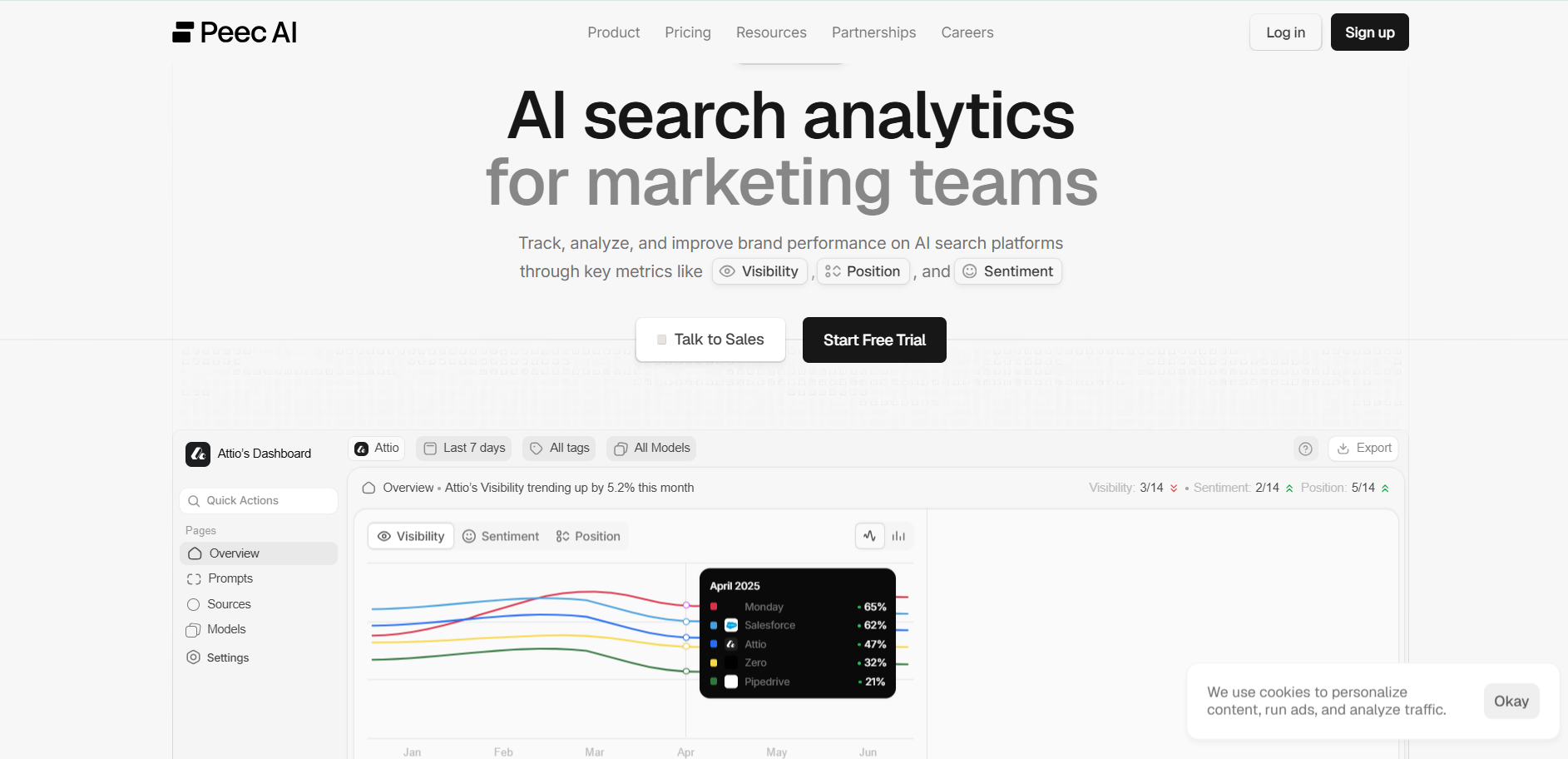
Peec AI is built purely around tracking, with no content or outreach features layered on top. It's designed to give a clean, fast read on how your brand and your competitors show up across AI tools.
How does this actually help your GEO?
It separates a plain mention of your brand from an actual citation, meaning it shows the difference between an AI tool casually naming you and one actually linking to your content as a source. That distinction matters for deciding what to fix first.
Who will benefit from using this?
If you already know which AI tools your buyers use most, Peec AI can give your team a focused way to track them. Its simple interface makes it easier for teams to monitor AI visibility without the complexity of broader SEO platforms.
As your tracking requirements expand, the cost can increase, especially if you need to monitor more AI platforms.
What will it actually cost you?
Starter costs $95 a month for 50 tracked questions across 3 of 7 available AI tools. Pro ($245) and Advanced ($495) raise that limit. Each additional AI tool beyond the first 3 costs $35 to $165 a month.
Some GEO tools only show where your brand appears, while others help you act on those insights. Understanding the difference between tracking visibility and building an AI search strategy can help you choose the right approach.
Content-led and execution tools
These tools go beyond tracking by helping teams create content, fix gaps, and improve AI visibility.
1. Chosenly
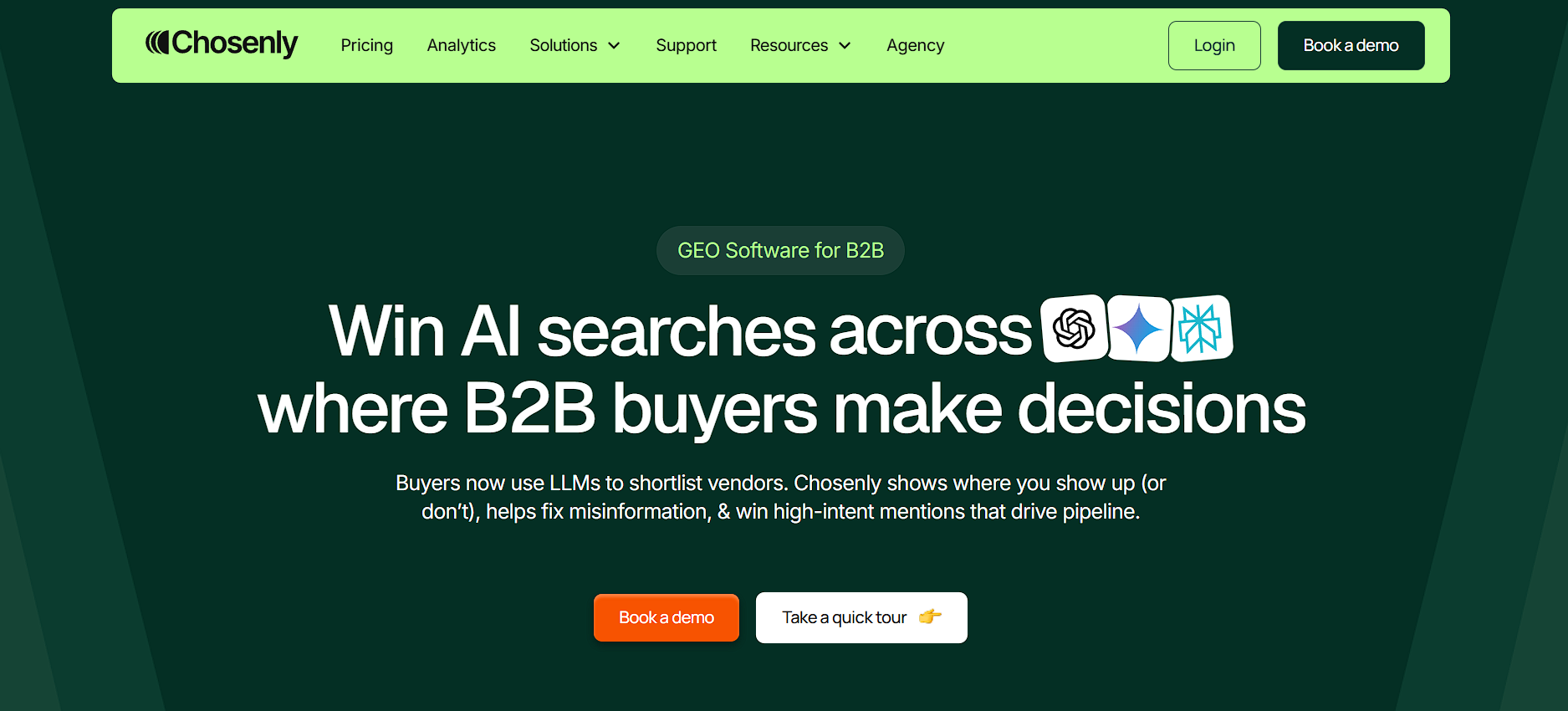
Chosenly is built exclusively for B2B teams and goes beyond tracking into actually doing the work: drafting content, reaching out for mentions, and engaging on Reddit. It starts from a single seed keyword and maps out an entire category of relevant questions, rather than asking you to build a prompt list yourself.
How does this actually help your GEO?
Once it flags a gap, whether that's a missing mention or a competitor getting cited instead of you, it doesn't stop at the report. It drafts the content needed to close that gap, reaches out for listicle placements, and responds to relevant conversations on Reddit in your brand's voice, so the fix actually happens instead of sitting on a to-do list.
Who will benefit from using this?
If you’re running a B2B team without enough time to act on every insight a tracker surfaces, Chosenly can help by handling more of the analysis and optimization work for you. As a newer platform, it has a smaller track record compared to more established tools, with limited third-party information available when evaluating it.
For smaller teams that only need occasional visibility tracking, Chosenly’s wider range of capabilities may feel more than necessary.
What will it actually cost you?
The SaaS Platform plan costs $400/month and includes 600 tracked questions, 100 outreach contacts, 20 AI-drafted content pieces, and unlimited team access. The $4,000/month plan adds a dedicated team that manages execution and optimization for you.
2. Writesonic
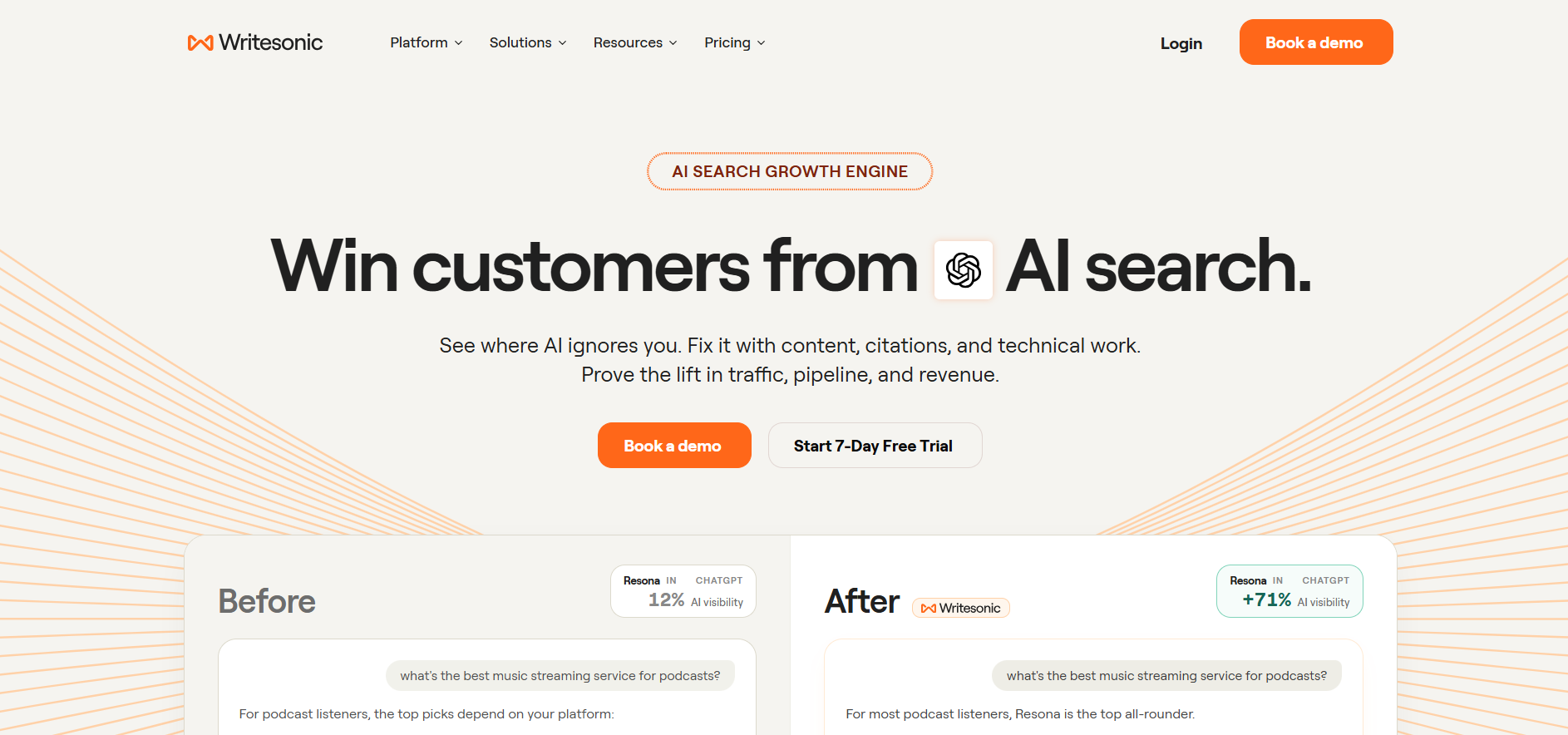
Writesonic started as an AI writing tool and has grown into what it now positions as a full AI search visibility platform. It tracks your brand across more than 10 AI tools and turns each gap it finds into a specific content task inside the same dashboard your team already writes in.
How does this actually help your GEO?
Every visibility gap it finds gets converted into an actual content task, telling your team what to write or update and why, instead of leaving you to interpret a chart. Since writing and tracking are handled in the same platform, your team can move from spotting a gap to fixing it without switching between tools.
Who will benefit from using this?
If your content team wants both AI visibility tracking and content creation in one place, Writesonic can help reduce the need for multiple subscriptions. Its platform capabilities are widely recognized for content creation, but its newer AI visibility features have a shorter track record.
This means teams evaluating Writesonic for GEO may have less external feedback specifically around its AI search tracking capabilities.
What will it actually cost you?
AI visibility tracking starts at around $199/month, while full access to tracking across 10+ AI platforms is available with the $399/month Growth plan. If you need both content creation and GEO tracking, check the plan details carefully to ensure the features you need are included.
3. Goodie AI
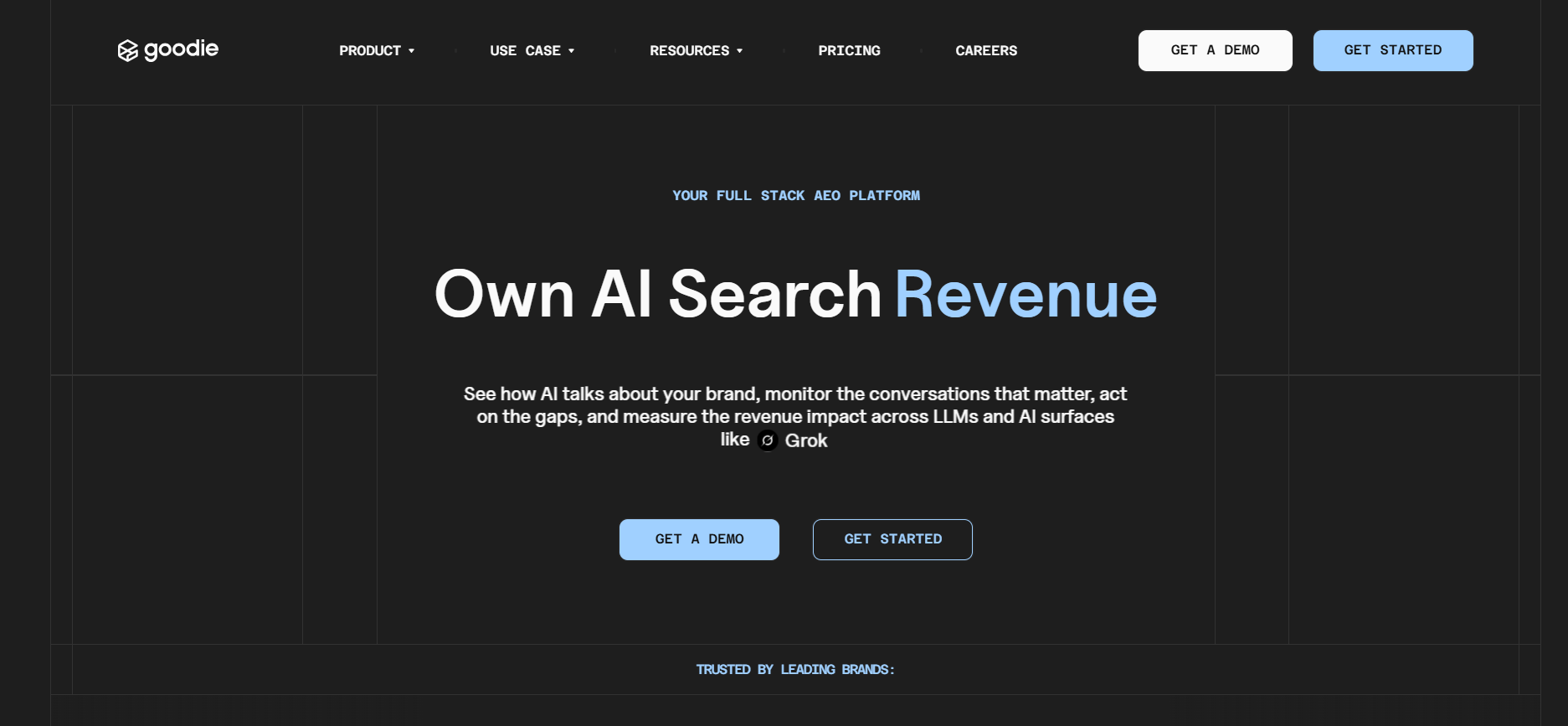
Goodie AI bundles visibility monitoring with content tools and a feature most competitors don't have: a misinformation detector that flags when AI tools describe your brand incorrectly.
How does this actually help your GEO?
Beyond tracking mentions, it actively flags moments where an AI tool gets a fact about your brand wrong- pricing, features, positioning- so you can correct it before it spreads further across more AI answers. That's a gap pure trackers don't cover at all.
Who will benefit from using this?
If you’re part of a larger team looking to manage AI visibility, content improvements, and misinformation issues in one place, Goodie AI offers a wide range of capabilities for teams with broader needs.
The platform may require some time to implement across your team, especially when multiple stakeholders need to be involved before you can fully benefit from its features.
What will it actually cost you?
The only published plan, Explorer, costs $399 a month and covers 3 AI tools: ChatGPT, Google AI Overviews, and Perplexity. Coverage of more AI tools, up to 11 or 12, requires Pro or Enterprise, both of which need a demo to get pricing.
These three fix what they find. The next set is built for bigger teams that need deeper data and reporting.
Tools built for enterprise and advanced analytics
These four cost more, but they're built for teams that need every AI tool covered and numbers that hold up when a leadership team asks hard questions.
1. Profound
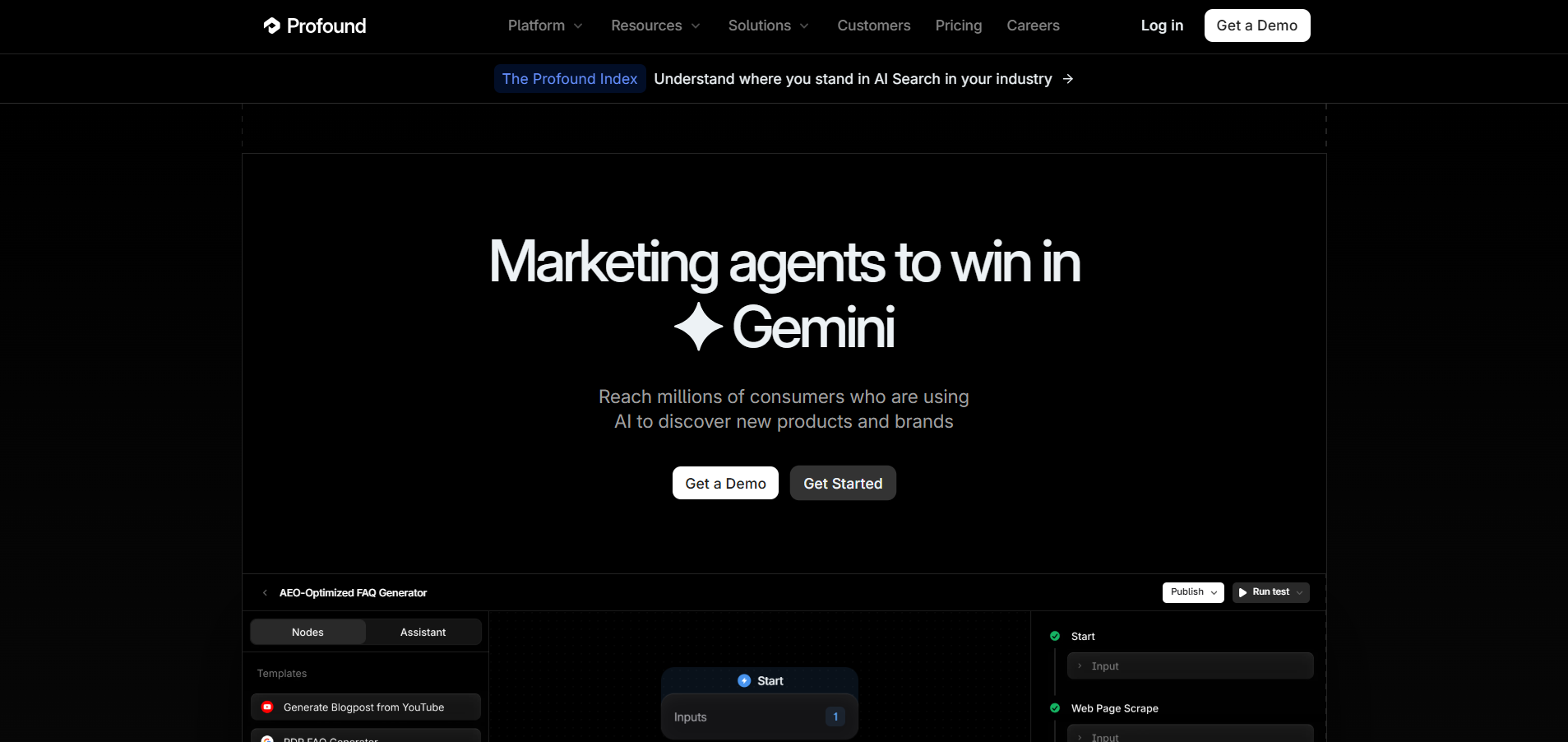
Profound is built for teams that need detailed AI visibility reporting at an enterprise scale. Instead of relying only on manually created prompts, it analyzes real AI conversations to show how brands appear across AI search experiences.
How does this actually help your GEO?
Because it draws from real user conversations rather than simulated prompts, the data gives you a clearer view of how AI tools actually discuss your brand. That makes the findings easier to validate and explain when stakeholders want to know where the data came from.
Who will benefit from using this?
If you’re on an enterprise team that needs wide AI engine coverage and detailed reporting, Profound is designed for more complex tracking needs. Its enterprise-focused capabilities make it suitable for teams managing large-scale AI visibility efforts. Still, the platform may take some time to learn because of the depth of data it provides.
However, the depth of data can feel overwhelming for teams new to GEO. Profound provides in-depth data, but it can be difficult to know what actions to take, especially since the platform is built with enterprise use cases in mind.
What will it actually cost you?
Profound does not publish fixed pricing; costs depend on your tracking needs, team size, and reporting requirements. Its enterprise plans cover AI visibility tracking, citation monitoring, competitive insights, and reporting across multiple AI platforms.
2. AthenaHQ
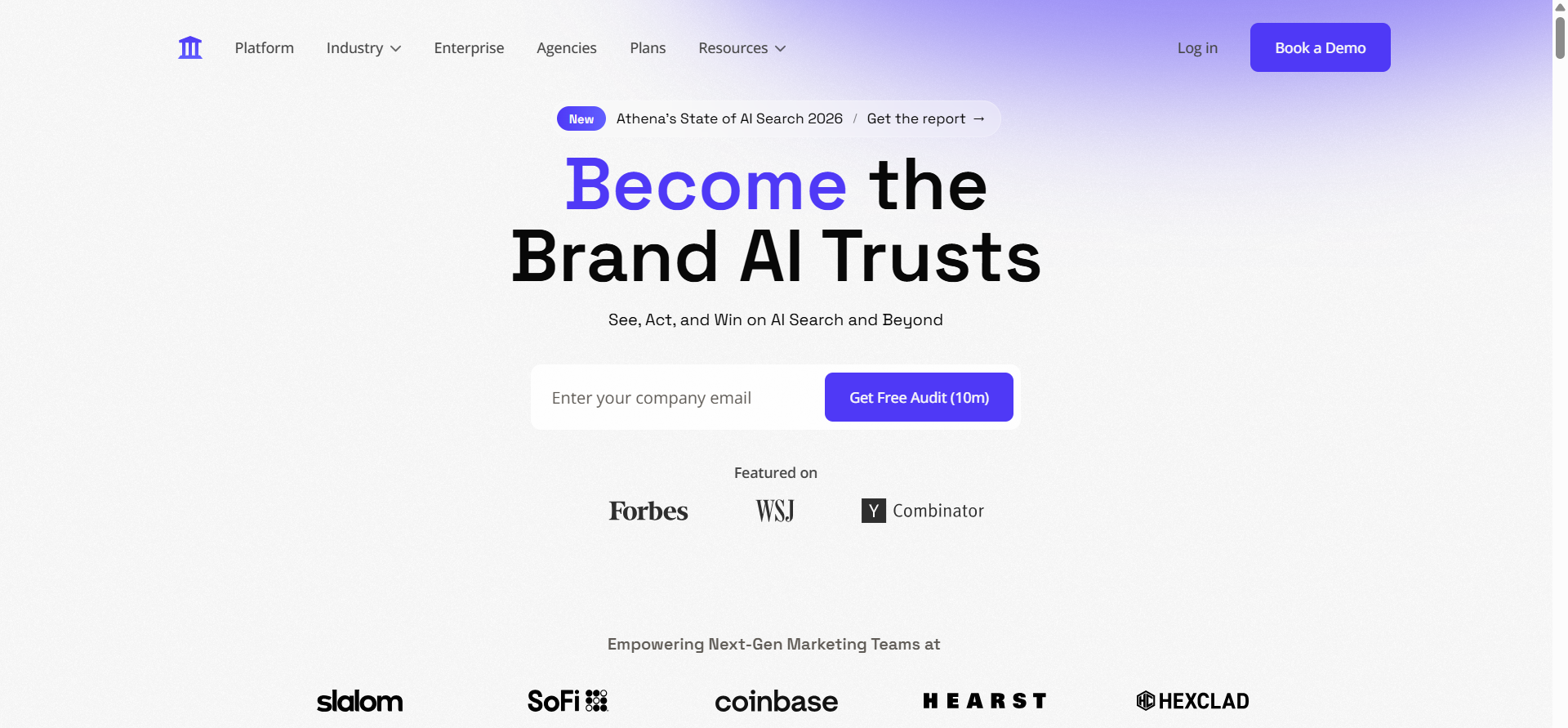
AthenaHQ is a GEO platform that helps brands track how they appear across AI search platforms and understand where they are gaining or losing visibility. It combines AI visibility monitoring with competitor analysis, prompt tracking, and content recommendations to help teams improve their presence in AI-generated answers.
How does this actually help your GEO?
AthenaHQ helps you understand how AI engines perceive and mention your brand across different prompts and topics. It tracks visibility trends, competitor performance, and citation opportunities, giving teams insights into where content improvements can increase AI search presence.
Who will benefit from using this?
AthenaHQ works well for marketing teams, SEO professionals, and agencies that want a clearer view of their AI search performance without manually testing hundreds of prompts. It is especially useful for teams actively investing in GEO and looking to measure progress over time.
Its platform experience is often highlighted for making AI visibility tracking easier to understand and act on.
What will it actually cost you?
AthenaHQ offers a free plan with limited usage, while paid plans start at $295/month for teams that need broader AI visibility tracking. Pricing varies based on tracking volume, features, and reporting needs, with plans covering capabilities such as prompt monitoring, competitor analysis, AI visibility insights, and content recommendations.
3. Ahrefs Brand Radar
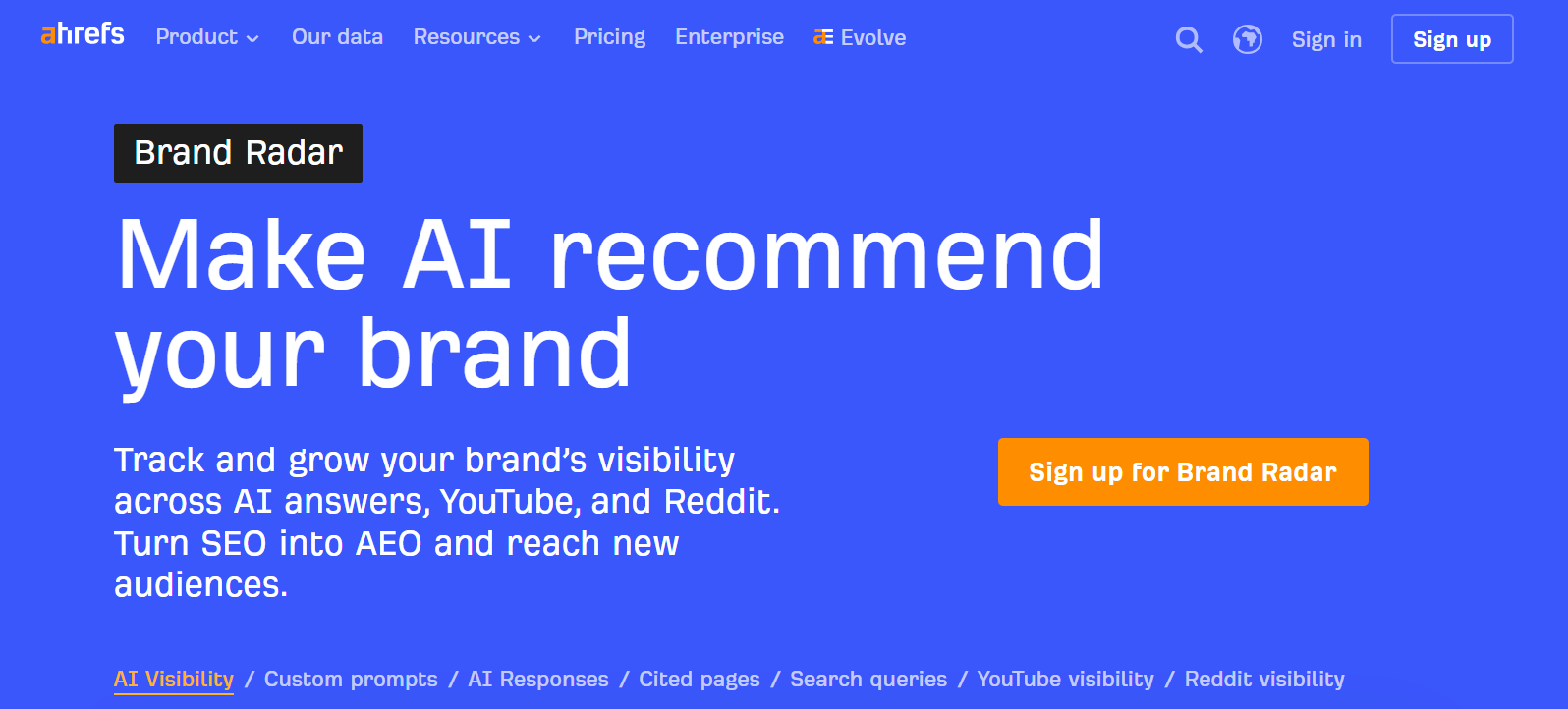
Ahrefs Brand Radar is a GEO tracking tool that helps brands monitor how they appear across AI search results. It tracks brand mentions, citations, competitor visibility, and the sources AI platforms use to generate responses, helping teams understand their AI presence and find opportunities to improve it.
Who will benefit from using this?
Ahrefs Brand Radar is a strong fit for SEO teams, content marketers, and agencies already using Ahrefs who want to extend their workflows into AI search. It works best for teams that want to connect traditional search insights with AI visibility data instead of managing separate platforms.
What will it actually cost you?
Ahrefs Brand Radar is available as an add-on to Ahrefs plans, with pricing depending on the level of AI visibility tracking and usage requirements. It covers features such as AI mentions tracking, citation analysis, competitor comparisons, and visibility reporting across AI search platforms. Teams already using Ahrefs may find it easier to add to their existing workflow.
4. Semrush AI Visibility Toolkit
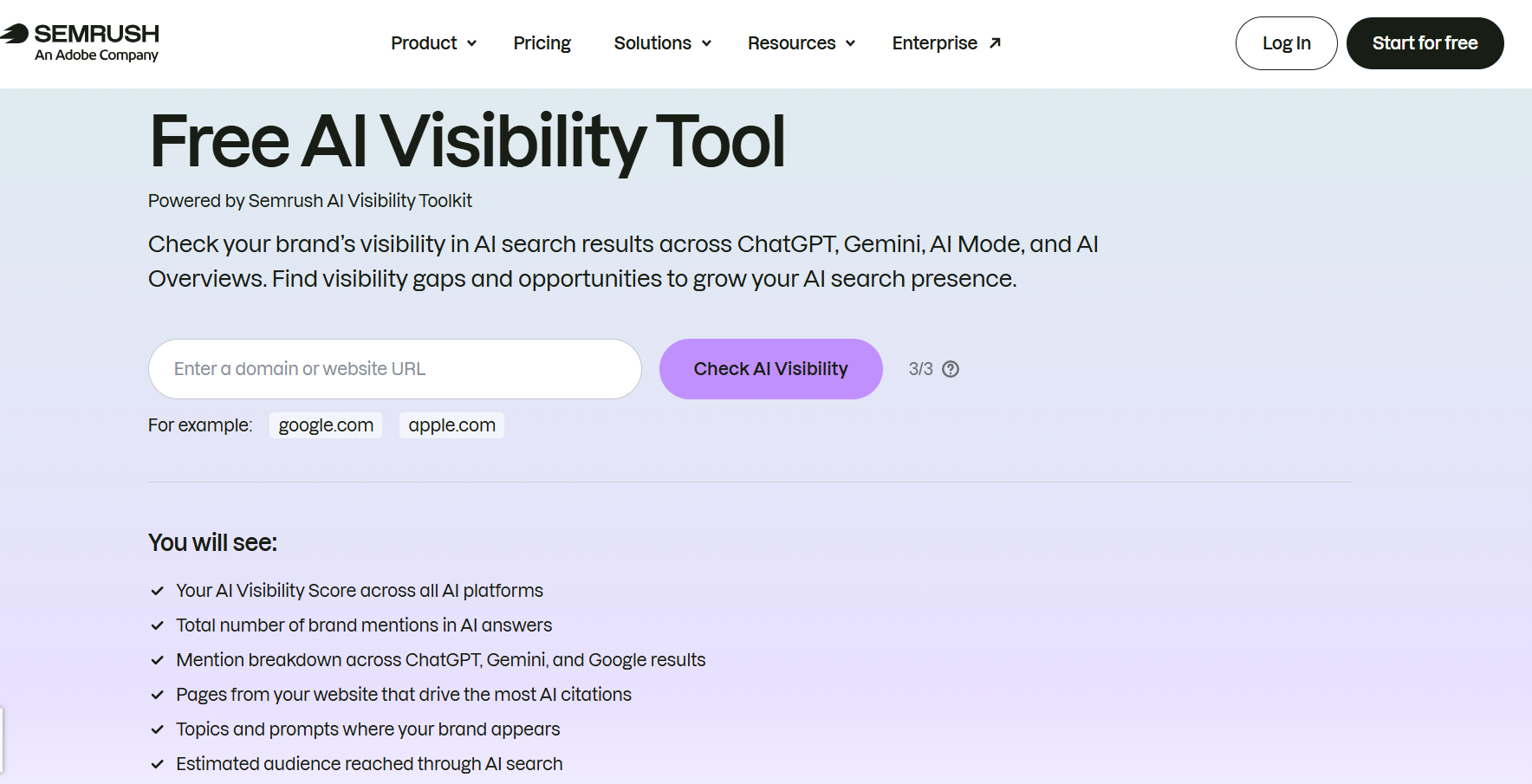
Semrush AI Visibility Toolkit is an AI search visibility platform from Semrush that helps brands track their presence across generative AI platforms. It brings together AI mention tracking, competitor monitoring, and reporting features to give teams a view of how brands appear in AI-generated search experiences.
Who will benefit from using this?
Semrush AI Visibility Toolkit is a good fit for SEO teams, content marketers, and agencies that already use Semrush and want to add AI search tracking to their existing workflow. Its established platform experience makes it a practical choice for teams that want AI visibility insights alongside their traditional SEO data.
What will it actually cost you?
Semrush AI Visibility Toolkit is available as an add-on to Semrush plans, with pricing starting at $99/month in addition to an active Semrush subscription. It includes features such as AI visibility tracking, competitor comparisons, citation monitoring, and reporting across AI search platforms. Pricing may vary based on the number of prompts and tracking requirements.
As teams increase AI investments, the challenge is moving from measurement to execution. Gartner found that only 30% of CMOs report mature AI readiness capabilities in 2026.
GEO tools can highlight visibility gaps, but closing them requires deeper analysis, content optimization, and ongoing execution.
What a GEO tool doesn't do for you?
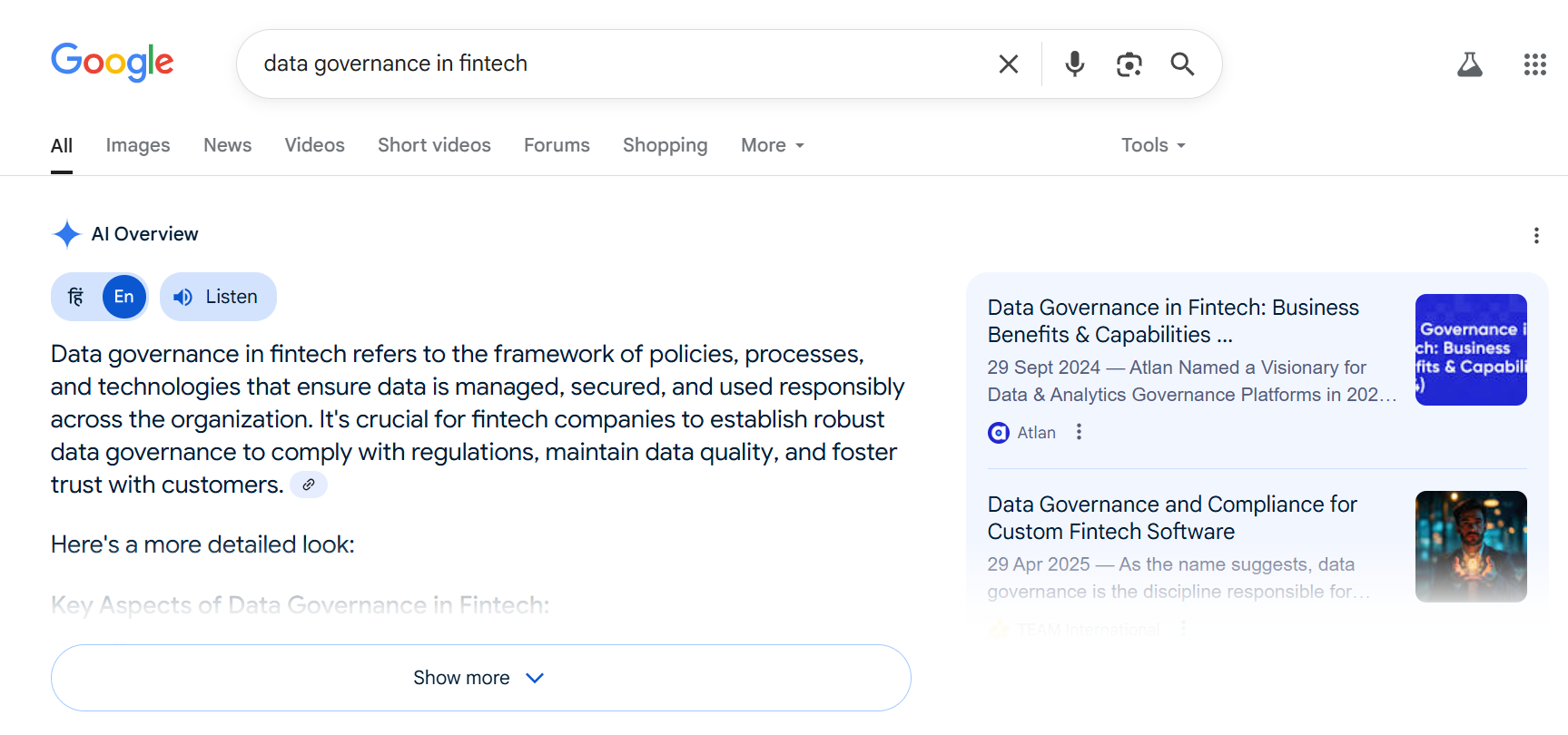
Our client Atlan invested in a GEO tracker, monitored dashboards, and expected visibility to improve automatically. However, the dashboard only highlighted opportunities. Improving AI visibility required deeper analysis, content optimization, and continuous testing.
This is where our GEO strategy helped Atlan scale its AI search presence. We manually analyzed ChatGPT, Perplexity, Claude, and Google AI Overviews every month using 50+ buyer-intent queries, combining tool insights with deeper research.
We identified the questions their buyers were asking, optimized content to improve citation potential, and addressed the content and technical factors AI systems consider before referencing a page.
This approach helped Atlan achieve a 5x increase in organic traffic, earn AI Overview citations within 4 weeks, and drive $4M in sourced revenue with $12M in influenced pipeline.
If you want to turn AI visibility insights into growth, partner with RevvGrowth to uncover gaps, improve citation potential, and build a GEO strategy that gets your brand discovered across AI platforms.
FAQs about GEO Tools
.svg)


.webp)
.avif)